How do modern pagans adapt ancient festival traditions for contemporary celebration?
Modern Pagan Festival Adaptations represent a fascinating evolution of spiritual practice, where practitioners translate seasonal, agricultural, and mythic themes into forms that fit contemporary life by shifting dates for work schedules, re-imagining rural rites for cities and apartments, integrating diverse cultural sources, emphasizing inclusivity and consent, and extending celebrations into online and hybrid spaces. This transformation creates a bridge between ancient wisdom and modern needs, allowing practitioners to maintain meaningful connections to cyclical time while honoring the realities of contemporary living.
Contemporary Sabbat Celebrations Today

Wheel of The Year Wood Sign 12",Sabbats Pagan Sign Witches Runes Wood Engraved Board Wiccan Holidays,Wicca Calendar,Yule Altar, Celestial Sign,Vintage Handmade Tabletop Ornament Decor
View Product →The foundation of Modern Pagan Festival Adaptations lies in the Wheel of the Year, an ingenious modern synthesis that draws from Celtic fire festivals, Norse blóts, Druidic solar rites, and even Christianized feast days to create eight Sabbats marking solstices, equinoxes, and their midpoints. Rather than attempting to reconstruct one specific historical tradition, contemporary pagans have crafted a unified symbolic cycle that speaks to practitioners worldwide, regardless of their specific cultural background or geographical location. This approach represents one of the most significant adaptations in modern paganism: the recognition that revival and reconstruction are two different things, and that meaningful spiritual practice often requires creative synthesis rather than rigid historical adherence.
The flexibility of contemporary Sabbat timing demonstrates how modern practitioners prioritize accessibility and participation over historical accuracy. While the eight Sabbats are traditionally spaced roughly every six weeks throughout the year, most modern pagans shift these celebrations to the nearest weekend or most convenient date to accommodate work schedules, school calendars, and family obligations. This practical adaptation extends globally, with Southern Hemisphere practitioners often advancing dates by six months so their midsummer and midwinter celebrations align with actual local seasons rather than European agricultural patterns. Such geographical consciousness shows how Modern Pagan Festival Adaptations honor the principle of place-based practice while maintaining connection to a broader spiritual community.
Perhaps the most creative aspect of contemporary Sabbat celebrations involves transforming agricultural rites for non-agrarian lives. Traditional festivals rooted in planting, tending, and harvesting are now reframed as metaphors for personal growth, creative projects, and psychological cycles, acknowledging that many modern practitioners live far from food production centers. Lughnasadh becomes a time to harvest achievements and express gratitude for abundance in careers, relationships, and personal development rather than focusing solely on grain crops. Samhain combines ancestor veneration with psychological shadow work, while practitioners might build ancestor altars, light candles for the dead, and incorporate popular Halloween elements like costumes and jack-o’-lanterns as connections to older protective and transformative rites.
The individualized nature of modern Sabbat practice reflects the diverse needs and paths within contemporary paganism. Unlike historical festival traditions that were often community-mandated and culturally uniform, modern practitioners adapt Sabbat content to align with their specific spiritual path whether Wiccan, Druid, Heathen, polytheist, or eclectic. Yule might focus on intention-setting and inner reflection for some practitioners while emphasizing solar return and community gift-giving for others. Beltane celebrations have evolved significantly, with historical fertility rites transformed into symbolic acts like maypole dancing, ritual fires, and ceremonial chalice-and-athame blessings that honor life force energy while respecting contemporary ethics around consent and appropriate public behavior. This flexibility ensures that ancient themes of birth, growth, harvest, death, and renewal remain relevant while allowing specific practices to evolve naturally within modern contexts.
Urban Witchcraft Seasonal Rituals
Urban environments present unique challenges for Modern Pagan Festival Adaptations, requiring practitioners to reimagine seasonal celebrations within built landscapes where direct access to natural cycles might be limited. The genius of urban witchcraft lies in its ability to find the sacred within city constraints, using micro-nature and symbolic correspondences to maintain seasonal awareness and ritual meaning. Apartment-dwelling pagans create elaborate altar displays featuring potted plants, balcony herb gardens, farmers market produce, or even store-bought seasonal flowers to represent the agricultural abundance traditionally central to harvest festivals. These adaptations maintain the essential symbolic connections between human celebration and natural cycles while acknowledging the reality of urban living spaces and lifestyle constraints.
Fire festivals present particularly interesting adaptation challenges in urban environments where open flames, large bonfires, and group gatherings might violate local regulations or pose safety risks. Modern practitioners have developed creative solutions that preserve elemental symbolism while respecting practical limitations: Beltane and Samhain celebrations might feature elaborate candle arrangements, indoor cauldron fires, electric illumination, or small rooftop fire-safe containers instead of traditional hilltop blazes. These modifications demonstrate how Modern Pagan Festival Adaptations prioritize safety and legal compliance while maintaining the transformative and purifying associations of sacred fire. Urban practitioners often discover that intimate candle rituals can be just as powerful as large community bonfires, shifting focus from spectacle to personal transformation and symbolic meaning.
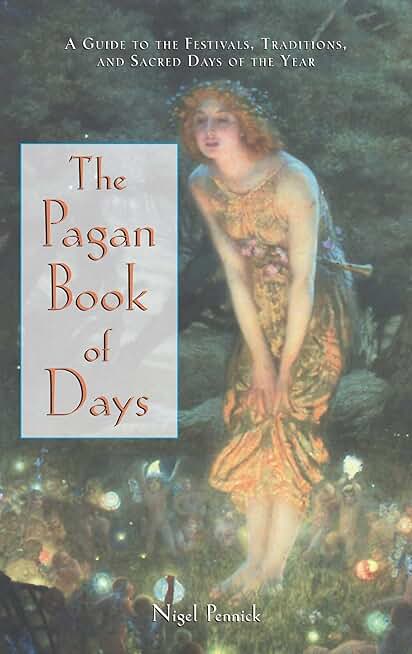
The Pagan Book of Days: A Guide to the Festivals, Traditions, and Sacred Days of the Year
View Product →Public urban spaces become sacred sites for seasonal celebrations as practitioners adapt traditional grove and commons-based rituals to parks, community gardens, riverside areas, and other accessible locations. This adaptation requires sensitivity to shared space usage, local regulations, and community relations while creating meaningful ritual experiences. Some urban practitioners have begun treating city infrastructure itself as spiritually significant: bridges become threshold spaces perfect for equinox balance work, crossroads embody the liminal energy appropriate for Samhain transitions, and even subway systems or train lines represent the underground journeys associated with winter solstice themes. This innovative approach shows how Modern Pagan Festival Adaptations can transform any environment into sacred space through intentional awareness and creative interpretation.
The integration of social justice themes into seasonal celebrations represents another significant urban adaptation, as city-dwelling practitioners often feel more connected to social activism and community support networks than rural agricultural cycles. Modern urban Sabbats frequently incorporate environmental activism, climate grief processing, mutual aid organization, and social justice themes alongside traditional seasonal symbolism. An urban Mabon celebration might combine gratitude practices with food bank donations, while a Yule ritual could include intentions for community healing alongside personal renewal work. These adaptations reflect how Modern Pagan Festival Adaptations serve not just individual spiritual development but also community building and ethical action, showing how ancient festival structures can support contemporary values and urgent social needs while maintaining their essential character as celebrations of renewal, balance, and interconnection.
Neo-Pagan Community Gathering Practices
Community gathering practices within Modern Pagan Festival Adaptations emphasize accessibility, diversity, and inclusion over strict historical reconstruction or exclusionary traditions. The shift from secretive coven-based celebrations to public and family-friendly festivals represents a fundamental transformation in how contemporary pagans approach seasonal observances. While some traditions maintain initiatory requirements and closed practices, many communities now offer open circles, public rituals, and interfaith-accessible celebrations especially for major astronomical events like solstices and equinoxes. This openness reflects modern values around spiritual accessibility and community building, allowing newcomers, families with children, and curious observers to participate meaningfully without long-term commitments or extensive preparation.
The practical logistics of contemporary pagan gatherings demonstrate remarkable flexibility in accommodating modern life constraints while maintaining ritual integrity. Sabbat celebrations are frequently moved to weekend dates to allow for travel, family participation, and work schedule coordination, showing how Modern Pagan Festival Adaptations prioritize community participation over calendrical precision. Many groups structure their annual cycle around both Sabbats and Esbats or full moon gatherings, creating regular opportunities for community connection that blend seasonal awareness with lunar rhythms. Multi-day festival formats have become increasingly popular, allowing participants to create temporary sacred communities with extended ritual programming, workshops, and social activities that deepen relationships and spiritual practice beyond what single-evening celebrations can provide.
The educational and workshop components of modern pagan festivals reflect the eclectic and polycultural nature of contemporary practice. Community gatherings often feature presentations on different spiritual paths including Druidry, Heathenry, Hellenic polytheism, Celtic reconstructionism, and various forms of animism, acknowledging that modern pagans draw inspiration from multiple sources rather than single cultural traditions. This educational approach helps participants develop more informed and respectful practices while building bridges between different approaches to earth-based spirituality. Collaborative rituals that honor multiple deities, archetypes, or seasonal themes allow diverse participants to contribute their own cultural perspectives and spiritual insights, creating celebrations that are both inclusive and deeply meaningful across different backgrounds and experience levels.
The emphasis on personal transformation and mutual support within community festival contexts shows how Modern Pagan Festival Adaptations serve psychological and social needs alongside spiritual ones. Modern Sabbat gatherings frequently incorporate sharing circles, group healing work, and collaborative magic focused on community support and collective challenges. Life transition rituals including handfastings, coming-of-age ceremonies, and memorial services are often scheduled to coincide with appropriate seasonal festivals, integrating individual milestones with community celebration and seasonal symbolism. This approach transforms ancient agricultural markers into frameworks for personal development, relationship building, and community resilience, showing how traditional festival structures can support contemporary needs for meaning, connection, and mutual aid while maintaining their essential character as celebrations of natural cycles and spiritual renewal.
Digital Age Spiritual Observances
The integration of digital technology into Modern Pagan Festival Adaptations represents one of the most significant contemporary innovations in earth-based spiritual practice. Online ritual participation has evolved far beyond simple video calls to encompass sophisticated virtual coven experiences, live-streamed celebrations, and synchronized global rituals that connect practitioners across geographical boundaries and time zones. Virtual Sabbat celebrations allow practitioners in remote areas, those with mobility challenges, or individuals facing local safety concerns to participate meaningfully in group rituals and seasonal observances. Ritual leaders have developed techniques for sharing synchronized altar setups, guided meditations, and collaborative spellwork that preserve the essential elements of shared sacred time and collective energy-raising even when participants are physically separated by continents.

Digital calendar systems and ritual planning applications have transformed how practitioners integrate seasonal awareness into busy contemporary lifestyles. Comprehensive websites and mobile apps provide detailed information about Sabbat dates, lunar phases, astrological transitions, and related cultural celebrations, helping modern pagans maintain awareness of natural cycles despite urban environments and demanding schedules. Notification systems and scheduling functions turn the Wheel of the Year into a practical spiritual management tool, sending reminders about upcoming celebrations and providing ritual suggestions appropriate to specific dates and seasons. These technological adaptations show how Modern Pagan Festival Adaptations embrace helpful innovations while maintaining focus on cyclical awareness and seasonal attunement as foundational spiritual practices.
Social media platforms have created new forms of distributed festival participation that extend celebration beyond individual ritual practice or local community gatherings. Hashtag campaigns, photo challenges, and shared altar displays allow practitioners worldwide to participate in collective seasonal celebrations while maintaining individual autonomy and creativity. The rapid exchange of ritual ideas, seasonal correspondences, and festival lore through online communities accelerates the evolution of contemporary pagan practice compared to historical patterns of slower oral transmission and regional variation. However, this accessibility also encourages greater awareness of cultural appropriation issues and source tradition respect, as educational resources emphasize ethical practice and cultural sensitivity alongside practical ritual instruction.
The educational accessibility enabled by digital platforms has democratized pagan festival knowledge in unprecedented ways, making detailed information about seasonal celebrations available to anyone with internet access regardless of geographical location or community connections. Online courses, tutorial videos, and comprehensive articles explain Sabbat meanings and provide step-by-step ritual instructions for practitioners of all experience levels, eliminating traditional barriers created by initiatory requirements or geographic isolation. This open access approach encourages critical thinking about cultural sources, historical accuracy, and ethical practice while supporting innovation and personal adaptation. Modern Pagan Festival Adaptations thrive in digital environments because they combine respect for traditional wisdom with creative contemporary application, allowing ancient seasonal awareness practices to evolve naturally within technological contexts while maintaining their essential focus on cyclical time, natural rhythm, and community celebration.
The evolution of Modern Pagan Festival Adaptations continues as practitioners worldwide discover new ways to honor ancient wisdom within contemporary contexts, creating living traditions that serve modern spiritual communities while maintaining connection to seasonal cycles and natural rhythms. How might your own seasonal awareness and celebration practices benefit from exploring these adaptive approaches to earth-based spirituality?
Related Items:

Lilly Dupres
Owner & AuthorLilly Dupres, a lifelong practitioner of paganism, established Define Pagan to offer a clear definition of paganism and challenge misconceptions surrounding modern pagan lifestyles.