What essential sacred tools do you need for setting up your first altar at home?
The answer lies in understanding that altar setup sacred tools form the foundation of meaningful spiritual practice, and with just a few key items, you create a sacred space that grows with your journey.
Essential Altar Tools Guide
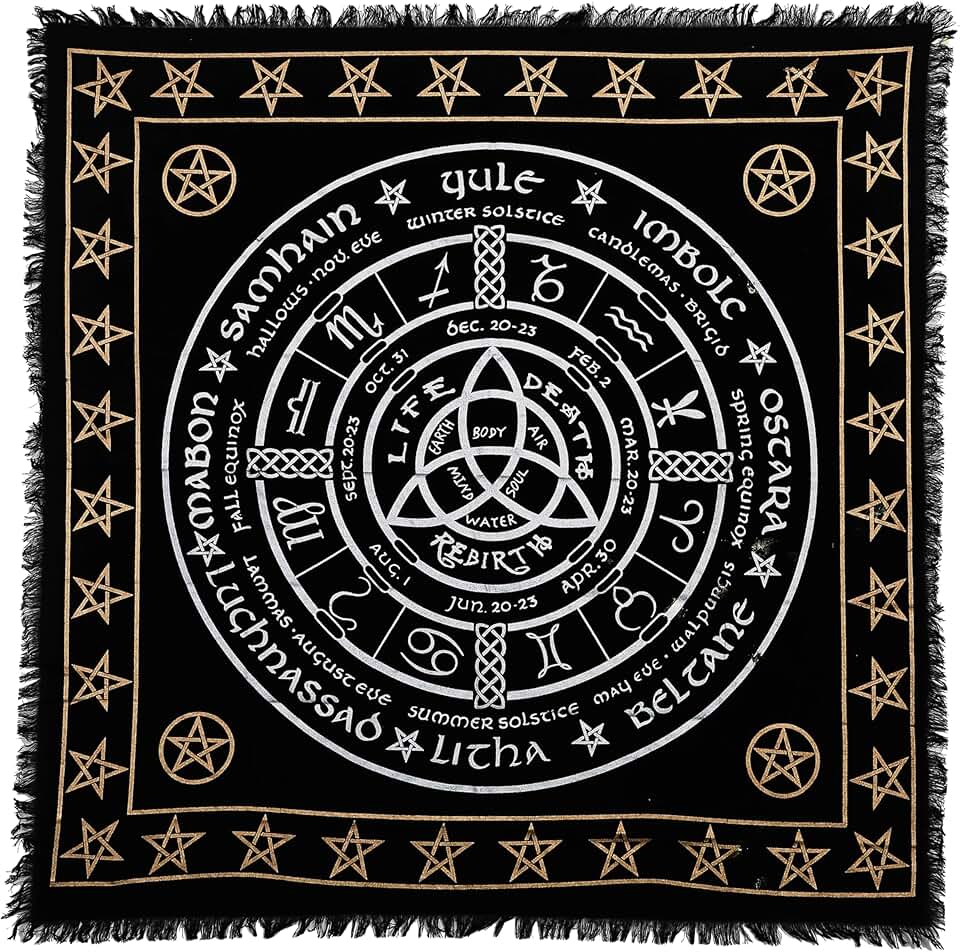
Indian Consigners Altar Cloth Pagan Wheel Witchcraft Alter Tarot Spread Top Cloth Wiccan Square Spiritual 36 by 36 Sacred Pagan Wheel
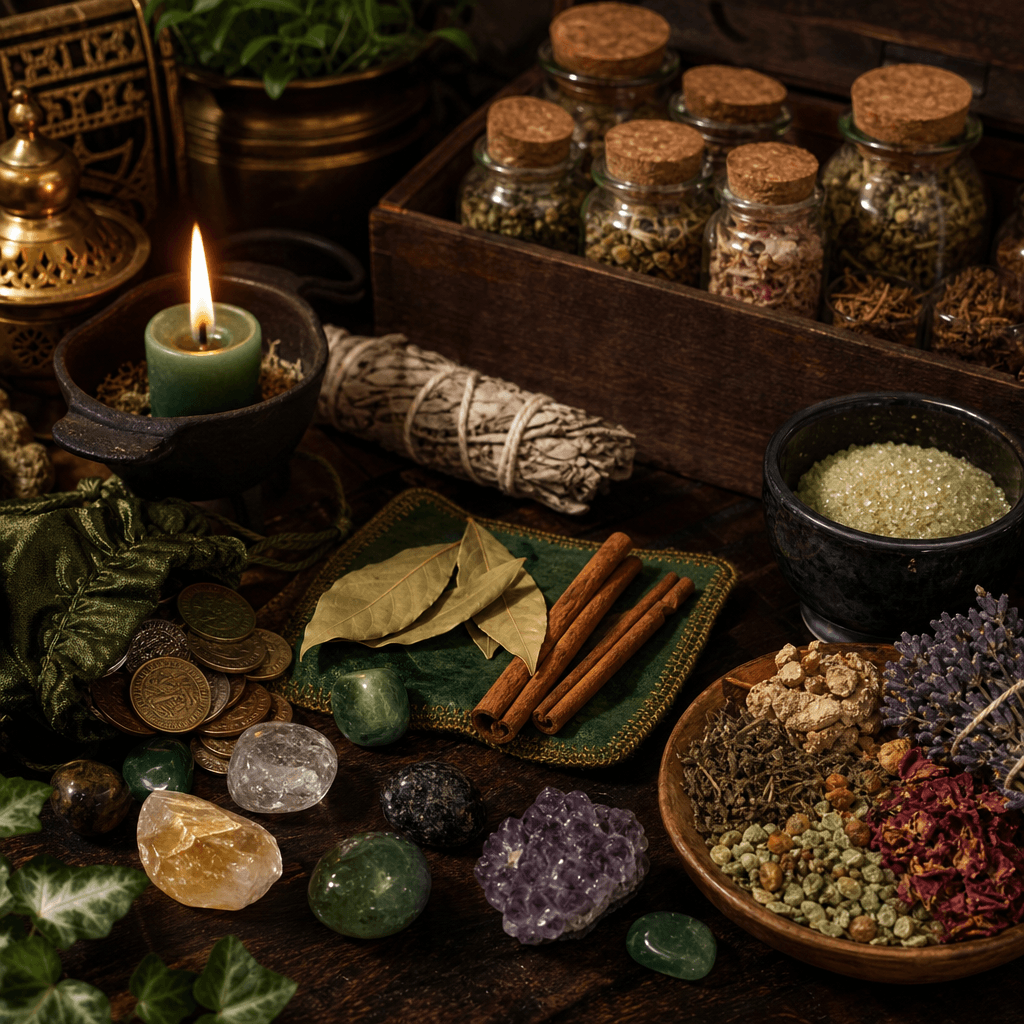
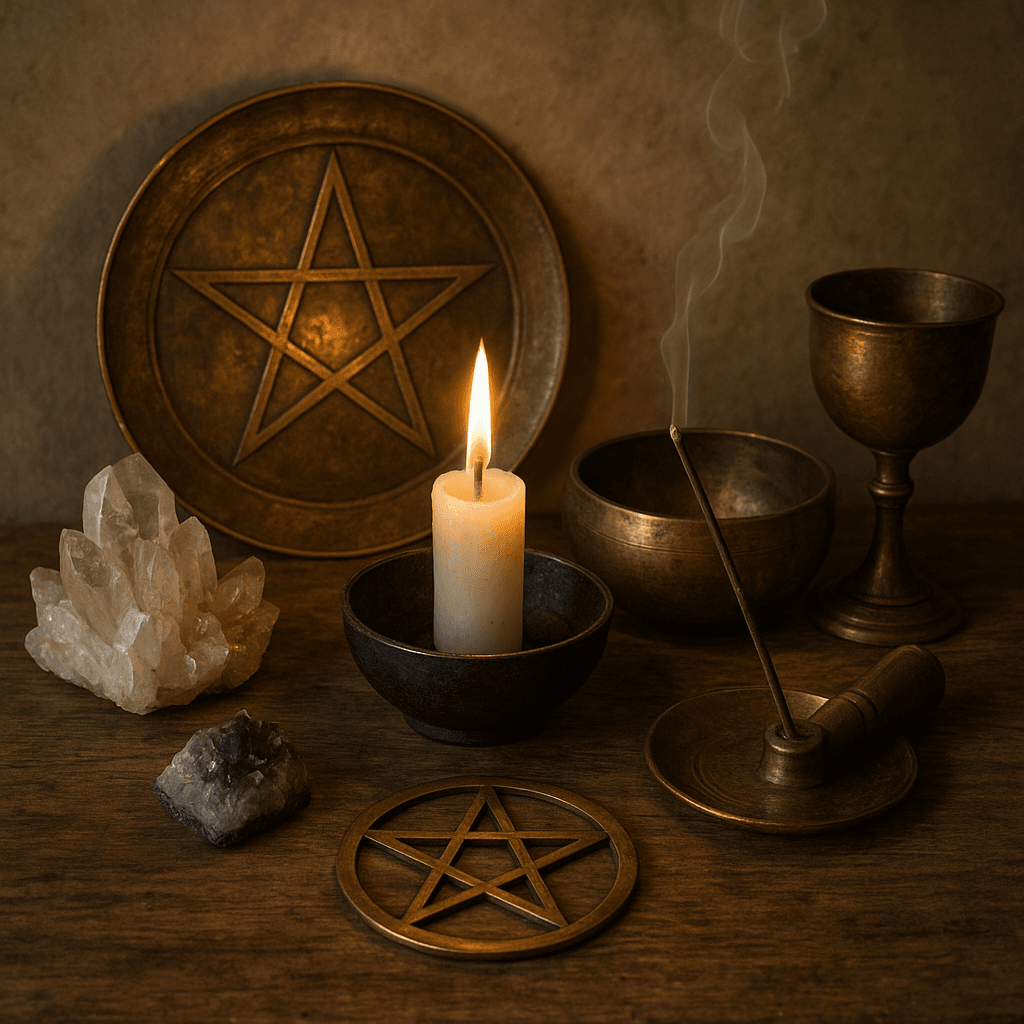
View Product →Building your first altar requires understanding which sacred tools provide the most value for beginners. Start with a cloth or surface covering to protect your chosen space and create a defined sacred area. This foundation supports everything else you place upon it. Add one or two candles to represent the fire element and provide illumination during your spiritual work. Choose a chalice, cup, or bowl to represent the water element and hold offerings or blessed water. Include a small bowl of salt to represent earth and provide protection during rituals. Select at least one crystal that resonates with your intentions, whether clear quartz for amplification, amethyst for spiritual connection, or rose quartz for heart-centered work.
Beyond these basics, traditional practitioners often include representations of the Goddess and God, whether through statues, images, or symbolic objects. A wand helps direct energy during spellwork and ritual, while an athame or ritual knife serves similar purposes in many traditions. Add a bell to mark transitions and call attention during ceremonies. Include a cauldron or offering bowl for mixing ingredients, burning petitions, or receiving gifts to deities. Keep incense and a censer nearby for purification and to engage your sense of smell during spiritual work.
Your personal connection to these tools matters more than their cost or origin. Choose items that speak to your spirit and support your practice. A handmade ceramic bowl works as well as an expensive chalice. A smooth stick from your local park serves as effectively as an ornate wand. Trust your instincts about which tools call to you. Your altar setup sacred tools should inspire you each time you approach your sacred space. Remember that you build your collection over time. Start with basics and add specialized items as your practice deepens and your needs become clearer.
Sacred Altar Arrangement Tips
The physical arrangement of your altar setup sacred tools directly impacts the energy and effectiveness of your spiritual practice. Position your altar on any flat surface that feels right to you. Your bedroom offers privacy and convenience for daily practice. A dresser top, nightstand, or dedicated table works perfectly. If space is limited, consider a wall-mounted shelf, serving tray, or even a windowsill. The key is consistency in location so your energy builds in that specific spot over time.
Follow elemental correspondences when arranging your tools. Place earth-related items like crystals, salt, and stones facing north. Position fire elements like candles and your athame facing south. Water representations such as your chalice and bowl of water face west. Air-associated tools like incense, feathers, and your wand face east. This traditional arrangement balances the energies of your space and creates harmony between the elements. Some practitioners prefer placing Goddess and God representations in the center, then arranging other tools around them according to elemental directions.
Consider the seasonal flow of your altar arrangement. Change decorative elements to reflect the wheel of the year. Add evergreen branches and holly berries during winter celebrations. Include fresh flowers and green leaves during spring festivals. Summer calls for bright colors and abundant plant life. Autumn welcomes harvest symbols like acorns, colored leaves, and small pumpkins. These seasonal touches keep your altar alive and connected to natural cycles.
Your altar cloth deserves special attention in your arrangement. Choose colors that match your current magical focus. White works for purification and new beginnings. Black provides protection and banishing energy. Green supports prosperity and growth magic. Red enhances passion and courage work. Blue brings peace and healing vibrations. Purple connects you with spiritual wisdom and psychic development. Change your cloth colors to align with specific spells, seasons, or personal needs. The cloth also protects your surface from candle wax, water spills, and heat damage during ritual work.
Beginner Altar Setup Instructions
Creating your first altar requires a methodical approach that builds confidence and establishes good practices from the beginning. Choose your location first. Your bedroom provides privacy and easy access for daily spiritual work. Select a flat surface at comfortable working height. Clean this space thoroughly, both physically and energetically. Wipe down the surface with a damp cloth, then pass sage smoke or sprinkle blessed water to remove lingering energies from previous uses.

Lay your altar cloth as the foundation for everything else. This protective barrier creates a defined sacred space and shields your furniture from damage. Choose a cloth that resonates with your current intentions or simply use white for its universal spiritual properties. Smooth out any wrinkles and ensure the cloth lies flat. This simple act marks the beginning of your sacred work and signals your intention to create something meaningful.
Add your essential tools one at a time with purposeful placement. Position your candles first, lighting them to welcome spiritual energy into your space. Place your chalice or bowl in its designated spot, filling it with fresh water if desired. Set your salt bowl in the earth position, your incense in the air position. Arrange your crystals where they feel most comfortable. Include any deity representations or meaningful personal objects that support your spiritual path.
Cleanse each item before placing it on your altar. Pass tools through sage smoke, sprinkle them with blessed water, or simply hold them while setting clear intentions for their use. This purification process removes any unwanted energies and dedicates each tool to your sacred work. Take your time with this step. The energy you invest in preparation directly influences the power of your future altar work.
Complete your setup with a dedication ceremony. Light your candles and incense. Hold your hands over your altar and speak your intentions aloud. Dedicate this space to your highest good and spiritual growth. Ask for blessing and protection over your sacred work. This formal consecration transforms your collection of objects into a true spiritual altar. Your altar setup sacred tools now carry the energy of your intention and dedication.
Traditional Altar Tool Meanings
Understanding the deeper meanings behind traditional altar setup sacred tools enhances your spiritual practice and helps you choose items that truly support your goals. Candles serve as more than simple light sources. They represent the fire element and carry specific magical properties through their colors. White candles provide purification and connection to higher spiritual realms. Black candles offer protection and help banish negative energies. Red candles enhance passion, courage, and strength magic. Green candles support prosperity, growth, and healing work. Blue candles bring peace, wisdom, and enhanced communication. Purple candles deepen psychic abilities and spiritual insight. Yellow candles increase mental clarity and communication skills.
The chalice holds profound symbolic meaning as the vessel of the divine feminine. It represents the water element, intuition, emotion, and the receptive aspects of spiritual practice. Your chalice receives offerings of wine, juice, or water during ritual work. It also serves as a focal point for meditation on abundance, emotional healing, and spiritual nourishment. Some practitioners keep their chalice empty except during active ritual work, while others maintain fresh water as a constant offering to their deities or as a tool for blessing and consecration.
Crystals bring the stable, grounding energy of the earth element to your altar space. Each stone carries unique vibrational properties that support specific types of magical work. Clear quartz amplifies the energy of other crystals and intentions. Amethyst enhances spiritual connection and psychic development. Rose quartz opens the heart to love and compassion. Black tourmaline provides powerful protection against negative energies. Citrine attracts abundance and prosperity. Moonstone connects you with lunar energy and feminine wisdom. Choose crystals based on your current needs and trust your intuitive attraction to specific stones.
The athame and wand serve as tools for directing magical energy and intention during spellwork and ritual. The athame, a double-edged ritual knife, represents the fire element and masculine energy. It cuts through illusion and directs focused will. The wand represents air element and serves similar functions through gentler means. Both tools help you channel and direct energy during circle casting, spell work, and ritual gestures. Neither tool needs to be expensive or elaborate to be effective. A simple wooden wand or basic black-handled knife serves these purposes perfectly. Your intention and practice matter more than the physical appearance of these altar setup sacred tools.
Wiccan Altar Essentials
Wiccan altar essentials embrace the principle that personal connection trumps rigid tradition every time. Your altar becomes sacred through regular use, gathering magical energy from daily meditations, weekly rituals, and intentional spiritual work. No universal rules dictate what belongs on your altar. The only requirement is that your chosen items inspire your spiritual practice and hold meaningful energy for your personal path. Your altar evolves as your practice grows, reflecting your changing needs, seasonal celebrations, and deepening understanding of your spiritual calling.
Start with minimal investment while you explore what truly resonates with your practice. A simple cloth, basic candle holder, plain white candle, ceramic bowl, table salt, stick incense, and single crystal provide everything necessary for meaningful spiritual work. These affordable basics support meditation, intention setting, simple spells, and seasonal celebrations. Avoid the temptation to purchase elaborate tools before you understand how you actually want to use them. Your practice develops through experience, not through accumulating expensive ritual items.
Build your collection thoughtfully as your understanding deepens. Add specialized tools that align with your specific path, whether you focus on deity work, elemental magic, seasonal celebrations, or personal growth practices. A nature-focused practitioner might emphasize stones, shells, feathers, and plants. Someone drawn to ceremonial magic might invest in formal wands, athames, and chalices. A kitchen witch might feature herbs, wooden spoons, and small cauldrons. Let your actual practice guide your choices rather than following someone else’s idea of what your altar should contain.
Your altar setup sacred tools reflect your individual spiritual approach and personal magical style. Some practitioners maintain elaborate permanent installations with multiple deity statues, extensive crystal collections, and specialized tools for different types of work. Others prefer simple, portable arrangements that adapt to changing needs and living situations. Both approaches are valid. Your altar serves your spiritual growth, not the expectations of others. Trust your instincts about what belongs in your sacred space and remember that the most powerful altar is the one you actually use regularly for spiritual practice and personal transformation.
The journey of creating and maintaining your altar setup sacred tools is deeply personal and endlessly rewarding. What will your altar look like six months from now as your practice deepens and your spiritual needs evolve?
Related Items:

Lilly Dupres
Owner & AuthorLilly Dupres, a lifelong practitioner of paganism, established Define Pagan to offer a clear definition of paganism and challenge misconceptions surrounding modern pagan lifestyles.