
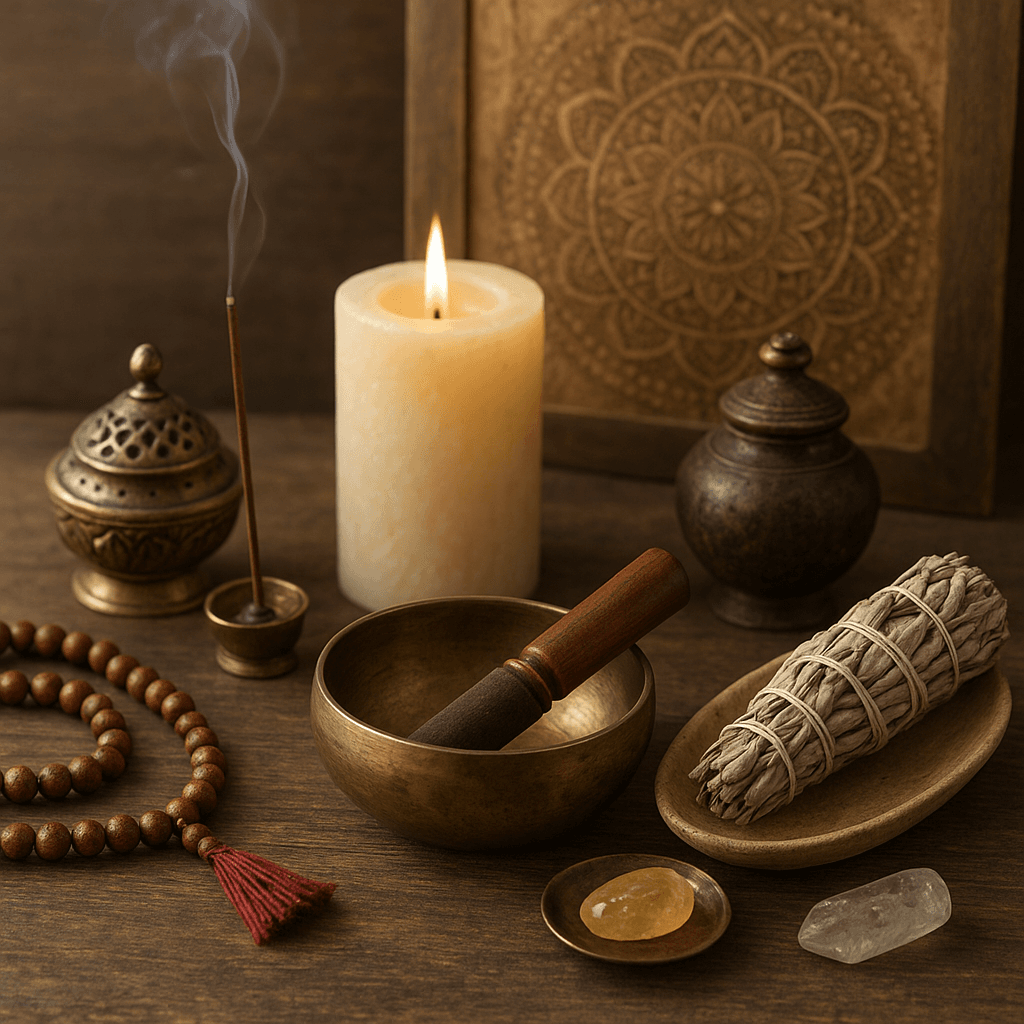
How do you create a sacred space at home for meditation and spiritual practice?
Sacred Space Setup Essentials

Indian Consigners Altar Cloth Pagan Wheel Witchcraft Alter Tarot Spread Top Cloth Wiccan Square Spiritual 18 by 18 Sacred Pagan Wheel
View ProductSacred Space Setup Essentials begin with selecting the right location and arranging it with intention. Creating your sacred space starts with choosing a quiet area that feels naturally peaceful to you. This space does not need to be large or elaborate. A bedroom corner, windowsill, small table, or shelf works perfectly for most practitioners. Outdoor locations like gardens and balconies offer wonderful alternatives when weather permits. Even a simple tabletop or meditation cushion creates an effective compact setup for those with limited room.
Physical cleaning comes first before any spiritual work begins. Remove clutter and dust from your chosen area. This physical act prepares both the space and your mind for deeper spiritual work. After cleaning, focus on clearing stagnant energy that might linger in the area. Burn sage or palo santo and allow the smoke to move through the space while you hold your intention for peace and clarity. Sound also clears energy effectively. Ring bells, play sacred music, or use singing bowls to shift the vibration. Essential oils provide another cleansing method. Apply sage or palo santo oil to your pulse points and breathe deeply while visualizing the space filling with positive energy.
Arranging meaningful items transforms your clean space into a sacred sanctuary. Add candles to create focus and bring gentle light to your practice. Crystals work excellently for energy alignment. Mahogany obsidian supports root chakra work while clear quartz amplifies your intentions. Natural elements like stones, shells, or small plants connect you with earth energy. Include spiritual symbols that resonate with your path, whether these are deity statues, pentacles, or personal talismans. Sacred texts, fresh flowers, and aromatherapy tools complete your basic setup. Keep arrangements simple to avoid overwhelming the energy of your space.
Setting clear intentions activates your sacred space energetically. Speak your intention aloud, such as This space serves as my sanctuary of peace or This altar connects me with divine wisdom. Bless your space with a ritual that feels authentic to your practice. This might include calling quarters, invoking deities, or simply stating your gratitude for this sacred area. Energize the space through smudging, sound work, or meditation. Regular maintenance keeps your sacred space vibrant and effective. Refresh items weekly, re-cleanse monthly, and trust your intuition about when changes feel needed. Your space should evolve as your spiritual path grows and develops.
Permanent vs. Portable Altar Tables: What Every Pagan Practitioner Should Know
Permanent altars work best when you have dedicated private space and household members who respect your spiritual practice. These setups use fixed furniture like tables, shelves, or dresser tops in bedrooms, living rooms, or other quiet areas of your home. Position permanent altars facing east or north walls when possible, or place them in the center of your ritual room for group workings. The main advantage of permanent altars lies in their constant availability for spontaneous spiritual work, daily devotions, and ongoing spell maintenance. You never need to spend time setting up or tearing down your workspace. Your tools remain charged and ready for immediate use. Permanent altars also serve as daily reminders of your spiritual commitment and help maintain consistent energy in your living space.
However, permanent altars require sufficient room and tolerance for visible spiritual items in your daily environment. They work best for solitary practitioners or those living in accepting households where pagan symbols cause no conflicts. Consider your privacy needs carefully before committing to a permanent setup. These altars naturally evolve with your spiritual path but need regular cleaning and refreshing to maintain their power. Dust accumulates on permanent displays, and energy grows stagnant without periodic attention. You must also consider guests who might visit your home and their comfort levels with visible spiritual items.
Portable altars solve many problems faced by practitioners in shared living situations, those who prefer privacy about their spiritual path, or people who travel frequently for work or pleasure. These flexible setups fit into boxes, backpacks, or small cases that store discretely when not in use. Portable altars work excellently for outdoor rituals, hiking trips, hotel rooms, or any location where you want to create temporary sacred space. You assemble your portable altar for specific rituals then pack everything away cleanly afterward. Essential portable altar tools include small containers for salt and water, travel candles or tea lights, a compass for directional orientation, and a few key crystals or spiritual symbols.
Storage becomes crucial with portable altars. Organize your tools in dedicated containers so setup proceeds quickly and smoothly. Many practitioners use decorative boxes, vintage suitcases, or specialized altar bags for storage. Keep your portable tools separate from daily items to maintain their spiritual energy and prevent loss or damage. Semi-permanent altar options balance flexibility with convenience. These setups go up and come down for each ritual but use the same location consistently. Travel altar kits work perfectly for practitioners who move frequently or spend extended periods away from home. Choose your altar style based on your living situation, privacy requirements, group size for rituals, and lifestyle demands. Portable options prioritize flexibility and discretion without cluttering your daily living areas with spiritual items.
Essential Tools for Sacred Space Creation

Sacred Space Setup Essentials focus on energy alignment, clear intention setting, and creating sensory comfort without overwhelming your workspace with excessive items. Start with crystals that support your specific spiritual goals and chakra work. Red jasper strengthens root chakra connection while smoky quartz provides excellent grounding energy during intense spiritual work. Store crystals in a dedicated pouch or small bowl to keep their energy focused and prevent them from scattering throughout your space. Amethyst enhances psychic abilities and meditation depth. Rose quartz brings loving energy to healing work. Citrine attracts abundance and prosperity. Black tourmaline offers protection during challenging spiritual work. Choose crystals that resonate with your current spiritual needs rather than collecting large quantities without purpose.
Cleansing tools remove negative energy and prepare your space for effective spiritual work. Sage bundles or loose sage leaves create purifying smoke when burned safely in a fireproof container. Palo santo offers a sweeter scent alternative to sage while providing similar energetic clearing properties. Incense sticks or cones work well in smaller spaces where heavy smoke feels overwhelming. Bells produce clear tones that shatter stagnant energy quickly and effectively. Sound bowls create sustained vibrations that cleanse large areas thoroughly. Essential oil diffusers provide gentle cleansing through aromatherapy without producing smoke that might trigger sensitivities or smoke detectors in apartment buildings.
Representational items anchor your intentions and connect you with specific energies during spiritual practice. Candles provide focus points for meditation and spellwork while bringing gentle light to evening rituals. Choose candle colors that match your magical intentions: white for purification, green for prosperity, red for passion, blue for peace. Fresh flowers and living plants bring vital life force energy into your sacred space. Change flowers regularly to maintain fresh energy. Essential oils and diffusers create aromatic atmospheres that support different types of spiritual work. Natural elements like salt, water, stones, and shells represent the four elements and ground your practice in earth energy.
Practical comfort items support longer meditation sessions and ritual work. Meditation cushions called zafu provide proper posture support during seated practice. Zabuton mats cushion your knees and ankles during floor sitting. Soft cloths create clean bases for altar arrangements and protect furniture from wax or oil spills. Prayer beads or malas help count repetitive chants or affirmations during spiritual practice. Journals record spiritual insights, dreams, and magical results for future reference. Spiritual symbols, sacred texts, and personal meaningful objects add individual touches that make your space unique to your path. Flower petals, herbs, and other natural materials offer seasonal variety and connection with natural cycles. Start simple to avoid cluttering your workspace. Store extra items in decorative boxes until needed. Cozy additions like textured fabrics, carefully chosen color palettes, or speakers for sacred music enhance immersion without overwhelming your senses.
Cleansing and Consecrating Your Ritual Area
Physical cleansing removes dust, clutter, and mundane energy that interferes with spiritual work. Start by removing all items from your chosen sacred space area. Dust surfaces thoroughly with appropriate cleaning products. Vacuum or sweep floors around your altar location. Remove unnecessary clutter that creates visual distraction during meditation and ritual work. Physical cleaning prepares both the space and your mind for deeper spiritual practices. This mundane task becomes part of your spiritual preparation when approached with proper intention and mindfulness.

The Pagan Book of Days: A Guide to the Festivals, Traditions, and Sacred Days of the Year
View ProductEnergetic cleansing follows physical cleaning and removes stagnant or negative vibrations that accumulate in all spaces over time. Light sage, palo santo, or incense and move the smoke throughout your sacred area while holding clear intentions for peace and spiritual clarity. Ring bells or use other sound instruments to break up dense energy patterns. Sound vibrations penetrate into corners and crevices that smoke might not reach effectively. Play sacred music or chanting during cleansing to maintain focused intention throughout the process. Apply essential oils like sage or palo santo to your pulse points and breathe deeply while visualizing protective light filling your space. These methods work quickly to shift the vibrational quality of any area.
Consecration establishes your space as specifically dedicated to spiritual purposes rather than mundane activities. Speak your intention aloud with clear authority, stating something like This space serves as my sanctuary of healing or This altar connects me with divine wisdom and protection. Your spoken words carry power and program the energy of your space for your intended purposes. Perform a blessing ritual that feels authentic to your spiritual path and personal beliefs. This might include calling upon deities, angels, or spirit guides for protection and assistance. Light a white candle while stating your consecration intention. Sprinkle blessed water or salt around the perimeter of your space to create energetic boundaries.
Regular maintenance keeps your sacred space energetically clear and spiritually powerful over time. Cleanse your area weekly or before important rituals to remove accumulated stagnant energy. Replace items like flowers, water, and food offerings regularly to maintain fresh energy. Trust your intuition about when your space needs attention. You might notice that meditation feels more difficult or that the area feels heavy or uncomfortable. These signs indicate the need for immediate cleansing and refreshing. Swap altar items seasonally to stay connected with natural cycles and prevent energetic stagnation. In pagan contexts, this preparation creates a bridge between physical and divine realms that supports effective magical and spiritual work. Maintain clear boundaries around your sacred space by asking others to respect its purpose and by keeping everyday items separate from your spiritual tools. Sacred Space Setup Essentials require ongoing attention and care rather than one-time arrangements.
Ready to transform your spiritual practice by creating the perfect sacred space for your unique path and living situation?
Related Items:

Lilly Dupres
Owner & AuthorLilly Dupres, a lifelong practitioner of paganism, established Define Pagan to offer a clear definition of paganism and challenge misconceptions surrounding modern pagan lifestyles.


