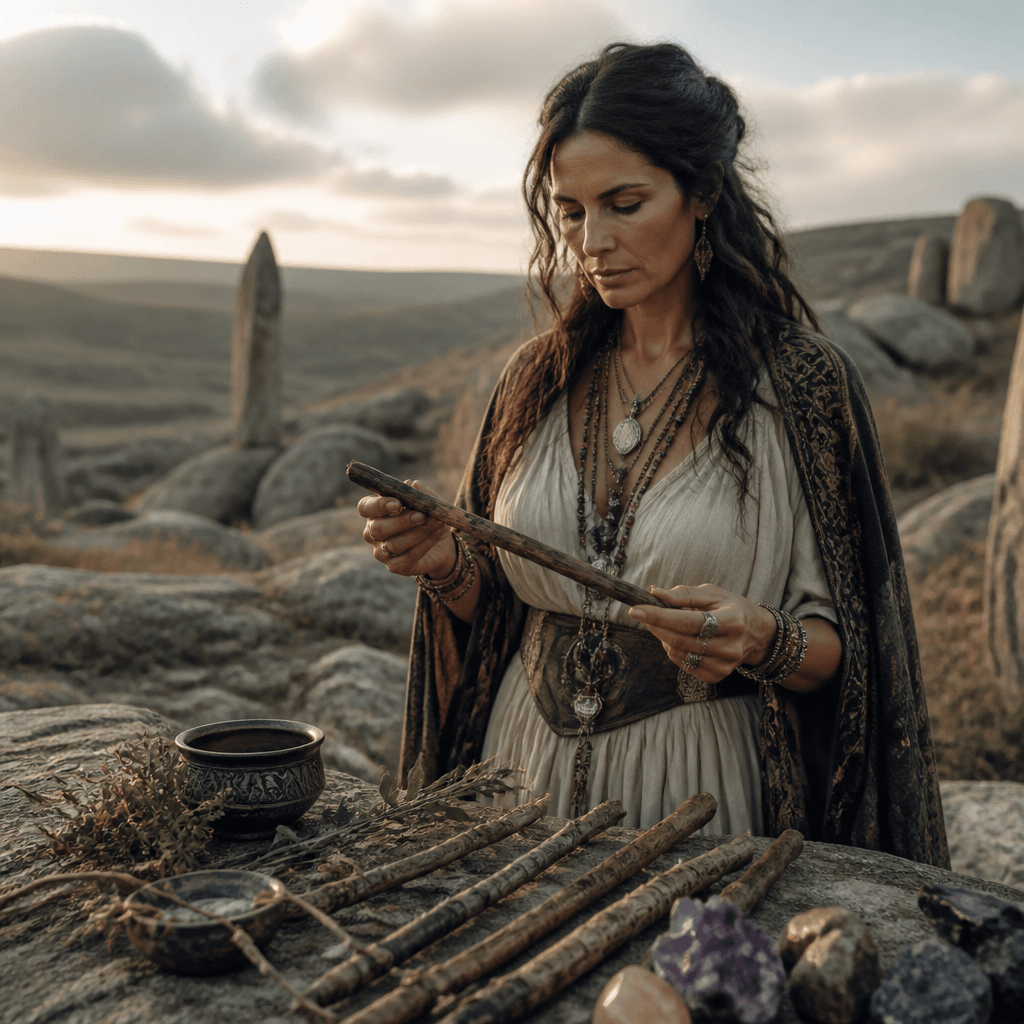
What are the most famous ancient goddess artifacts discovered around the world and where can you see them today?
Ancient Goddess Artifacts Worldwide span across continents and millennia, telling powerful stories of feminine divinity that once shaped entire civilizations. From the winged goddess depicted in the Burney Relief at the British Museum to the sacred statues of Inanna found in Mesopotamian temples, these artifacts reveal how our ancestors honored the sacred feminine through art, ritual, and devotion. The most renowned pieces include the Nippur Temple finds dedicated to Inanna at the Metropolitan Museum of Art, the comprehensive Egyptian goddess collection featuring Isis and Hathor artifacts, and the stunning Greek goddess statues showcased in Berlin’s Altes Museum. These treasures aren’t just museum pieces—they’re windows into ancient spiritual practices that recognized feminine power as essential to cosmic balance and human flourishing.
Mesopotamian Goddess Statues Discovery

The Divine Feminine in Ancient Europe: Goddesses, Sacred Women and the Origins of Western Culture
View ProductThe cradle of civilization gave us some of the most extraordinary examples of goddess worship through its intricate statuary and ceremonial objects. Mesopotamian goddess statues discovery reveals a sophisticated understanding of divine feminine energy, particularly through artifacts dedicated to Inanna, the fierce goddess who embodied both love and warfare. The Nippur Temple excavations unearthed numerous statues that show Inanna in various aspects—as the Queen of Heaven adorned with symbols of celestial power, and as the goddess of the underworld wielding authority over life and death. These statues weren’t merely decorative; they served as focal points for rituals where priestesses channeled the goddess’s energy to heal, prophesy, and guide their communities.
The famous Burney Relief, crafted during the Isin-Larsa period, depicts a winged goddess figure standing upon lions with owls at her sides, surrounded by symbols of divine authority including the rod and ring of justice. Archaeological evidence suggests these statues were regularly anointed with oils, dressed in fine fabrics, and presented with food offerings, indicating they were treated as living embodiments of the goddess rather than simple representations. The Tell Asmar Hoard, while primarily associated with the god Abu, includes several female figures that demonstrate the Early Dynastic artistic style and reveal how goddess imagery evolved alongside Mesopotamian society.
Modern practitioners and scholars studying these artifacts often note the striking similarity between ancient rituals and contemporary goddess worship practices, suggesting an unbroken thread of feminine spiritual wisdom. The intricate craftsmanship of these pieces—from the detailed feather work on wings to the carefully carved facial expressions—shows that ancient artisans understood their sacred responsibility in creating vessels for divine presence. Today, when you stand before these Mesopotamian treasures in museums worldwide, you’re witnessing humanity’s earliest attempts to capture the ineffable power of the sacred feminine in stone and clay.
Egyptian Goddess Burial Treasures
Egyptian goddess burial treasures represent perhaps the most elaborate and symbolically rich collection of feminine divine artifacts ever discovered, reflecting a culture where goddesses held supreme power over life, death, and rebirth. The upcoming Divine Egypt exhibition at the Metropolitan Museum of Art showcases over 200 artifacts that demonstrate how goddesses like Isis and Hathor weren’t peripheral figures but central to Egyptian cosmology and daily spiritual practice. Isis, known as the Great Mother and protector of the dead, appears in countless burial artifacts—from intricate amulets placed between mummy wrappings to massive sarcophagi adorned with her protective wings.
These treasures reveal that Egyptians believed feminine divine energy was essential for successful passage into the afterlife, with Isis serving as both mourner and resurrector, the one who could piece together the fragments of the soul and breathe new life into them. Hathor, the cow-headed goddess of love, music, and motherhood, appears frequently in burial contexts through her sacred sistrum rattles, mirror handles shaped like her face, and elaborate headdresses worn by her priestesses. Archaeological discoveries in tombs have revealed that both men and women were buried with goddess artifacts, indicating that reverence for feminine divinity transcended gender boundaries in ancient Egypt.
The craftsmanship of these burial treasures often surpasses that of artifacts dedicated to male deities—gold work so fine it seems to glow with inner light, lapis lazuli inlays that mirror the depth of night sky, and hieroglyphic inscriptions that read like love letters to the divine feminine. Many of these treasures include practical magical items: protective amulets shaped like the tyet knot of Isis, which symbolized her protection and was believed to safeguard the wearer’s blood and life force. The goddess Neith also features prominently in burial contexts, her weaving symbolism connecting the threads of fate and the fabric of existence itself. What makes Egyptian goddess burial treasures particularly powerful is their integration of beauty and function—these weren’t just pretty objects but carefully crafted magical tools designed to harness and direct feminine divine energy for protection, transformation, and spiritual empowerment.
Greek Goddess Temple Relics

Greek goddess temple relics showcase a sophisticated theological understanding where feminine divinity was celebrated through magnificent artistic expression and elaborate ritual practice. The recent exhibition at Berlin’s Altes Museum, titled Goddesses and Consorts: Women in Ancient Myth, featured life-size statues and intricate vase paintings that reveal how deeply goddess worship was woven into Greek society. Aphrodite, the goddess of love and beauty, appears in temple relics not as a shallow symbol of physical attraction but as a powerful force of creation and cosmic harmony, her statues often depicting her rising from sea foam or surrounded by doves and roses.
Temple excavations across Greece have revealed that her sanctuaries included healing pools, gardens of sacred plants, and workshop spaces where priestesses created love talismans and fertility charms for devotees. Artemis, the virgin huntress and protector of women, left behind temple relics that speak to her role as guardian of the wild feminine—silver arrows, hunting implements, and small animal figurines that were offered by women seeking her protection during childbirth or her blessing for independence from male control. The famous Temple of Artemis at Ephesus, one of the Seven Wonders of the Ancient World, housed countless relics including the many-breasted statue of the goddess that emphasized her role as the great nourisher and protector of all living things.
Archaeological evidence shows that Greek goddess temples weren’t just places of worship but centers of feminine education, healing, and empowerment where women gathered to learn herbalism, midwifery, and sacred arts. Athena’s temple relics reveal her complexity as both warrior and wisdom keeper—owl figurines representing her connection to hidden knowledge, olive branches symbolizing peace and prosperity, and weapons that were blessed by her priestesses for protection rather than aggression. The pottery and vase paintings found in temple contexts often depict goddess rituals in vivid detail: women dancing in ecstatic celebration, priestesses conducting healing ceremonies, and communities gathering to honor the seasonal cycles through feminine divine energy. Many Greek goddess temple relics show evidence of continuous use over centuries, with layers of offerings, repairs, and additions that demonstrate how goddess worship adapted and evolved while maintaining its essential character and power throughout changing times.
Neolithic Goddess Figurines Archaeological Discoveries
Neolithic goddess figurines archaeological discoveries represent humanity’s earliest artistic attempts to honor and connect with feminine divine energy, predating organized religion by thousands of years. The famous Venus of Willendorf and similar figurines found across Europe, Asia, and the Americas reveal a prehistoric understanding that feminine power was central to survival, fertility, and spiritual well-being. These small but powerful artifacts, carved from stone, bone, and clay by our ancient ancestors, emphasize feminine attributes associated with life-giving and nurturing—full breasts, wide hips, and prominent vulvas that celebrate the sacred nature of women’s reproductive capacity.
Archaeological evidence suggests these figurines weren’t created as mere fertility charms but as sophisticated spiritual tools used in rituals that honored the Great Mother, the primordial feminine force from which all life emerged. The consistent appearance of similar figurines across vast geographical distances indicates that reverence for feminine divinity was a universal human experience rather than a localized cultural phenomenon. Many Neolithic sites have revealed that these goddess figurines were carefully placed in homes, buried in grain storage areas, or positioned at community gathering spaces, suggesting they served as protective talismans and focal points for collective ritual practice.

The artistry of these ancient pieces often surpasses what we might expect from prehistoric cultures—intricate patterns carved into clay, sophisticated understanding of human anatomy, and symbolic elements that connect earth, body, and spirit in unified expressions of sacred feminine power. Recent archaeological discoveries have revealed that some Neolithic goddess figurines were created with removable parts or were designed to be dressed in tiny textile garments, indicating that they were treated as living representations of the goddess rather than static art objects. The fact that many figurines show signs of extensive handling, wear, and repair suggests they were beloved ritual objects passed down through generations of women who understood their spiritual significance.
Carbon dating of Neolithic goddess figurines has pushed back the timeline of organized goddess worship by thousands of years, proving that honoring feminine divinity wasn’t a later development in human spiritual evolution but one of our species’ oldest and most enduring practices. These prehistoric treasures remind us that long before patriarchal religions dominated human consciousness, our ancestors recognized that feminine energy was the source of creation, transformation, and renewal—a wisdom that modern practitioners are working to reclaim and integrate into contemporary spiritual practice.
Ancient Goddess Artifacts Worldwide continue to reveal new secrets about humanity’s relationship with feminine divine energy, challenging us to reconsider what we think we know about prehistoric and ancient spiritual practices. Which of these powerful goddess artifacts calls to your spirit, and how might their ancient wisdom transform your own understanding of sacred feminine power?
Related Items:

Lilly Dupres
Owner & AuthorLilly Dupres, a lifelong practitioner of paganism, established Define Pagan to offer a clear definition of paganism and challenge misconceptions surrounding modern pagan lifestyles.