

What are the different types of goddesses worshipped in Wiccan practice and their meanings?
Goddess Worship in Wicca encompasses a rich diversity of divine feminine archetypes drawn from cultures spanning the globe. Practitioners work with goddesses representing every aspect of existence, from Celtic Brigid who governs creativity and smithcraft to Egyptian Isis who embodies magical protection and motherhood. The practice centers on revering the divine feminine as nature’s central force, with each goddess offering unique gifts and wisdom to those who seek her guidance.
Ancient Goddess Traditions Origins
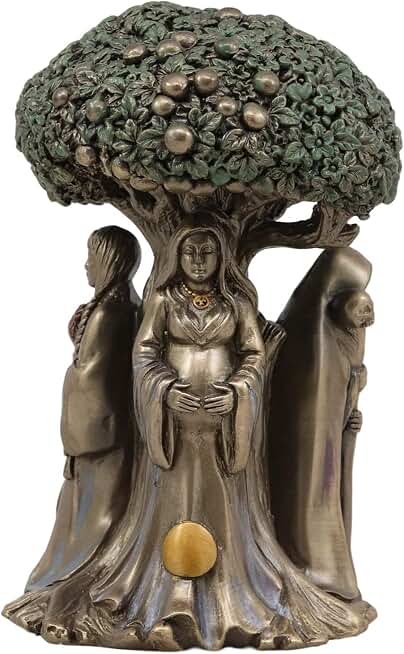
Ebros Celtic Sacred Moon Triple Goddess Mother Maiden Crone Under Tree of Life Statue 5.5" Tall Hecate Brigid Wicca Wiccan Holy Trinity Decor Sculpture Decorative Figurine Cosmic Celestial Gods
View Product →Goddess Worship in Wicca traces its roots back thousands of years to ancient polytheistic traditions that honored the divine feminine across multiple cultures. These early civilizations recognized goddesses as powerful forces governing nature, fertility, the moon, and life’s endless cycles. Greek traditions gave us Demeter, the grain mother who taught humanity agriculture, while Celtic peoples revered Danu as the primordial mother of their gods. Egyptian culture honored Isis as the great mother and magician, Roman society celebrated Ceres as their harvest goddess, and Norse traditions recognized Freya as the goddess of love and war. Hindu practices contributed fierce goddesses like Kali, who embodies destruction and renewal.
Each culture developed specific rituals to honor these divine feminine forces, including elaborate altars decorated with seasonal offerings, dramatic retellings of mythic stories, structured prayers that invoked divine favor, and sympathetic magical practices designed to create harmony between worshippers and their chosen deities. The famous Eleusinian Mysteries of ancient Greece provide excellent examples of how goddess worship functioned in antiquity, with initiates participating in secret ceremonies that promised spiritual transformation through connection with Demeter and Persephone.
Modern Wicca synthesizes these ancient wisdom traditions with contemporary spiritual innovations, treating goddesses as living archetypes rather than historical artifacts. This approach allows practitioners to work with goddess energies while adapting ancient practices to fit modern lifestyles. The synthesis creates a dynamic spiritual system where ancient wisdom meets contemporary needs, offering practitioners access to divine feminine wisdom that spans cultures and centuries.
Modern Wiccan Goddess Practices
Contemporary Goddess Worship in Wicca emphasizes direct personal relationship with divine feminine energies through carefully crafted ritual practices. Modern practitioners create sacred experiences by first identifying specific goddess attributes they wish to work with, then designing rituals that invoke those particular energies. Circle casting forms the foundation of most goddess rituals, with practitioners calling upon the four elements of earth, air, fire, and water to create sacred space. Within these consecrated circles, Wiccans invoke specific goddesses through prayers, chants, meditation, and offerings tailored to each deity’s preferences.
Seasonal celebrations align goddess worship with nature’s rhythms, honoring maiden energies during spring festivals, mother energies during summer celebrations, and crone wisdom during autumn and winter observances. Daily practices extend beyond formal rituals to include herbalism work where practitioners grow plants sacred to their chosen goddesses, gardening activities that honor earth mother energies, and spellwork that channels goddess power for healing, protection, and manifestation.
Moon phase worship plays a central role in modern goddess practice, with practitioners timing their rituals to align with lunar cycles. New moon rituals focus on maiden energies and new beginnings, full moon ceremonies celebrate mother energies and manifestation, while waning moon rituals honor crone wisdom and release work. Many practitioners maintain permanent goddess altars in their homes, decorating these sacred spaces with statues, crystals, candles, flowers, and seasonal offerings that represent their chosen deities.
The practice treats all acts of love, pleasure, and nature connection as sacred expressions of goddess energy, encouraging practitioners to find the divine feminine in everyday experiences. This approach transforms ordinary activities like cooking, gardening, creating art, and spending time in nature into opportunities for goddess worship and spiritual connection.
Triple Goddess Maiden Crone

Divine Feminine Reiki: The Complete Master's Guide To Unlocking Sacred Feminine Energy, The Strength Of The Warrior Goddess & Awakening The Womb Of Light
View Product →The Triple Goddess archetype forms the cornerstone of Goddess Worship in Wicca, representing the complete cycle of feminine divine power through three interconnected aspects. The Maiden embodies youth, independence, new beginnings, and creative potential, appearing during the waxing moon and spring season. Practitioners work with Maiden energies when starting new projects, exploring personal freedom, developing creative skills, and embracing fresh opportunities. Popular Maiden goddesses include Greek Artemis, who represents wild independence and the hunt, Celtic Rhiannon, who symbolizes freedom and sovereignty, and Norse Freya in her aspect as young goddess of beauty and self-determination.
The Mother aspect represents fertility, nurturing, manifestation, and life-giving force, corresponding to the full moon and summer season. Mother goddess work focuses on creation, abundance, protection of family and community, and bringing projects to fruition. Practitioners invoke Mother energies through goddesses like Greek Demeter and Roman Ceres for abundance and sustenance, Egyptian Isis for magical protection and motherhood, and Celtic Danu for wisdom and creative power.
The Crone embodies wisdom gained through experience, transformation through endings, death and rebirth mysteries, and prophetic insight, aligned with the waning moon and winter season. Crone work involves shadow exploration, wisdom seeking, releasing what no longer serves, and preparing for renewal. Powerful Crone goddesses include Greek Hecate, mistress of magic and crossroads, Celtic Morrigan, who governs fate and transformation, Hindu Kali, who destroys illusion to reveal truth, and Slavic Baba Yaga, the wise woman of the forest.
This triple structure governs the eight Sabbat celebrations throughout the year, with Maiden energies celebrated at spring festivals like Ostara, Mother energies honored at summer celebrations like Litha, and Crone wisdom recognized at autumn and winter festivals like Samhain and Yule. The Triple Goddess teaches that all phases of existence hold sacred value, encouraging practitioners to embrace every stage of their personal growth and transformation journey.
Sacred Feminine Divine Energy
Sacred feminine divine energy represents the fundamental creative force at the heart of Goddess Worship in Wicca, manifesting through the dynamic interplay of creation, sustenance, and transformation. This energy flows through nature’s cycles, appearing in seasonal changes, moon phases, plant growth patterns, and the rhythms of birth, life, death, and rebirth that govern all existence. Practitioners learn to recognize and work with this energy as a living force that responds to intention, respect, and authentic relationship.
The sacred feminine operates differently from masculine divine energy, emphasizing receptivity alongside action, intuition combined with logic, and cyclical patterns rather than linear progression. Working with sacred feminine energy requires practitioners to attune themselves to natural rhythms rather than fighting against them, learning to flow with life’s changes rather than demanding permanent stability.

Ritual practices for connecting with sacred feminine energy include meditation during specific moon phases, seasonal altar decorations that honor nature’s current expression, and ceremonies that celebrate women’s life transitions and mysteries. Many practitioners develop personal relationships with sacred feminine energy by spending regular time in nature, practicing receptive meditation techniques, working with goddess oracle cards or other divination systems, and maintaining dream journals to track messages received during sleep.
The energy responds particularly well to offerings of beauty, creativity, and heartfelt devotion, encouraging practitioners to approach their spiritual work with genuine love and reverence. Shadow work forms an important aspect of sacred feminine practice, as practitioners learn to embrace all aspects of the feminine divine including her fierce and destructive expressions. This complete acceptance allows for deeper transformation and more authentic spiritual growth.
Sacred feminine energy supports manifestation work by teaching practitioners to plant seeds of intention and nurture them through patient cultivation rather than forcing immediate results. The practice affirms that all aspects of feminine experience hold sacred value, from maiden exploration through mother creativity to crone wisdom, empowering practitioners to honor their complete life journey.
Sacred feminine divine energy offers endless opportunities for spiritual growth and personal empowerment through Goddess Worship in Wicca. Which goddess archetype calls to your heart, and how will you begin building a relationship with her sacred energy?
Related Items:

Lilly Dupres
Owner & AuthorLilly Dupres, a lifelong practitioner of paganism, established Define Pagan to offer a clear definition of paganism and challenge misconceptions surrounding modern pagan lifestyles.


