

How do you decorate a home altar for different seasons and holidays throughout the year?
Creating a Seasonal Altar Decorating Guide

Wheel of The Year Wood Sign 12",Sabbats Pagan Sign Witches Runes Wood Engraved Board Wiccan Holidays,Wicca Calendar,Yule Altar, Celestial Sign,Vintage Handmade Tabletop Ornament Decor
View ProductCreating a Seasonal Altar Decorating Guide begins with selecting a dedicated sacred space in your home where you feel connected to the divine energies. Your altar serves as the focal point for honoring the Wheel of the Year festivals and the eight sabbats that mark the eternal cycle of seasons. Start by gathering seasonal symbols such as colored candles that represent each time of year, fresh flowers or dried herbs that align with natural growth patterns, crystals that resonate with seasonal energies, and deity representations that speak to your personal practice.
The foundation of effective seasonal altar decoration lies in understanding elemental representations and placing them thoughtfully around your sacred space. Position air elements like incense or feathers in the east, earth elements such as salt or stones in the north, fire elements including candles in the south, and water elements like bowls or shells in the west to create energetic balance. Your seasonal displays should rotate throughout the year to reflect the natural themes of rebirth during spring, abundance in summer, harvest during autumn, and introspection in winter. This rotation connects you deeply with the natural world and helps you attune your spiritual practice to the rhythms of the earth. Natural items form the heart of your seasonal decorations, shifting from spring seeds and flowers to summer fruits, autumn grains and leaves, then winter evergreens and preserved elements. Each season brings unique opportunities to refresh your altar with items you find during nature walks, seasonal harvests from your garden, or meaningful objects that represent the current phase of the yearly cycle.
Spring Equinox Altar Elements
Transform your sacred space for Ostara by focusing on the powerful themes of fertility, rebirth, and perfect balance between light and darkness that define the spring equinox. Your color palette should emphasize soft pastel tones including fresh green for new growth, gentle pink for emerging love and compassion, and pure white for cleansing and new beginnings. These colors create an atmosphere of hope and renewal that perfectly captures the essence of spring’s arrival.
Incorporate traditional symbols of fertility and new life such as painted eggs that represent potential and birth, small rabbit or hare figurines that symbolize abundance and quick growth, delicate butterfly decorations that speak to transformation, and actual seeds or seedlings that you plan to plant in your garden. Fresh spring flowers become the centerpiece of your Ostara altar, so gather daffodils for rebirth, tulips for declaration of love, sweet violets for modesty and faithfulness, four-leaf clover for luck, fragrant honeysuckle for devoted affection, bright forsythia for anticipation, or cheerful daisies for innocence and purity.
Your incense and herb selections should reflect the gentle, awakening energies of spring through lavender for peace and purification, chamomile for comfort and healing, fresh mint for protection and renewal, rose petals for love and beauty, jasmine for spiritual love and prophetic dreams, or sandalwood for meditation and spiritual connection. Create meaningful offerings that honor the season by placing fresh eggs, local honey, homemade bread, bright lemon slices, or a mixture of crushed eggshells and sea salt on your altar.
Select crystals that amplify spring energies including rose quartz for unconditional love, green aventurine for growth and opportunity, citrine for joy and manifestation, carnelian for courage and motivation, amethyst for spiritual wisdom, or clear quartz for amplifying your intentions. Complete your Ostara altar with symbolic items such as a wooden Wheel of the Year disc, small bird nests, ceramic chicks, ram symbols for Aries season, or a special marble egg that you return to each spring, arranging everything with river rocks for grounding, colorful feathers for air element connection, and perhaps a decorative flower-shaped incense holder that brings all elements together in harmony.
Summer Solstice Sacred Decorations
Honor Litha by celebrating the sun at its peak power and the longest day of the year when solar energy reaches maximum strength on your altar. Your decorating approach should emphasize bold sun symbols including golden discs, sunburst designs, solar wheels, or images of the sun in its full glory to capture the intense energy of this sabbat. Incorporate abundant gold accents throughout your display using golden candles, metallic altar cloths, brass ritual tools, or gold-painted decorations that reflect the sun’s radiance back into your sacred space.

Dryad Design Greenman Cernunnos Candle Holder - Wood Finish Altar Decor
View ProductChoose vibrant and bright colors that mirror the intensity of summer including brilliant yellow for solar power and intellectual energy, fiery orange for enthusiasm and creativity, bold red for passion and strength, and bright white for purity and divine light. These colors should dominate your altar to create an atmosphere of vitality, power, and celebration. Fill your space with the abundant flowers of summer, selecting varieties that bloom at solstice time such as sunflowers that follow the sun’s path, bright marigolds for protection, cheerful daisies for happiness, fragrant roses for love, or wild herbs and flowers that you gather from meadows and gardens.
Add movement and celebration to your altar with colorful ribbons that flutter in the breeze, small maypole figures that represent fertility and community, or flowing fabric that captures the dynamic energy of summer festivals. Your incense selection should feature frankincense for its solar associations and ability to enhance spiritual connection, or choose bright, energizing scents that reflect the season’s vitality. Include deity representations that honor solar energies, particularly symbols or images of sun gods and goddesses such as Sol, Ra, Helios, Brigid, or Lugh who govern light, healing, inspiration, and abundance.
Balance these powerful fire energies by including representations of all four elements, placing air symbols in the east with feathers or bells, earth symbols in the north with stones or salt, fire symbols in the south with multiple candles, and water symbols in the west with a bowl of blessed water or seashells. Use your altar’s rotation and arrangement to emphasize the themes of peak light, maximum warmth, abundance, and celebration that make Litha such a powerful time for manifestation, healing, and spiritual growth.
Autumn Harvest Altar Arrangements
Create your autumn altar to honor both Mabon and Lughnasadh by embracing the rich themes of balance, gratitude, and abundant harvest that define this sacred season. Your color scheme should reflect the warmth and richness of autumn using deep orange for creativity and success, golden yellow for wisdom and prosperity, rich red for passion and strength, and warm brown for grounding and stability. These warm colors create an atmosphere of comfort, abundance, and preparation that perfectly captures the essence of harvest time.
Gather natural elements that represent the season’s bounty including colorful fallen leaves in various shapes and sizes, small gourds and pumpkins that symbolize abundance, acorns for potential and strength, pinecones for fertility and life cycles, fresh apples for wisdom and love, sheaves of grain for prosperity, homemade bread for gratitude, and seasonal fruits such as grapes, pears, or pomegranates that represent the earth’s generous gifts. Traditional autumn symbols add depth to your display through small cauldrons for transformation and rebirth, chalices filled with grape juice or wine for celebration, decorative pumpkins in various sizes, hedgehog figurines for protection and intuition, antler pieces for connection to the wild, owl decorations for wisdom and mystery, or crow feathers and imagery for magic and prophecy.
Create a forest atmosphere by incorporating freshly-cut apple slices arranged in patterns, branches from local trees, small logs or pieces of wood, or collections of nuts and seeds that represent the coming winter’s stored energy. Your incense selection should evoke the deep, earthy scents of autumn through sage for wisdom and cleansing, cedar for purification and protection, apple wood for love and healing, or custom blends that combine cinnamon, clove, and orange peel for warmth and prosperity.
Arrange offering foods that celebrate the harvest including fresh bread, local apples, seasonal vegetables, nuts, dried fruits, or preserves that you made during the abundant summer months. Include crystals that support balance and grounding such as carnelian for courage, citrine for abundance, smoky quartz for protection, tiger’s eye for clarity, or garnet for strength and devotion. Your autumn altar should reflect both the joy of successful harvest and the wisdom of preparing for winter’s introspective time, creating a sacred space that honors the earth’s generosity while acknowledging the natural cycle of growth, harvest, rest, and renewal.
Winter Solstice Seasonal Setup
Design your Yule altar to welcome the returning light during the longest night of the year and honor the profound spiritual significance of the winter solstice. Your foundation should feature evergreen branches from pine, fir, spruce, or cedar trees that represent eternal life and continuity through the darkest season, arranged as garlands, wreaths, or simple sprigs placed throughout your sacred space. Incorporate classic winter symbols including pinecones for fertility and hidden potential, bright red holly berries for protection and good fortune, elegant poinsettias for celebration and renewal, traditional Yule logs for the returning sun, and stag or antler symbols that honor the Horned God and the wild masculine energy of winter.
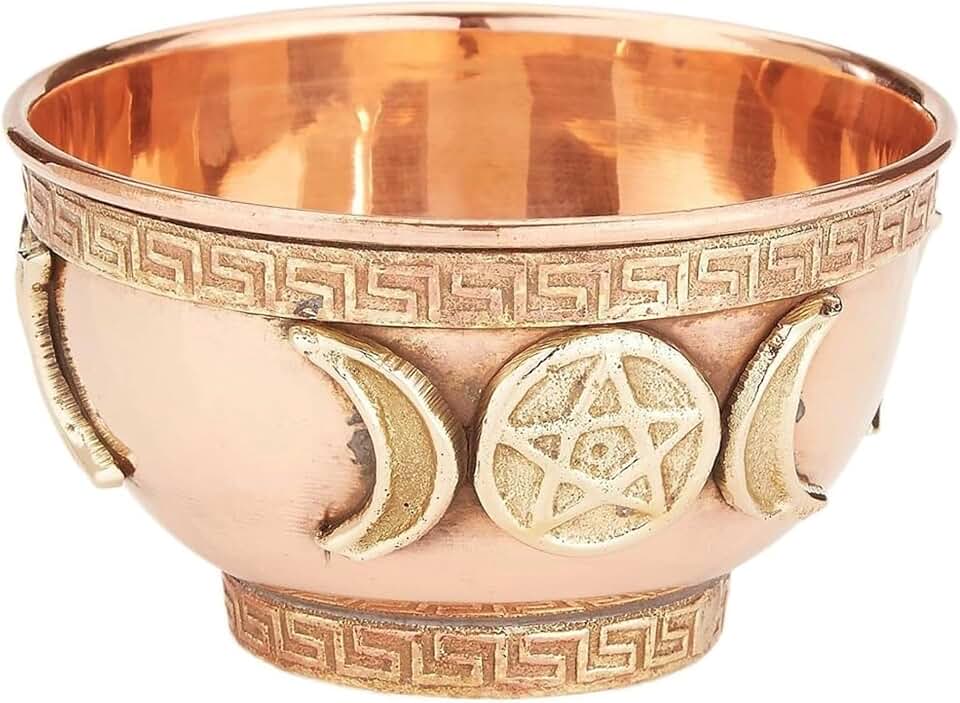
New Age Imports, Inc. bo, Triple Moon Pentacle Copper 3", for Altar, Ritual use, Incense Burner, smudging, Decoration, offering Bowl, 3" Diameter 2" Height
View ProductYour color palette should embrace the rich, warm tones that provide comfort during cold months including deep red for life force and passion, forest green for eternal life and growth, shimmering gold for solar return and prosperity, pure white for snow and purity, and gleaming silver for moon energy and reflection. These colors create an atmosphere of warmth, hope, and celebration that counters the darkness outside.
Select incense and aromatic elements that fill your space with the deep, resinous scents of winter including pine or fir for purification and healing, frankincense for spiritual connection and blessing, myrrh for protection and wisdom, cedar for cleansing and strength, warming cinnamon for prosperity and energy, protective clove for banishing negativity, or dried orange peel for joy and solar energy. Create meaningful Yule offerings that honor the season and provide sustenance during the cold months including homemade gingerbread for warmth and prosperity, dried fruits that preserve summer’s sweetness, various nuts for fertility and abundance, mulled wine or cider for celebration and warmth, or traditional clove-studded oranges that combine solar symbols with protective spices.
Add traditional Yule decorations that connect you to ancient winter celebrations through small bells that ring in the returning light, tomte or gnome figurines that represent home protection, wooden pentagrams for spiritual protection, candles in winter colors, or handmade ornaments that carry personal meaning. Arrange crystals that support introspection and spiritual growth including clear quartz for amplification, amethyst for spiritual wisdom, garnet for strength and devotion, or hematite for grounding and protection.
Your winter altar should serve as a beacon of warmth and hope during the darkest time of year, reminding you that even in the depths of winter, the light begins to return and the wheel continues its eternal turn toward spring’s rebirth. This Seasonal Altar Decorating Guide provides the foundation for creating meaningful sacred spaces that connect you deeply with the natural rhythms of the earth throughout the entire year, but which seasonal altar speaks most strongly to your spiritual practice right now?
Related Items:

Lilly Dupres
Owner & AuthorLilly Dupres, a lifelong practitioner of paganism, established Define Pagan to offer a clear definition of paganism and challenge misconceptions surrounding modern pagan lifestyles.


