Why isn’t lavender working for my herbal magic practice?

Citrus Magic Closet Solid Air Freshener, Fresh Lavender, 8 Ounce, Pack of 3
View Product →Most people who ask this question already put in the effort. You make offerings. You set intentions. You plan your workings. The problem isn’t your commitment. It’s your range.
Lavender works well for what it does, but one herb cannot handle every magical task. A complete herbal toolkit supports cleansing, protection, attraction, banishing, blessing, and daily maintenance work. You don’t need to own every herb that exists. You need a small, reliable set that covers the jobs you do most often.
Why Lavender Isn’t Enough for Complete Herbal Practice
Building a functional herbal practice means moving beyond single-herb solutions. Each herb carries specific properties and energetic signatures. Lavender excels at calming, blessing, and sleep work, but it cannot cleanse a space like rosemary or draw success like bay leaves.
A serious toolkit addresses multiple functions. You need herbs for different types of work: some for speed and momentum, others for protection and boundaries, others for attraction and blessing. Trying to force one herb into every role weakens your results.
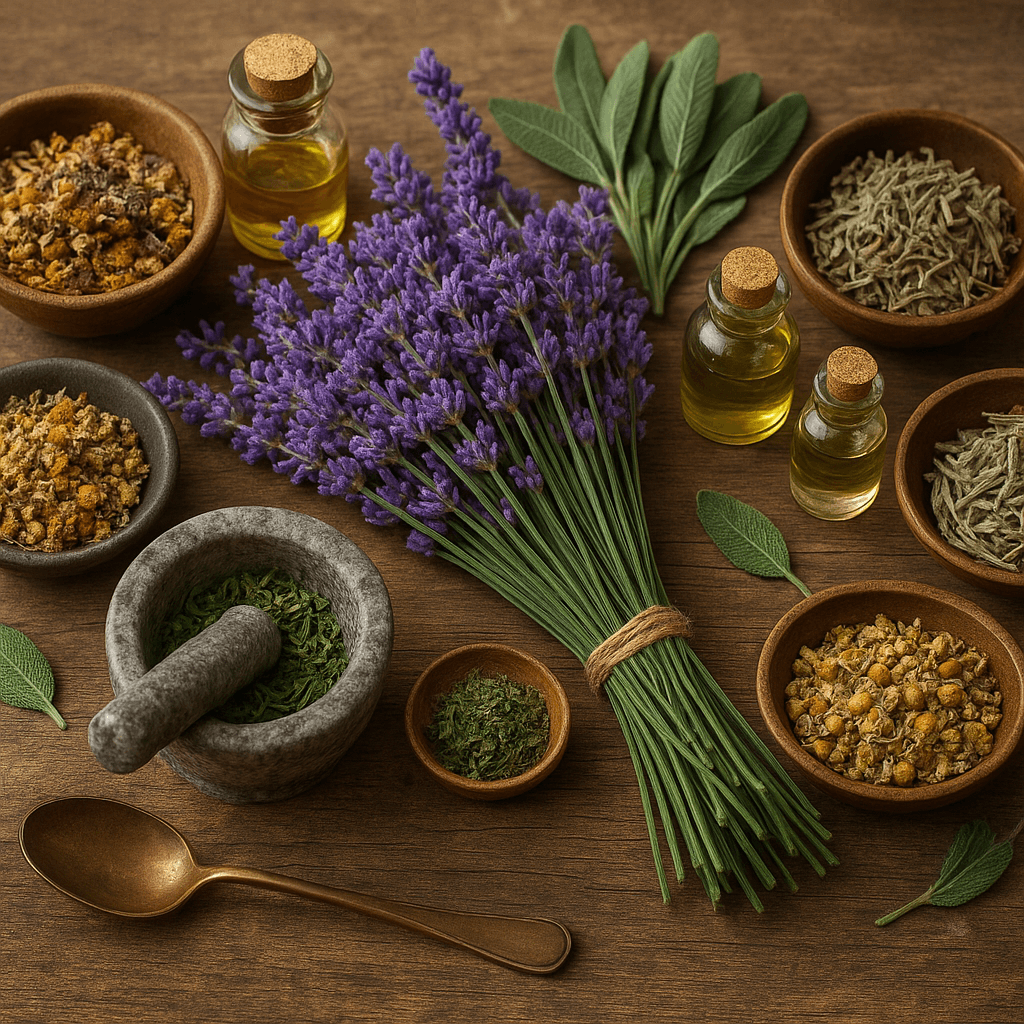
The most effective starter toolkit includes seven core herbs with broad applications. Rosemary handles cleansing and protection. Bay leaves carry petitions and success workings. Mugwort supports divination and dream work. Mint creates movement and clarity. Cinnamon adds speed and drive. Chamomile brings peace and eases tension. Lavender provides calm, blessing, and sleep support.
Salt belongs in every kit because it creates practical boundaries, makes cleansing washes, and anchors threshold work. This isn’t abstract purification. Salt physically marks boundaries and stabilizes energy in containers and ritual spaces.
Building Your Complete Herbal Toolkit Beyond Basic Lavender
Start with function, not novelty. Choose one or two herbs for each task you perform regularly. If you work with love magic, keep rose petals or hibiscus. For money workings, stock basil, cinnamon, or bay. Protection work calls for rosemary, rue where appropriate, and black salt if it fits your practice.
Quality matters more than quantity. Whole herbs outperform tired, dusty material that sits in jars for years. Buy leaves, flowers, and roots that still carry strong scent, bright color, and intact structure. Fresh material holds more energy and produces better results.
Form affects function. Use whole leaves for bowls and packets. Choose petals for charm work. Select roots for long-term petitions. Pick seeds for fast, focused workings. Dry herbs should smell fragrant and look vibrant, not gray and flat.
Source from suppliers who understand magical use. Decorative herbs often lack the harvest integrity and storage care that ritual work requires. Pay attention to where your herbs come from and how they’ve been handled.
The Workhorse Herbs That Make Lavender Isn’t Enough a Complete System
Three herbs form the backbone of any practical toolkit: rosemary, bay, and mint. These move through multiple types of work without becoming complicated or fussy.

Citrus Magic Solid Air Fresheners, Lavender Escape, 8 Ounce, Pack of 3
View Product →Rosemary cleans spaces, provides protection, and sharpens mental focus before rituals. You’ll use it more than almost any other herb because it prepares the energetic foundation for other work.
Bay leaves carry written petitions effectively and have centuries of use in victory and success magic. They hold intentions well and burn cleanly in cauldrons or fire-safe bowls.
Mint creates movement when spells feel stalled. It supports communication work and adds momentum to workings that need a push forward. Keep dried mint on hand for times when energy feels stuck.
These three herbs get used repeatedly because they solve common problems that arise in regular practice. They’re not filler material. They’re the herbs you reach for most often.
Understanding Plant Forms: When Lavender Isn’t Enough Means Choosing Flowers vs Roots
Different plant parts carry different energies and work best for specific purposes. Flowers support blessing, attraction, and gentle workings. Roots hold slower, denser, longer-lasting energy.
Chamomile and lavender flowers settle chaotic atmospheres quickly. They belong in workings that need softness and peace. Rose petals draw love and beauty. These flower energies move fast and work well for immediate shifts.
Ginger and cinnamon bring heat and momentum to sluggish situations. Marshmallow root supports soothing and drawing work that needs to develop over time. Root energy builds slowly and lasts longer than flower energy.
Many beginners treat all herbs the same way. They put together root jars and flower sachets without considering how form affects function. A root working and a flower working operate differently. Understanding this difference strengthens your results.
How to Build Your Toolkit Without Wasting Money on Random Herbs
Build around your actual practice, not an idealized version of what you think you should be doing. If you work magic weekly, start with eight to ten herbs and learn them thoroughly. If you focus on lunar cycles, include herbs that support dream work, intuition, and cleansing.
Seasonal practitioners need materials that match the rites they repeat every year. Don’t buy herbs for workings you’ve never done and probably won’t try anytime soon.
Buy reasonable amounts. Herbs lose potency over time. Purchase what you can use before the material fades and loses its scent. Refill the herbs that disappear fastest from regular use. Skip the ones that looked useful but never get touched.
Track which herbs you actually reach for during workings. The herbs that run out first are the ones earning their place in your kit. The ones that sit untouched for months probably don’t match your real practice style.
Making Lavender Isn’t Enough Work: Quality Sources and Practical Storage

Source from suppliers who understand ritual use rather than just decorative purposes. Pagan suppliers typically stock herbs with better harvest integrity and storage practices. They know the difference between material that looks good and material that works well in actual practice.
Store herbs in airtight containers away from direct light and heat. Glass jars with tight lids work better than plastic bags or decorative containers that don’t seal properly. Label everything with names and dates so you know what you have and when you got it.
Check your herbs regularly. Fresh material should maintain strong scent and good color. When herbs start looking gray or smelling flat, replace them. Weak herbs produce weak results.
Keep your most-used herbs in easy reach. Store occasional-use herbs separately so your workspace doesn’t get cluttered with materials you rarely touch.
The right herbal toolkit makes consistent magical practice much easier. Quality herbs from suppliers who understand ritual use give you the foundation for effective workings that go far beyond what lavender alone provides.
A reputable pagan supplier stocks the dependable herbs, containers, salts, and accessories that keep your practice clean and effective. You’ll find everything needed for a serious beginner toolkit at https://www.definepagan.com/pagan-shop/.

Lilly Dupres
Owner & AuthorLilly Dupres, a lifelong practitioner of paganism, established Define Pagan to offer a clear definition of paganism and challenge misconceptions surrounding modern pagan lifestyles.