What Materials Are Best for Altar Cloths and What Is Their Spiritual Significance in Different Religious Traditions?
The altar cloth material significance extends far beyond simple decoration, serving as a bridge between the physical and spiritual realms. Linen stands as the gold standard for altar cloths across Christian traditions, prescribed by ecclesiastical law and rooted in profound theological symbolism. This sacred fabric connects directly to Christ’s burial shroud, while its white color represents purity, resurrection, and the righteousness of the faithful. Hemp also holds acceptable status within traditional Christian practice, sharing similar spiritual properties and practical benefits. Beyond Christianity, various religious traditions honor different materials for their sacred textiles. Silk carries significance in Buddhist ceremonies, representing the delicate nature of enlightenment and the interconnectedness of all beings. Cotton finds favor in many earth-based spiritual practices due to its natural origin and breathability. Wool holds special meaning in Celtic and Norse traditions, symbolizing protection and the connection between human craft and animal sacrifice. Each material choice reflects deeper theological understanding and practical considerations for sacred work.
Sacred Fabric Types and Meanings

Grevosea Tarot Altar Cloth, Square Divination Mat, Polyester Witchcraft Witch Altar Tablecloth for Tarot Cards Crystals Rituals Spiritual Supplies Black 19.3x19.3in/49x49 cm
View Product →The spiritual significance of different fabrics reveals layers of meaning that inform religious practice across cultures. Linen’s journey from plant to sacred cloth mirrors the spiritual transformation sought in worship. The flax plant grows from earth, dies through harvesting, and resurrects as pure white fabric through processing. This transformation parallels the Christian narrative of death and rebirth. The fiber’s strength increases when wet, symbolizing faith that grows stronger under pressure. Linen’s ability to absorb moisture while maintaining integrity makes it ideal for protecting sacred surfaces from spilled sacramental wine or oils. Hemp shares these qualities while adding its own symbolism of resilience and adaptability. Both materials resist mold and bacteria naturally, making them suitable for sacred spaces where cleanliness holds spiritual importance.
Silk brings different energy to altar work, with its lustrous surface reflecting light and creating visual beauty that lifts the spirit. The silkworm’s metamorphosis from caterpillar to moth parallels spiritual transformation. Cotton represents simplicity and humility, growing close to the earth and requiring minimal processing. Its accessibility makes it suitable for everyday altar work and personal devotional practices. Wool carries the energy of animal sacrifice and protection, with its lanolin content naturally repelling water and providing insulation. Each fabric type brings specific energetic qualities that enhance different aspects of spiritual practice.
Traditional vs Modern Material Choices
Traditional altar cloth materials evolved through centuries of practical experience and spiritual insight. Ancient churches used expensive materials including gold thread, silver cloth, and precious stone inlays to honor the divine. These materials reflected the community’s dedication to offering their finest possessions in worship. Pope Sylvester I changed this approach by mandating linen or hemp specifically to address practical concerns about absorbing spilled sacramental wine. This shift prioritized function alongside symbolism, creating standards that serve both spiritual and practical needs. The traditional three-cloth system provides multiple layers of protection, with each cloth serving specific functions in the liturgical process.
Modern synthetic materials like polyester offer convenience through easy care and durability. These fabrics resist wrinkles, dry quickly, and maintain color well under regular washing. Yet synthetic materials present significant drawbacks for sacred use. Polyester melts rather than burns, creating safety hazards near candles. Its petroleum origin connects it to industrial rather than natural processes. Synthetic fabrics also trap moisture rather than absorbing it, making them less effective at protecting altar surfaces. The altar cloth material significance becomes compromised when convenience takes precedence over spiritual appropriateness. Many contemporary religious communities balance tradition with practicality by using high-quality linen for major celebrations while accepting cotton blends for everyday use. This approach honors both the sacred requirements and the real-world needs of active religious communities.
Hand-Crafted vs Mass-Produced Altar Cloths

Hand-crafted altar linens carry the energy and intention of their creators, adding personal devotion to their sacred function. Artisans who specialize in ecclesiastical textiles understand the specific requirements for altar work, including proper sizing, finishing techniques, and appropriate decorative elements. The process of creating altar cloths by hand becomes a form of prayer and devotion in itself. Each stitch represents time spent in contemplation of the sacred purpose the cloth will serve. Hand-embroidered details add beauty while maintaining the functional requirements of the fabric. Traditional techniques like hemstitching, drawn work, and delicate cross-stitch create altar cloths that become heirlooms passed through generations. The individual attention given to hand-crafted pieces ensures proper fabric selection, with artisans choosing linen of appropriate weight and weave for specific altar requirements. Custom sizing allows for perfect fit on unique altar shapes and dimensions. The higher cost of hand-crafted linens reflects not only the time invested but also the specialized skills required for ecclesiastical needlework.
Mass-produced altar cloths serve communities with limited budgets while maintaining basic liturgical requirements. Factory production allows for consistent quality and standardized sizing that fits most altar dimensions. Machine embroidery provides decorative elements at lower costs than hand work. However, mass production often compromises fabric quality to meet price points. Lower-grade linen blends or cotton substitutes reduce the spiritual and practical benefits of pure linen. The impersonal nature of factory production removes the devotional aspect that hand-crafted pieces carry. Mass-produced cloths often feature generic designs rather than symbols specific to particular denominations or communities.
Choosing Materials for Spiritual Practice
Your choice of altar cloth material directly impacts both the practical function and spiritual energy of your sacred space. Pure linen remains the preferred choice for serious liturgical use due to its superior absorption properties and symbolic significance. The investment in quality linen pays dividends through durability and enhanced spiritual connection. When selecting linen, choose fabric with appropriate weight for your intended use. Heavier linens work better for altars that see frequent use, while lighter weights suit occasional ceremonial purposes. The weave pattern affects both appearance and function, with tighter weaves providing better liquid absorption. Natural fiber content matters more than thread count for altar cloths. Pure linen outperforms linen blends in both absorption and longevity.
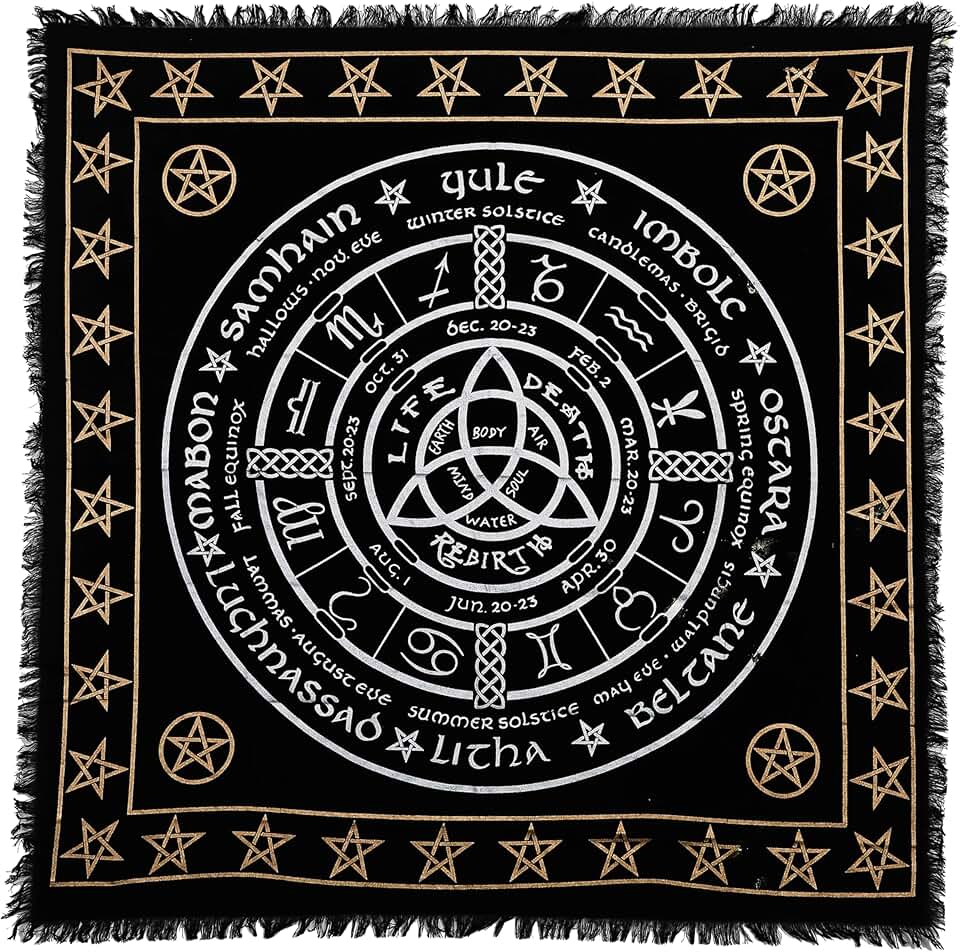
Indian Consigners Altar Cloth Pagan Wheel Witchcraft Alter Tarot Spread Top Cloth Wiccan Square Spiritual 36 by 36 Sacred Pagan Wheel
View Product →Cotton presents an acceptable alternative for communities unable to afford linen, particularly when choosing high-quality, tightly woven varieties. Avoid synthetic blends that compromise the natural fiber benefits while adding unnecessary chemicals to your sacred space. Color choice extends beyond the traditional white to include liturgical colors appropriate to different seasons and celebrations. Red altar cloths honor martyrs and the Holy Spirit, while purple marks penitential seasons. Green represents ordinary time and growth in faith. Gold celebrates major feasts and divine glory. The altar cloth material significance influences every aspect of your worship experience, from practical considerations like spill protection to spiritual elements like symbolic meaning. Quality materials honor both the sacred purpose they serve and the community that gathers around them. Care requirements should factor into your material choice, as proper maintenance preserves both appearance and function over time.
The altar cloth material significance shapes every element of sacred worship, connecting ancient wisdom with contemporary practice. How will you honor this tradition while meeting the unique needs of your spiritual community?
Related Items:

Lilly Dupres
Owner & AuthorLilly Dupres, a lifelong practitioner of paganism, established Define Pagan to offer a clear definition of paganism and challenge misconceptions surrounding modern pagan lifestyles.