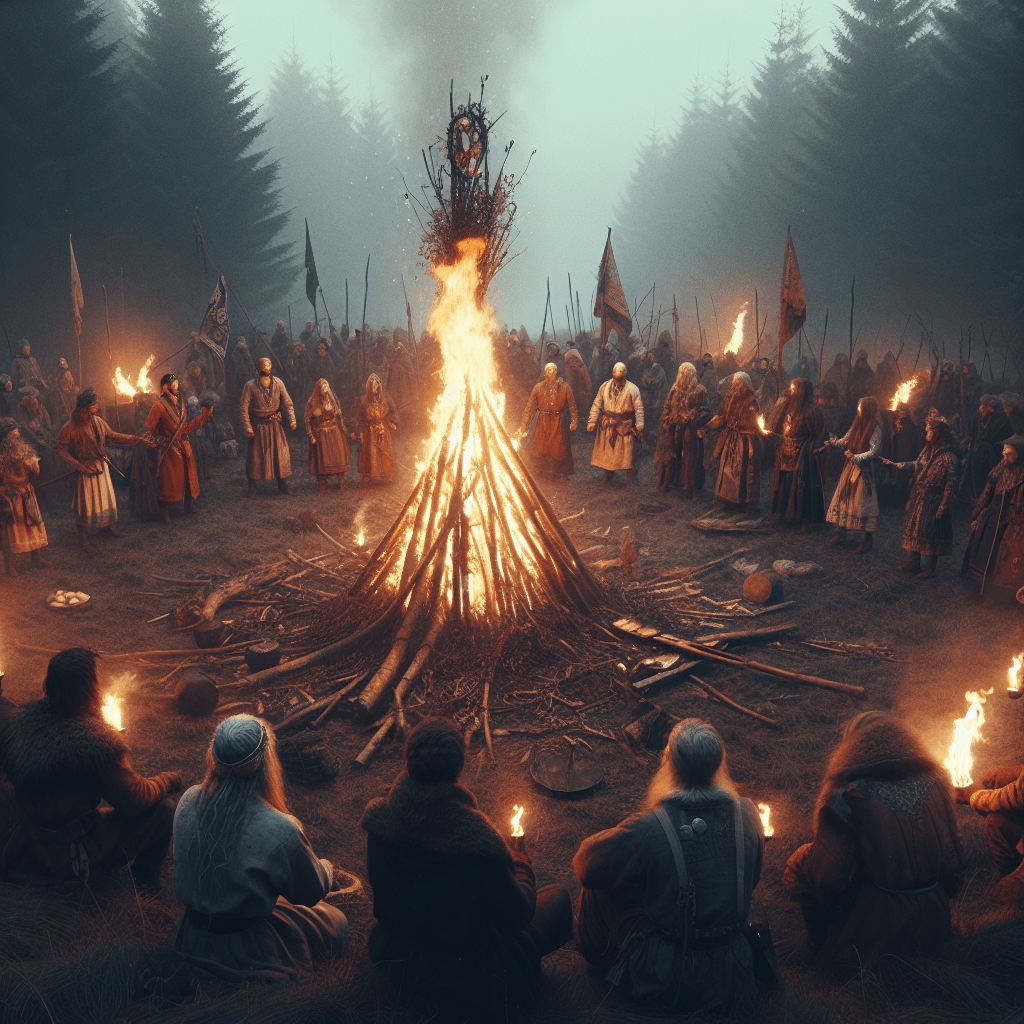
What do the different symbols and elements mean in traditional Slavic fire rituals and ceremonies?
Understanding Slavic Fire Ritual Meanings reveals a complex spiritual system where fire served as the ultimate connector between earthly existence and divine realms. In ancient Slavic traditions, fire symbolized creation, purification, protection, transformation, and acted as a sacred bridge between physical and spiritual worlds. This powerful element was embodied by numerous deities including Svarog, the celestial smith who forged the world with divine sparks, and his son Svarozhich, representing living fire created through wood friction. Other fire deities like Semargl served as fiery guardians, while Rarog appeared as whirlwind fire spirits, Znich maintained eternal flames of remembrance, and Kupala governed summer solstice rites that merged fire with water elements. Each ritual element carried profound meaning, from the living fire kindled by friction from wood to represent alive sacred fire extracted from living trees, to the grand bonfires lit on hilltops using ash, birch, or oakwood to symbolize prosperity and ward off malevolent spirits. Burning wheels spun on birch pegs with tarred straw spokes rolled downhill to ignite ceremonial fires, representing new homes, fertility, and spiritual renewal. Sacred herbs like wormwood, thyme, mugwort, and mullein were burned for cleansing purposes, while wreaths thrown into flames carried prayers for health, fertility, and love. The eternal flames maintained in sanctuaries for Znich and Svarozhich served as focal points for sacrifice, remembrance, and divine connection, with their ashes later spread on fields for fertility and protection.
Ancient Purification Through Sacred Flames
The purification aspects of Slavic Fire Ritual Meanings centered around fire’s unique ability to consume impurities while simultaneously bridging the gap between earthly and spiritual realms. Living fire, known as Svarozhich, was considered the most potent form of sacred flame for healing purposes, created exclusively through the friction of wood against dry grass or birch bark. This sacred fire was believed to contain the living essence of trees and held extraordinary power to drive out illness and negative energies. Sick individuals were carefully carried through these flames while specific healing spells were recited at hearths, with the fire acting as a divine physician that could extract disease from both body and spirit. Livestock were similarly driven through sacred flames to protect them from disease and ensure their health throughout the coming seasons. The act of jumping over bonfires, whether performed individually or in pairs, served as a fundamental purification ritual that cleansed both body and soul while symbolically burning away past troubles and negative experiences.
This practice was enhanced by the burning of specific herbs, with wormwood being particularly valued for its protective properties when girded around the waist, while mullein and other sacred plants created protective smoke that shielded participants from malevolent spirits during the vulnerable purification process. The purification process was not merely physical but represented a complete spiritual transformation, allowing individuals to emerge from the ritual renewed, protected, and aligned with divine forces. Communities would gather in sacred spaces, often clearings or riverbanks, where the combination of fire, smoke, herbs, and collective intention created powerful fields of purification that extended beyond individual participants to encompass entire villages and their surrounding lands.
Kupala Night: Slavic Summer Solstice Traditions
Kupala Night represents one of the most significant celebrations in Slavic Fire Ritual Meanings, occurring during the summer solstice when fire energy reached its peak power and merged harmoniously with water elements to create perfect spiritual balance. This sacred night honored Kupala, the deity who governed the magical union of fire representing love and family bonds with water symbolizing health and purification. The celebration began with the creation of holy fires kindled exclusively through friction methods, ensuring the flames possessed the living energy necessary for the night’s powerful rituals. Burning wheels, crafted with careful attention to traditional methods using ash hubs, birch pegs, and tarred straw spokes, were set ablaze and rolled down hillsides to ignite massive communal bonfires that could be seen for miles around. These spectacular wheel ceremonies symbolized the sun’s journey across the sky and the continuous cycle of renewal that governs all life.
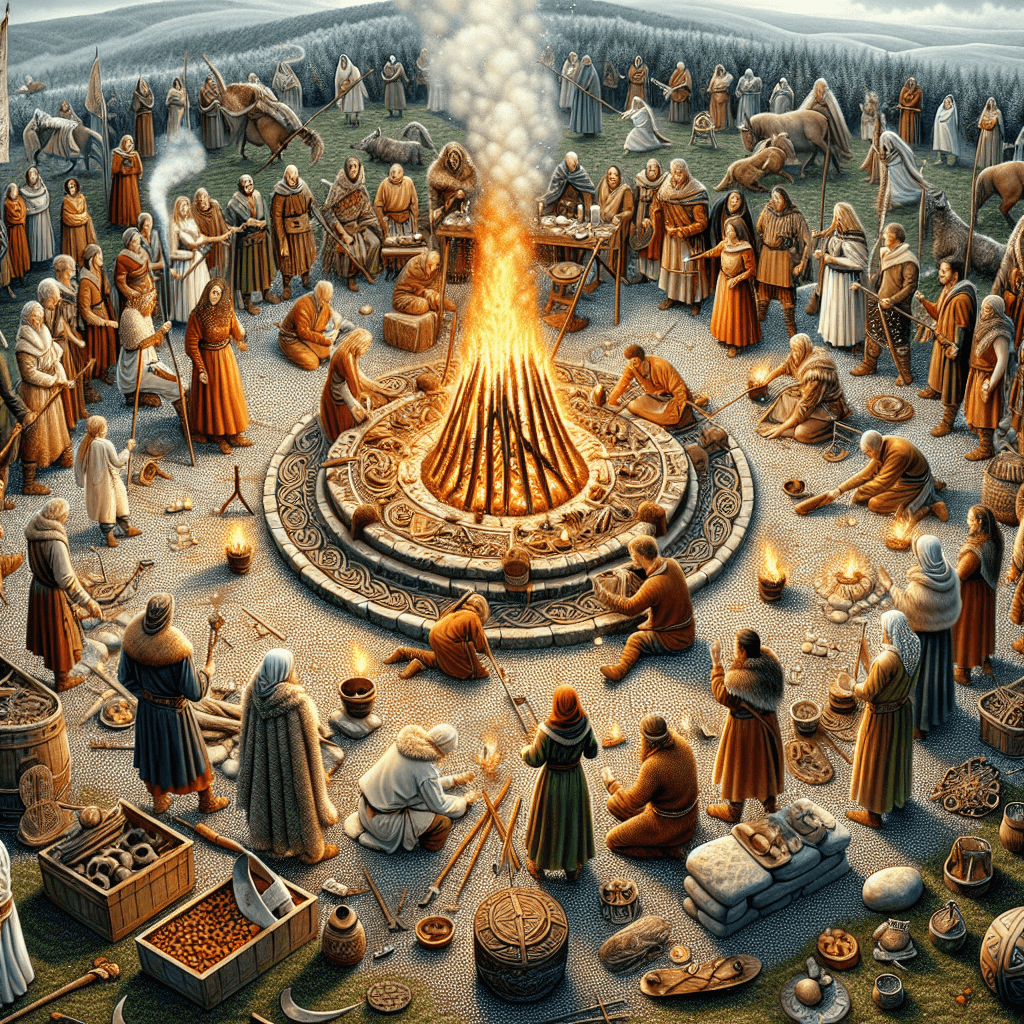


Participants engaged in ritualized jumping over fires to achieve purification, prosperity, and receive omens about future marriage prospects, with the height and grace of each jump interpreted as indicators of coming fortune. Young women played central roles in Kupala celebrations, throwing carefully prepared wreaths and herbs into the flames while making prayers for health, fertility, and love, then retrieving these offerings from the water where they floated after the fire rituals concluded. The night featured elaborate puppet effigies that were ceremonially carried over fires while communities engaged in singing, dancing, and the gathering of magical herbs that were believed to possess enhanced power during this sacred time. The celebration continued throughout the night with various divination practices, courtship rituals, and community bonding activities that strengthened social ties while honoring the divine forces that governed fertility, love, and abundance.
Protective Fire Ceremonies Against Evil
The protective aspects of Slavic Fire Ritual Meanings established fire as the primary guardian against chaos, demons, and malevolent spiritual forces that threatened community wellbeing. Semargl, the fiery sentinel deity, was invoked through elaborate ceremonies that positioned fires as spiritual boundaries protecting sacred spaces and human settlements from supernatural threats. Hilltop bonfires served as beacons that not only chased away plagues and evil spirits but also functioned as communication networks between communities during times of crisis. The Huda ceremonies featured particularly tall fires accompanied by ritualized dancing and jumping that created powerful energy fields capable of driving away the most persistent spiritual threats. These protective fires were constructed with specific types of wood chosen for their spiritual properties, with oak providing strength and endurance, ash offering protection against negative magic, and birch contributing purification and renewal energies.
The ashes from these ceremonial fires were carefully collected and spread on agricultural fields to protect crops from natural disasters like hail, drought, and pest infestations, while fragments of burnt wood were planted at field boundaries to create permanent protective barriers. Community members were strictly forbidden from extinguishing these ritual fires, as their continuous burning ensured that protective spirits remained active and malevolent forces stayed at bay. The Three Fires Cult encompassed atmospheric fire like lightning, earthly fire represented by hearths, and heavenly fire embodied by the sun, creating a comprehensive protective system that operated on multiple spiritual levels. Sacred flames were maintained in temple sanctuaries dedicated to Znich and Svarozhich, where trained priests tended eternal fires that served as focal points for community protection rituals and divine communication. These protective ceremonies often involved entire communities working together to maintain sacred fires during critical periods, creating shared spiritual experiences that strengthened social bonds while ensuring collective safety against both seen and unseen threats.
Modern Revival of Fire Rituals
Contemporary practitioners exploring Slavic Fire Ritual Meanings through Rodnovery and other Slavic neopagan movements are successfully reviving ancient fire traditions while adapting them for modern spiritual needs and circumstances. Modern zherts, serving as priests and ritual leaders, conduct elaborate Kupala celebrations that maintain traditional elements like offering toasts and sacrifices into sacred fires, girding participants with protective wormwood, and facilitating community jumping rituals for purification and blessing. The creation of living fire through friction methods continues at sacred sites and seasonal gatherings, where practitioners use traditional techniques to kindle flames that connect contemporary celebrations with ancestral wisdom and spiritual practices. These modern revivals blend ancient mythological understanding with seasonal celebrations, creating meaningful spiritual experiences that honor historical traditions while addressing contemporary spiritual yearnings and community needs.
Participants in modern Slavic fire rituals report profound experiences of connection with natural cycles, ancestral wisdom, and divine energies that transcend ordinary consciousness and create lasting spiritual transformation. Sacred sites throughout Slavic regions are experiencing renewed activity as practitioners gather to maintain traditional fire ceremonies, often combining historical research with intuitive spiritual practices that honor the essential meanings behind ancient rituals. Modern celebrations incorporate traditional herbs, music, dancing, and divination practices while adapting safety measures and legal requirements to contemporary contexts without losing the essential spiritual power of the original ceremonies. The revival movement emphasizes community building, ecological awareness, and spiritual development through direct engagement with fire as a sacred element that continues to offer purification, protection, and transformation to dedicated practitioners. Educational initiatives are preserving and sharing traditional knowledge about fire ritual meanings, ensuring that future generations can access this valuable spiritual heritage while contributing their own insights and innovations to the living tradition.
These ancient fire traditions continue to offer profound wisdom for those seeking authentic spiritual connection and community healing. What aspects of Slavic Fire Ritual Meanings resonate most deeply with your own spiritual journey and how might you incorporate these powerful practices into your personal or community celebrations?
Related Items:

Lilly Dupres
Owner & AuthorLilly Dupres, a lifelong practitioner of paganism, established Define Pagan to offer a clear definition of paganism and challenge misconceptions surrounding modern pagan lifestyles.