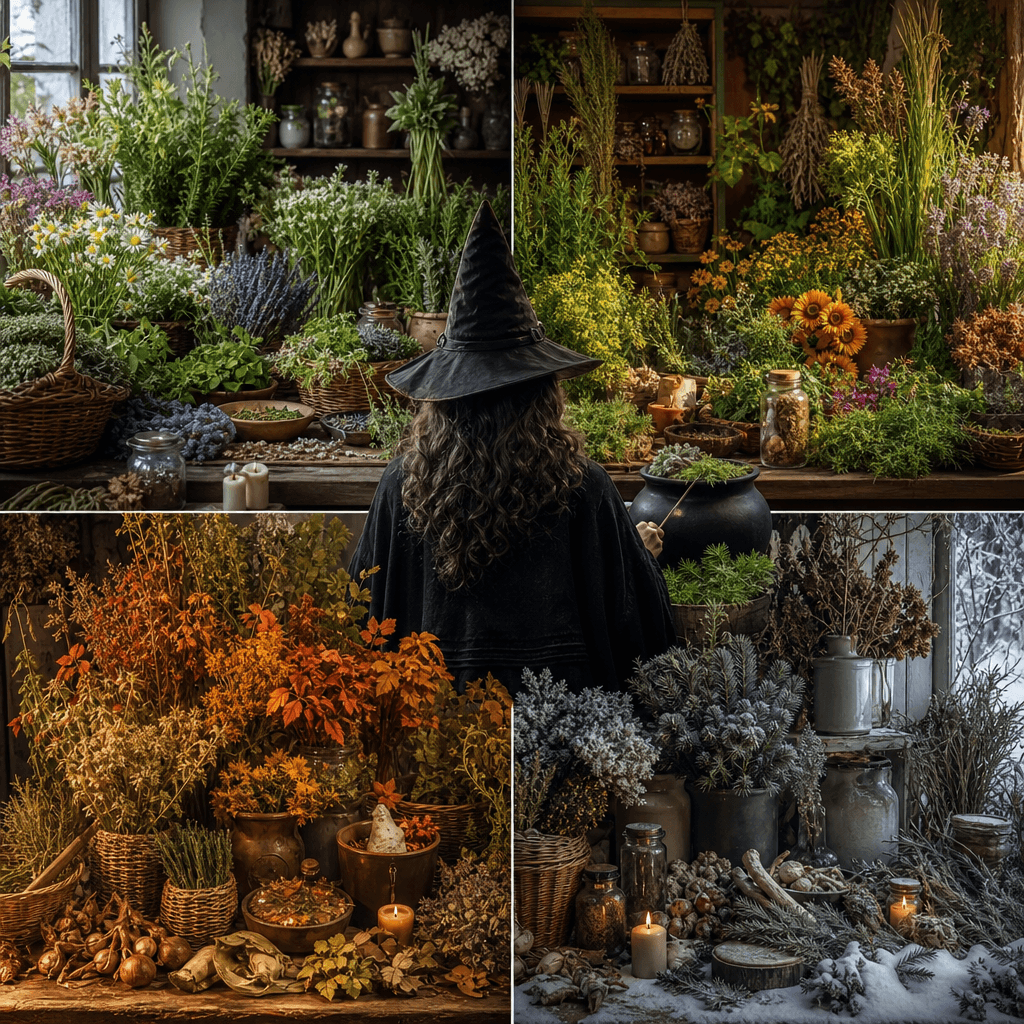
How do I know which magical herbs to buy for each season?
The answer lies in matching your herb stock to the work you do throughout the year. The Witch’s Seasonal Herb Buying Guide: What to Stock Each Quarter helps you build a working shelf that supports your practice without waste or confusion.
Most witches make the same mistake. They buy herbs because they sound magical or traditional, then watch them sit unused until they lose their power. A seasonal approach changes this. You stock what you need when you need it, keeping your herbs fresh and your practice aligned with natural cycles.
Buy for Function First in Your Seasonal Herb Buying Guide
Start with what you actually do. Spring calls for herbs that support cleansing, growth, and new beginnings. Summer demands protection, blessing, and love work. Autumn focuses on preservation and boundary setting. Winter requires uncrossing, protection, and ancestor work.
This practical approach keeps you from buying random herbs that never get used. Each season has different energy and different needs. Your herb shelf should reflect that reality.
Spring and Summer Herbs That Work
Spring is your quarter for versatile herbs. You want plants that move easily from cleansing to consecration to new work. Rosemary stands out because it handles purification and remembrance better than most herbs in traditional European practice. Chamomile supports peace and gentle uncrossing work.
Mint and basil become your staples for quick household magic, prosperity spells, and petition jars. These herbs grow well in warm weather and work hard in your practice. Thyme, parsley, and dill cover additional ground for first planting rites and growth work.
Summer builds on spring’s foundation with stronger, more vigorous herbs. Basil, lavender, lemon balm, mugwort, and calendula handle protection, blessing, love work, and solar rites. These herbs tolerate heat well both in the garden and in storage. Their strong scents make them powerful for incense and ritual work.
Autumn and Winter Herbs for Deeper Work
Autumn shifts your focus to preservation and boundary work. The Witch’s Seasonal Herb Buying Guide: What to Stock Each Quarter emphasizes herbs that work harder during the darker months. Sage becomes essential for cleansing and boundary work in most modern pagan and folk magical settings.
Bay supports wishes, success, and divination. Fennel seed works well in protection and prosperity magic. Keep these herbs alongside whatever you dried properly from your summer garden. This is also the time to check your stored herbs. Weak aroma means weak performance in your practice.
Winter favors evergreen, resinous, and warming materials. Rosemary, pine, cedar, and juniper give you solid options for house blessings and ancestor work when your living garden goes quiet. Add clove and dried ginger for warming and protection spells.
These herbs hold their power through cold months. They work well for uncrossing, protection, and home blessing when you need reliable results.
How to Buy Herbs Like an Experienced Practitioner
Buy according to your actual methods. If you burn herbs for incense, scent and oil content matter most. If you make teas, look for culinary-grade cleanliness. If you keep altar jars or working bowls, visual integrity becomes important.
Whole herbs and cut-and-sifted material keep their scent and usefulness longer than powder. They give you better texture control for incense and poppet work. For herb baths, teas, and oil infusions, focus on color, dryness, and scent rather than fancy labeling.
Avoid anything musty, gray, or overly dusty. That material is dead stock, not usable stock. Fresh herbs hold their power. Stale ones waste your time and energy.
For seasonal buying, smaller amounts purchased more often beat a year’s supply that sits in jars losing power. Stock each quarter with the forms you use most. Whole herb, dried flower, seed, resin, and root all behave differently in magical work.
Building Your Seasonal Stock System
Start with a short list for each quarter. Focus on herbs you know you will use. Restock based on what you actually burn through, not what sounds interesting.
Keep notes on what you used before each season ends. This habit tells you more than any generic buying guide. It keeps your shelf ready for the work ahead instead of cluttered with unused materials.
Reputable suppliers stock most of what this guide covers. The right supplier sells clean, correctly identified material and treats ritual use seriously rather than as an afterthought.

Witchcraft Herbs Kit, Dried Herbs and Flowers for Witch Beginners, 40 Pack
View ProductYour herb shelf should serve your practice, not overwhelm it. Seasonal stocking keeps you aligned with natural cycles while preventing waste and confusion.
A well-planned seasonal herb collection supports consistent magical work throughout the year. The herbs stay fresh, your practice stays focused, and your results improve because you have the right materials at the right time.
Browse our carefully curated selection of magical herbs and supplies to build your seasonal collection with confidence and quality. Visit our Pagan Shop to explore herbs chosen specifically for working practitioners.

Lilly Dupres
Owner & AuthorLilly Dupres, a lifelong practitioner of paganism, established Define Pagan to offer a clear definition of paganism and challenge misconceptions surrounding modern pagan lifestyles.