
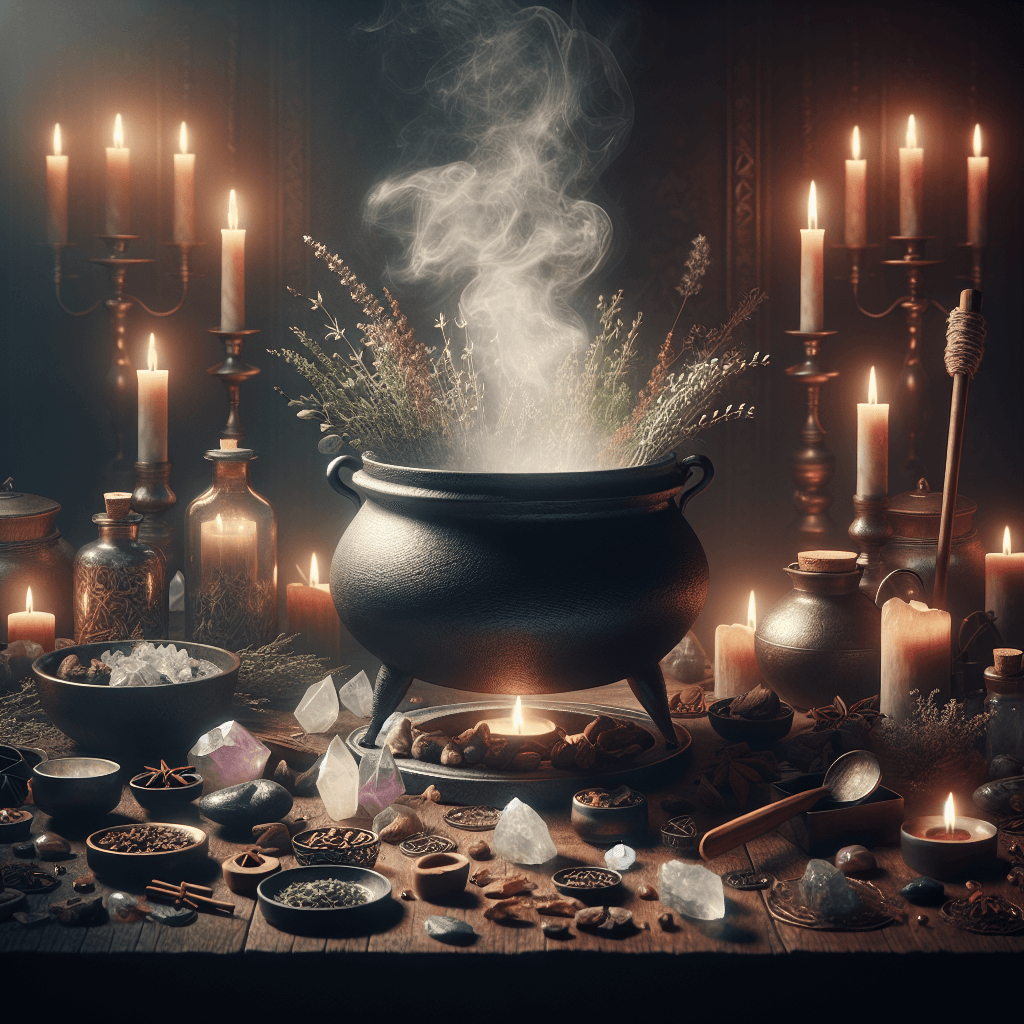
How do you properly cleanse and consecrate a new cauldron for witchcraft rituals?
The process begins with cleansing the space and cauldron with smoke from sage, incense, or herbs, followed by sprinkling with salted or blessed water to remove impurities. Next, pass the cauldron through representations of the four elements while invoking guardians to purify and charge it. Salt represents earth, incense represents air, candle flame represents fire, and water represents the west. Finally, anoint with oils or Florida water, add protective herbs like rosemary or basil, and dedicate it to deities or intentions with spoken words while visualizing it as a sacred vessel.
This complete cauldron cleansing and consecration process removes residual energies and infuses the cauldron with elemental power. The ritual dedicates your cauldron for specific purposes like brewing potions, burning incense, scrying, or deity offerings. Once consecrated, treat your cauldron as sacred and handle it personally. The transformation turns an ordinary vessel into a powerful ritual tool that symbolizes the womb of creation and elemental water in modern pagan practices. Begin by gathering your supplies: sage or preferred cleansing herb, salt, spring water, incense, a white candle, and protective oils. Choose a quiet space where you feel comfortable working with spiritual energy.
Initial Cleansing with Smoke and Blessed Water
Start your cleansing ritual by lighting your sage bundle or incense stick. Hold your cauldron above the smoke, rotating it slowly to ensure the smoke reaches every surface. Speak your intention aloud as you work. The smoke carries away any negative or stagnant energies that accumulated during manufacturing and transport. Pay attention to areas where the metal feels particularly dense or heavy. These spots often need extra cleansing attention. Set the cauldron down and prepare your salted water by adding three pinches of salt to clean water. Stir the mixture clockwise while focusing on purification. Sprinkle this blessed water inside and outside the cauldron. Watch as each drop carries away impurities and prepares the vessel for sacred work. The combination of smoke and water creates a powerful cleansing foundation that addresses both visible and invisible contamination.
Cauldron Cleansing and Consecration
Core steps combine purification through smoke, water, and salt with consecration through elemental passing, anointing, and invocation. This transforms your cauldron into a vessel symbolizing transformation and the womb of creation in modern pagan and Wiccan practices. The process requires intention, patience, and respect for the elemental forces you invoke. Begin by establishing sacred space around your working area. Some practitioners cast a full circle, while others simply call upon protective energies. Trust your intuition about what feels right for your practice. Place your cauldron in the center of your space, surrounded by representations of the four elements. Position salt in the north, incense in the east, a lit candle in the south, and water in the west. These elemental stations become power sources for your consecration work.
Elemental Passing and Sacred Invocations
In Santería-influenced rituals, practitioners add Florida water and invoke Orishas like Eleggua for protection and opening paths. In Wiccan traditions, practitioners bless the cauldron on a pentacle while invoking God, Goddess, and elemental spirits. The specific tradition matters less than your sincere intention and connection to the work. Lift your cauldron and carry it to each elemental station. At the north station, hold it over the salt while saying: Powers of the North, I consecrate this cauldron and charge it with your stability and strength. Move clockwise to the east and pass it through the incense smoke: Powers of the East, bless this vessel with clarity and wisdom. Continue to the south, holding it briefly above the candle flame: Powers of the South, ignite this cauldron with transformation and passion. Complete the circuit at the west, sprinkling it lightly with water: Powers of the West, flow through this cauldron with intuition and healing.
Final Dedication and Sacred Anointing
Return to the center and hold your cauldron at heart level. Visualize golden light flowing from your heart into the metal, awakening its spiritual potential. Speak words that express your specific intentions for this tool. Your dedication might focus on healing work, divination, protection rituals, or general magical practice. The words matter less than the energy and intention behind them. Anoint the rim with a drop of oil, moving clockwise around the edge. Add a pinch of protective herbs like rosemary or basil to the interior. These additions create lasting energetic signatures that strengthen your connection to the cauldron over time. Visualize negative energies washing away completely as positive, sacred energy fills every molecule of the metal. Affirm its sacred purpose by stating something like: This vessel now holds the power of protection and channels divine energies for the highest good.
Beginner’s Guide to Cauldron Work: Your First Cauldron and Essential Starting Rituals
Selecting Your First Ritual Cauldron
For beginners, select an iron cauldron for durability in rituals involving mixing herbs, burning incense on charcoal, or scrying with water. Cast iron holds heat well and resists magical energies that might damage other materials. Size matters less than quality and personal connection. Hold different cauldrons to see which feels right in your hands. Some practitioners report sensing energy or temperature changes when they touch their future ritual tools. Purchase from reputable suppliers who understand the tool’s sacred purpose. Many mass-produced items carry factory energies that require extensive cleansing. Avoid cauldrons with cracks, rough edges, or chemical coatings that might interfere with your work. Research the manufacturer when possible to ensure ethical production practices align with your values.
Essential First Consecration Ritual
Your essential first ritual starts with cleansing through smudging with sage or bundled herbs, followed by sprinkling with moon-charged or spring water. Pass the cauldron through incense smoke and candle flame, then place it on your altar under full moonlight or charge it daily with personal energy until it feels completely attuned to your vibration. This charging process takes time. Some practitioners need only one full moon cycle, while others work for several months before feeling complete resonance. Pay attention to dreams, synchronicities, or sudden insights that arise during this bonding period. Your cauldron often communicates its readiness through subtle signs like appearing in meditation visions or feeling noticeably warmer during ritual work.
Building Your Cauldron Practice
Use your newly consecrated cauldron initially for simple tasks like blessing ingredients with spoken intentions: By elements embraced, may this vessel hold our intentions, blessed be. Create sacred space by burning loose incense in the cauldron for meditation sessions. Mix herb blends for protection sachets or healing teas. Practice scrying by filling it with dark water and gazing softly at the surface. These beginning practices build familiarity without overwhelming new practitioners with complex procedures. Start with five-minute sessions and gradually extend your working time as comfort increases. Document your experiences in a dedicated journal to track your growing relationship with this sacred tool.

Ongoing Care and Sacred Relationship
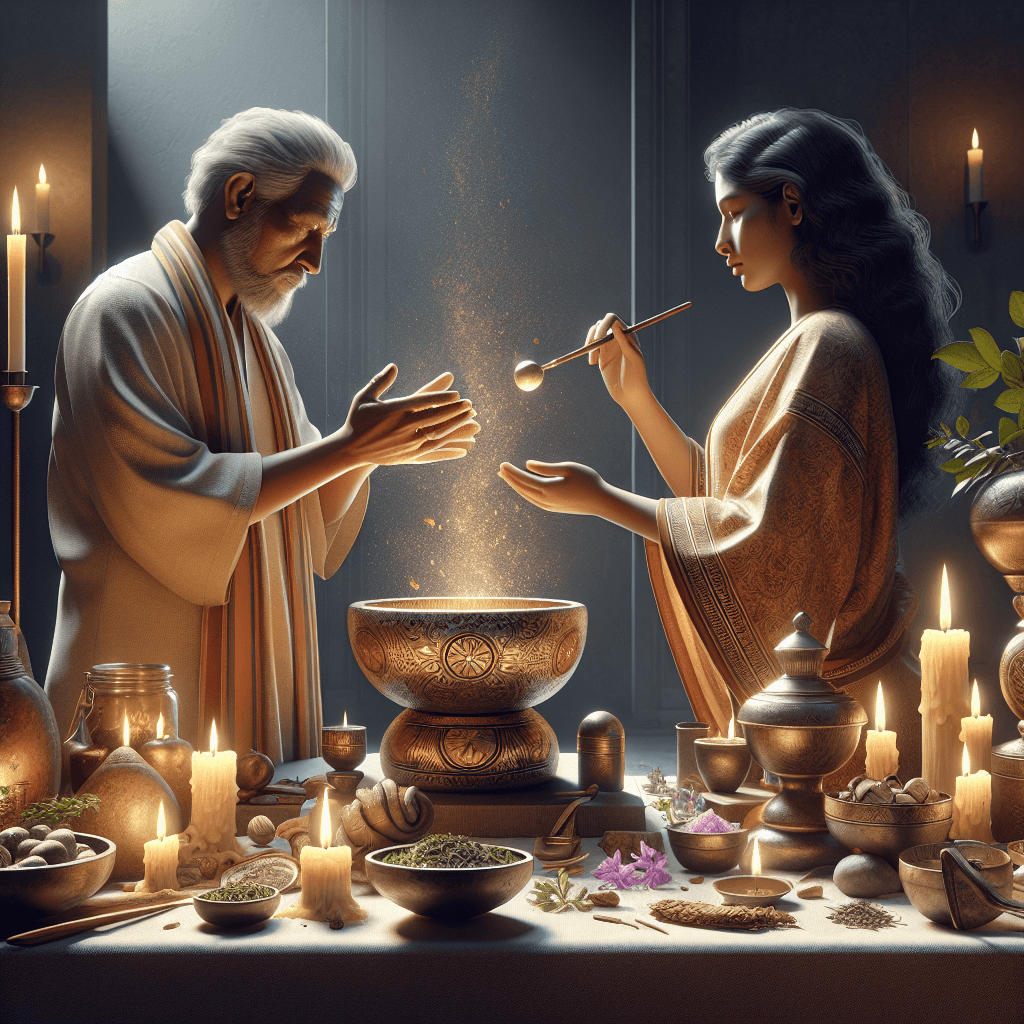
Cast a circle if desired, but follow your intuition about ritual structure. Formal ceremonial elements serve some practitioners while others prefer simple, heartfelt approaches. The emphasis should remain on personal connection rather than rigid adherence to prescribed steps. Your cauldron responds to genuine intention and regular interaction. Talk to it during rituals, thank it for its service, and store it respectfully when not in use. Some practitioners keep their cauldrons permanently on altars, while others wrap them in natural fabric between uses. Develop storage and care practices that honor the relationship you’re building. Clean your cauldron physically after each use, then cleanse it energetically with smoke or sound as needed. This ongoing maintenance preserves the sacred bond you established during consecration.
Traditional Methods for Purifying Sacred Cauldrons
Ancient Water-Fire Purification Techniques
Traditional purification employs dual water-fire approaches that connect your cauldron to ancient elemental wisdom. Salt the water with pinches representing land, sky, and sea while reciting invocations like: Let the water make pure the earth and free it from every ill. Then kindle incense fire while saying: I kindle this fire to be a fire of welcome to bless this vessel. These spoken words activate the elements and invite their cooperation in your consecration work. The specific phrasing matters less than your sincere intention to work in partnership with elemental forces. Many traditions include similar invocations passed down through generations of practitioners. Research your ancestral background to discover blessing phrases that might resonate with your heritage. Celtic, Norse, Slavic, and Mediterranean traditions all offer beautiful consecration prayers that add cultural depth to your personal practice.
Four-Direction Elemental Blessing
Elemental passing remains foundational across most purification methods. Position yourself facing north and hold your cauldron while invoking: Powers of the North, I consecrate this cauldron and charge it with your energies of stability, abundance, and protection. Turn clockwise to face east and repeat the process: Powers of the East, fill this vessel with wisdom, communication, and new beginnings. Continue to the south: Powers of the South, ignite this cauldron with transformation, courage, and creative fire. Complete the circuit facing west: Powers of the West, bless this tool with intuition, healing, and emotional depth. This four-direction blessing creates a complete energetic seal that remains active throughout the cauldron’s ritual life.
Advanced Traditional Techniques
Additional traditional methods include smudge sticks made from local tree needles, feathers for directing air energy, crystals placed around the cauldron during consecration, and anointing with oils blessed under specific moon phases. In group rituals, use earth collected from each participant’s property and recite purification chants together. The collective energy amplifies individual intention and creates stronger protective bonds around the cauldron. Group consecrations work particularly well for cauldrons intended for community use or coven work. Each person contributes their unique energy signature, making the tool responsive to multiple practitioners. Document who participated in your cauldron’s consecration, as this creates lasting energetic connections between people and tool.
Sealing and Maintenance
Conclude traditional purification by holding your cauldron aloft toward the sky and declaring: By the powers of earth, air, fire, and water, this tool is consecrated for sacred work. This final proclamation seals all previous work and officially transforms your cauldron from mundane object to sacred instrument. Store detailed notes about your specific consecration process, including dates, moon phase, weather conditions, and any unusual occurrences during the ritual. These details help you repeat successful techniques for future tools and troubleshoot any ongoing issues. Some cauldrons require periodic re-consecration, especially if they experience trauma, extended storage, or use by others without permission. Regular maintenance keeps the energetic bonds strong and the tool responsive to your will.
Your journey into cauldron cleansing and consecration opens doorways to deeper magical practice and elemental connection. What specific intentions will you set for your newly consecrated cauldron, and how will you begin building a working relationship with this ancient tool of transformation?
Related Items:

Lilly Dupres
Owner & AuthorLilly Dupres, a lifelong practitioner of paganism, established Define Pagan to offer a clear definition of paganism and challenge misconceptions surrounding modern pagan lifestyles.


