
What kind of wand should I actually buy for my practice?
This is the question most people type into a search bar right before they buy the wrong wand. They search for something pretty. They end up with a tool that fights them every time they use it. Here is how to match your wand to your magickal tradition so the one you buy actually works for the practice you have.
Why Matching Your Wand to Your Magickal Tradition Starts With Function, Not Looks

A wand has a job. It directs energy. It traces circles, points at things, opens space, seals space, and focuses intent. In ceremonial work, this is its whole purpose. In Wiccan and pagan practice, it is often the main tool for raising and sending intent during a rite.
This means balance matters more than decoration. A wand that is too heavy pulls your arm down mid-gesture. One that is too short forces you to overcorrect. One with an odd shape catches on your hand at the worst moment. None of this shows up in a product photo. It shows up the first time you cast with it.
A wand that fits should feel like part of your hand. Long enough to direct clearly. Light enough to move through the same motion twenty times without your wrist getting tired. That is the baseline before you think about wood type, crystal, or design.
How Material Choice Shapes Your Wand to Match Your Magickal Tradition
Material is the first big fork in the road.
Wood is the most common pick, and for good reason. It is easy to work with, holds up over time, and takes personalization well. If your practice is tied to the land, using local wood carries real weight. You know where it came from. You can source it in a way that respects the tree and the place.
Crystal wands look striking and suit devotional or divination work well. They are usually less practical for active casting unless the wand was built for stillness rather than motion. If your practice involves a lot of repeated gesture, a crystal wand can slow you down or feel wrong in the hand.
Metal wands suit precise, formal styles. Ceremonial magic and elemental work often call for this kind of exactness, and metal can hold that energy well.
Resin and composite wands can work fine too. The material label matters less here than the build quality. Check the finish. Check the balance. Check how it actually feels in your grip before you decide it fits your path.
Matching Your Wand to Your Magickal Tradition by the Work You Actually Do
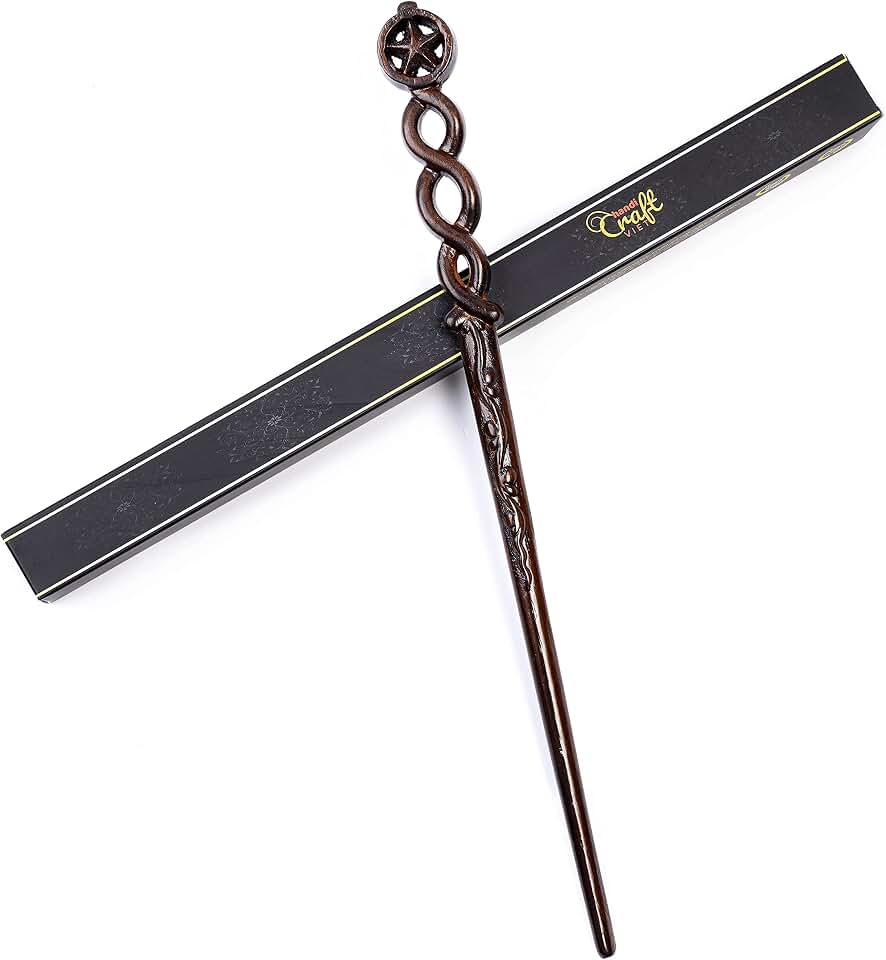
Handicraftviet Hand Carved Wood Magic Wand/Witch Wand Real Wood/Wizard Wands 15' for Halloween, Christmas and Birthday Party/Wooden Wand Star (S5)
View Product →The clearest way to choose is to look at what you do most often, then work backward from there.
For circle casting, you want smooth, instant response. No drag, no wobble.
For deity work, the wand should reflect the deity or current you serve. This is where symbolism carries more weight than in other kinds of work.
For seasonal rites, wood tied to the season, ash, oak, willow, or another species with real meaning in your practice, can strengthen the rite. This only works if the association already means something to you. Borrowing a correspondence you do not use in practice adds nothing.
If your path pulls from several traditions, choose by function first. Pick the wand that performs the way you need it to. Let symbolism come second.
How to Read the Wood When You’re Matching Your Wand to Your Magickal Tradition
Wood changes everything about how a wand handles: weight, grain, and grip. You will notice this before you notice anything else.
Dense woods feel grounded. They suit slow, deliberate work.
Lighter woods move fast. They suit quick, repeated gestures, the kind you use in fast-paced ritual work or frequent casting.
Smooth grain matters if you plan to use the wand often. A rough or splintery finish will bother you every single time, no matter how good the wood looks on a shelf.
If you are buying online, ask for exact details on length, weight, and finish. A seller who cannot answer these questions clearly is not the right source.
Common Mistakes People Make Matching Their Wand to Their Magickal Tradition

Handmade Wooden Magic Wand, Solid Birch, Unique One-of-a-Kind Design, 12 or 14 Inch, Fantasy and Enchantment (12 inch)
View Product →The biggest mistake is treating a wand as a symbol instead of a tool. A wand that photographs beautifully but twists in your hand will not improve a single rite you cast with it.
The second mistake is buying a wand built for someone else’s system and trying to force it into your own. A ceremonial wand, a devotional wand, and a folk-witch’s working wand can share traits, but they do not need to match exactly. Pick the one built for your method, not someone else’s.
Sourcing and Preparing a Wand That Matches Your Magickal Tradition
Buy from makers who understand ritual use. Not novelty. Not display pieces.
Ask if the wand is sealed. Ask if it is balanced. Ask if it is safe to handle regularly. If it arrives unfinished, find out if you need to sand it, oil it, or consecrate it yourself before use.
Once you have it in hand, cleanse it and dedicate it the way your practice already calls for. This step is what turns a store purchase into a working tool.
Every point in this guide points to the same thing: your wand needs to fit your hand and your practice, not just your aesthetic. A well-made, well-balanced wand supports the rites you actually perform instead of working against them. If you are ready to find a wand that matches your tradition and your grip, browse the collection at the Define Pagan shop.

Lilly Dupres
Owner & AuthorLilly Dupres, a lifelong practitioner of paganism, established Define Pagan to offer a clear definition of paganism and challenge misconceptions surrounding modern pagan lifestyles.