
Which Witch Wand Should I Actually Buy on Amazon?
That's the question most people type in right before they scroll through fifty listings and still feel unsure. You want something that works in circle, not something that looks good sitting on a shelf. Here's what practitioners who have bought several wands wish they knew before their first purchase.
Best Witch Wands on Amazon Are the Ones You Forget You're Holding
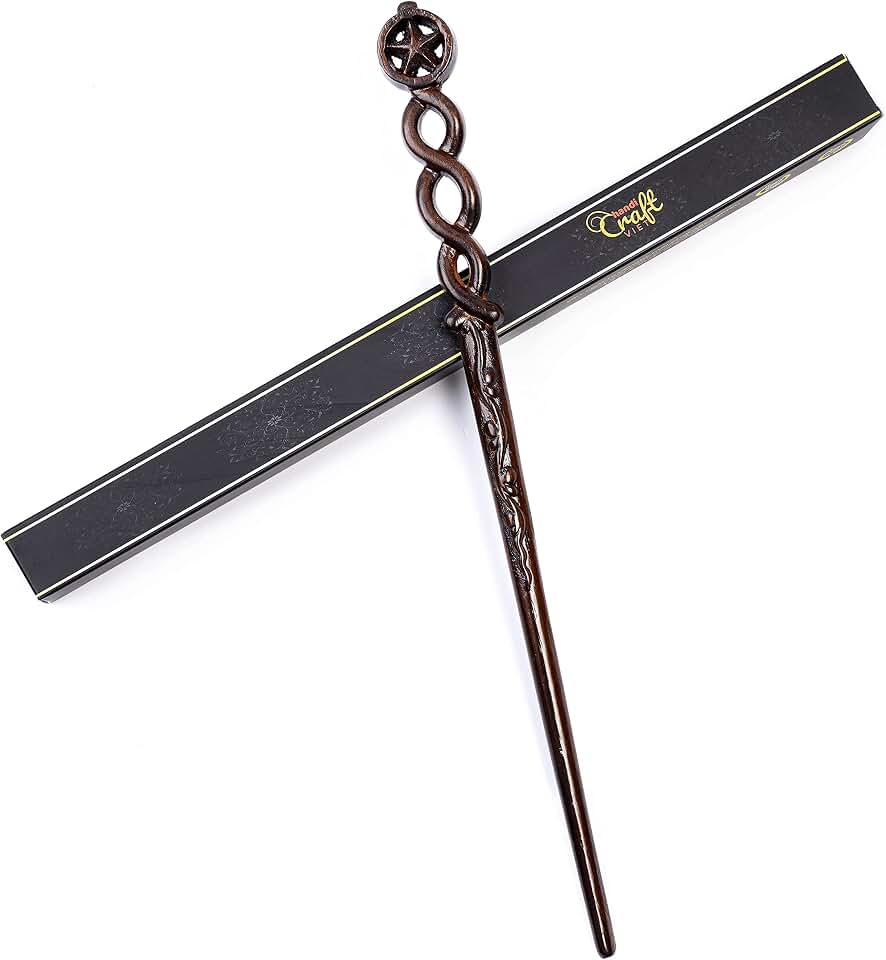
Handicraftviet Hand Carved Wood Magic Wand/Witch Wand Real Wood/Wizard Wands 15' for Halloween, Christmas and Birthday Party/Wooden Wand Star (S5)
View Product →The best wands disappear in your hand. You stop thinking about the wand and start thinking about the work. That happens when the grip fits, the weight feels natural, and nothing pokes or wobbles while you move.
Plain wooden wands do this best. Straight-grain wood with a smooth finish holds up to regular use. No paint flaking off. No glued-on gems shifting the balance. Just a tool that does its job and gets out of the way.
Correspondence systems differ on what a wand represents. Some traditions link it to air. Others link it to fire. That debate matters less than whether the wand works in your hand during an actual rite. A wand that photographs beautifully but feels wrong when you hold it will not serve you in circle.
What Practitioners Buy When They Want a Wand That Lasts
Ask any practitioner who has bought more than one wand and you'll hear the same pattern. They started with something decorative. They ended up buying something plain.
Here's what shows up again and again in what people actually keep using:
Straight-grain wood. It resists warping and splintering better than soft or knotty wood.
A sanded, comfortable handle. Rough spots become obvious fast when you're holding a wand through a long ritual.
A light or unfinished surface. Heavy lacquer looks nice at first. It also shows scratches and wear faster than raw wood.
Simple design at the grip. Carvings and ornament belong away from where your hand rests, not on it.
If you have a favorite tree association, like oak for strength or willow for intuition, that's fine. Just don't let the symbolism override the craftsmanship. A wand tied to a meaningful tree still needs to survive daily handling.
Coven work and outdoor rites put more strain on a tool than solitary indoor practice. If you cast circles often, durability should sit higher on your list than appearance.
What Practitioners Regret Buying Instead
The regrets are consistent too. Almost every experienced practitioner has a wand collecting dust because it looked perfect online and failed in practice.

Handicraftviet - Hand Carved Wooden Magic Wand, Magic Wands for Wizards/Collectible Cosplay, Magical Gift for Halloween, Christmas and Birthday Party 15 inch (S6)
View Product →Common regrets include:
Glitter-coated wands. The glitter sheds. It ends up on your altar cloth, your hands, and eventually the floor.
Hollow plastic wands. They feel light in a way that reads as cheap, not elegant. Many bend under light pressure.
Jeweled handle wands. The stone or gem often throws off the balance. Your hand has to work harder to keep the tip steady.
Pop-culture replica wands. Some of these work fine if the size and grip suit you. Most were built to be display pieces, not tools you use weekly.
Heavily carved "ceremonial" wands. Intricate patterns look impressive in a photo. After five minutes of active use, those same patterns dig into your palm.
The pattern across every regret is the same. The wand was chosen for how it looked, not how it performed.
How to Test a Wand Before You Trust It in Ritual
You can catch most of these problems before you buy, if you know what to check.
Step one: check the length. Many practitioners prefer a wand between forearm and elbow length. That's a starting point, not a rule. The right length lets you gesture without straining your wrist or overreaching.
Step two: check the tip. It should be clearly shaped but not thin enough to snap. A fragile tip is a liability the first time you set the wand down too fast.
Step three: check the grip. Your palm sweats during ritual. Warmth changes how your hand grips wood or resin. A grip that feels secure in a photo can turn slippery in practice.
Step four: check the material listed. If a listing doesn't say what the wand is made of, that's a signal. Sellers who care about ritual use tell you the material because it matters to the people buying.
Material Comparison for Practitioners Choosing Between Wood, Resin, and Metal

9 Inch Wooden Wand with Real Crystal and Moon Accent, Lightweight 60g Mystic Wand 04
View Product →Wood remains the most reliable choice for most people. It responds well to repeated use, it can be repaired if it chips or cracks, and it feels familiar in the hand almost immediately.
Resin wands can look striking, with color or texture embedded inside. They work fine as a secondary or ceremonial piece, but many are heavier or more slippery than wood, especially with sweaty hands.
Metal wands carry a different weight and a colder feel. Some practitioners like that contrast. Others find the extra weight tiring during longer rites.
None of these materials is wrong. The mistake is choosing a material for its look instead of testing how it performs in your hand.
Why Seller Reputation Matters as Much as Wood Grade
Even a well-made wand from the wrong seller can disappoint you. Costume shops and novelty retailers build wands for a photo, not for years of handling. Reputable pagan suppliers build with ritual use in mind, and it shows in the sanding, the balance point, and how the wood ages after repeated handling.
If you're comparing listings on Amazon, look past the marketing language and check for detail. Good sellers describe the wood type, the finish, and the intended use. Vague listings usually mean vague craftsmanship.
Everything in this guide points to one conclusion. A wand needs to work in your hand before it works in your practice. Weight, grip, material, and craftsmanship matter more than any decorative detail, and choosing well means fewer regrets and more tools you actually reach for.
If you want a wand built for real use rather than a shelf, take a look at what we carry at Define Pagan's shop. Every piece is chosen with the same standard this guide walks through: balance, durability, and a grip that holds up in circle.

Lilly Dupres
Owner & AuthorLilly Dupres, a lifelong practitioner of paganism, established Define Pagan to offer a clear definition of paganism and challenge misconceptions surrounding modern pagan lifestyles.