
Do I Need a Decorative Wand or a Functional One for My Practice?
If you have asked yourself this while shopping for a wand, you are not alone. Most practitioners hit this fork at some point. The answer depends on how you plan to use the tool, not on which one looks more impressive on your altar.
Decorative vs. Functional Witch Wands: What Separates Them

Handmade Wooden Magic Wand, Solid Birch, Unique One-of-a-Kind Design, 12 or 14 Inch, Fantasy and Enchantment (12 inch)
View Product →The difference between decorative and functional witch wands comes down to purpose. A decorative wand sits on display. It represents your practice and signals your identity as a witch or pagan. A functional wand does physical work. You hold it, move it, and rely on it during ritual.
Neither type is better than the other. They serve different needs. The mistake happens when you buy one thinking it will do the job of the other.
Why Handling Matters More Than Looks for Functional Witch Wands
A functional wand earns its place through how it feels in your hand, not through how it looks on a shelf. Balance matters. Length matters. Weight matters.
Think about how you already work. If you cast with small, precise motions, you want something light and easy to control. If you trace wide circles or use formal ritual gestures, you want something longer that gives you room to move.
Traditional witchcraft and ceremonial magic both treat the wand as a directing tool. It does not generate power on its own. It gives your hands a fixed point to focus through. That focus only works if the wand moves the way you expect it to move.
Ask yourself one simple question: do you ever hold this wand during active work? If the answer is no, you have a decorative piece. If you use it to mark space, trace symbols, or direct energy, you have a functional one.
How Material Changes the Decorative vs. Functional Witch Wands Decision
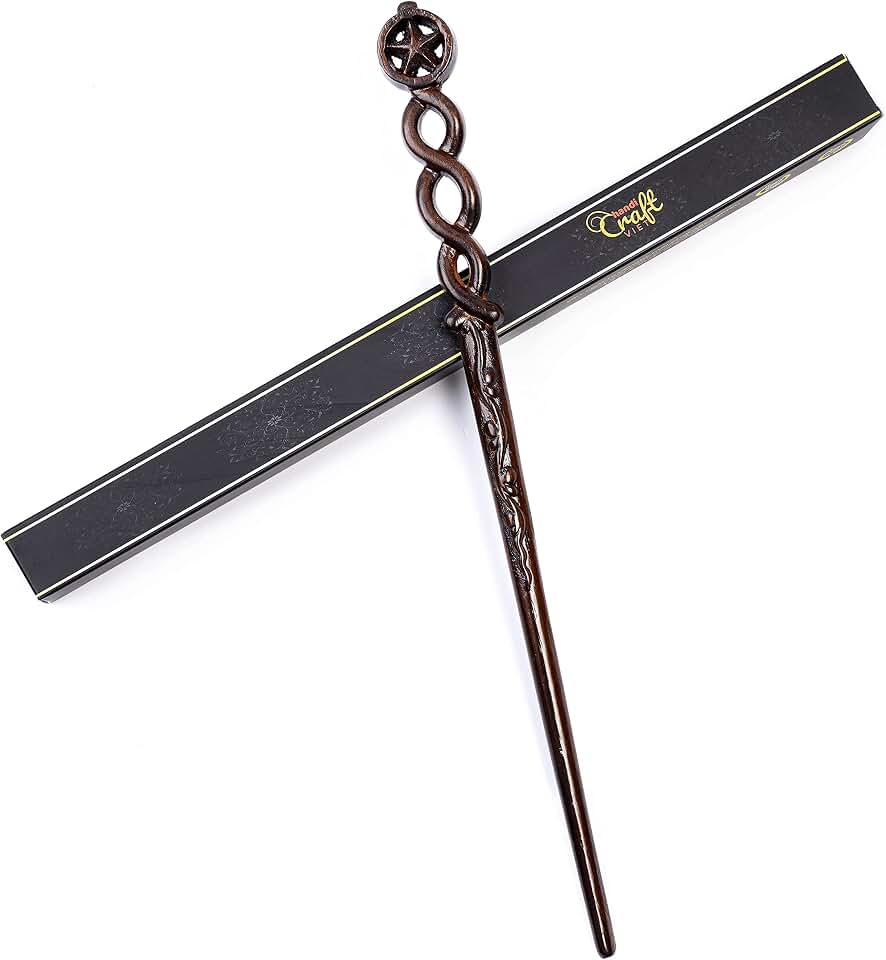
Handicraftviet Hand Carved Wood Magic Wand/Witch Wand Real Wood/Wizard Wands 15' for Halloween, Christmas and Birthday Party/Wooden Wand Star (S5)
View Product →Material affects feel before it affects meaning. Wood remains the top choice for working wands because it stays light, warm, and easy to shape into a comfortable grip.
Other materials work too, but each comes with tradeoffs:
- Metal adds weight, which can tire your wrist during longer rituals.
- Crystal looks striking but can chip or crack with regular handling.
- Bone carries strong symbolism but varies in durability depending on the source.
- Resin offers durability and design flexibility, though it can feel less warm in the hand than wood.
A wand that feels too heavy will slow your movements and strain your wrist. A wand that feels too slick will slip at the wrong moment. Before you commit to a wand for active use, hold it. Check where the tip lands when you move your wrist. Check whether the shaft guides your hand in a straight line or wobbles.
Matching the Wand to Your Practice
Look at how you already work. If your practice centers on your hands, breath, voice, or another primary tool like a blade or staff, a wand might stay mostly ceremonial for you. That is fine. Not every tool needs to carry equal weight in your ritual.
If your practice relies on visual tracing or directional focus, you need a wand you trust every single time you pick it up. That trust comes from repetition. You cannot build that trust with a wand that feels wrong in your hand.
What Makes a Wand Actually Work in Ritual
A working wand needs three things: a clear grip, a length that suits your movements, and a tip that feels intentional rather than accidental.
Heavy carving looks beautiful, but it can catch on your fingers during fast movements. That does not make an ornate wand bad. It just makes it less suited to repeated, hands-on ritual work. This is often where decorative vs. functional witch wands split most clearly. One wand gets admired from across a room. The other gets used under candlelight, through smoke, and during real movement.
Common Mistakes When Choosing Between Wand Types

Ximimark 1 pcs Natural Crystal Wand Handmade DIY Wand, Cosplay Halloween Scepter Witch Cane
View Product →Many practitioners buy the most elaborate wand they can find, then discover it is too fragile or too precious to actually use. Fear of damaging an expensive piece stops them from using it the way a working tool should be used.
Others go the opposite direction. They pass over a plain wand because it lacks visual flash, missing the fact that it might fit their hand perfectly and support their ritual work far better than a showpiece ever could.
The best wand for your practice is the one you can pick up without thinking twice. It works the way you need it to work, every time.
Choosing Between Decorative vs. Functional Witch Wands With Confidence
If you want a wand that offers both beauty and use, look for one that feels right in your hand first. Looks come second. A wand sourced from a supplier who understands ritual use will hold up better over time and perform the way you need during actual practice.
A well-made wand gives your hand a steady point of focus during ritual, which is exactly what this whole comparison comes down to. Once you know whether you need a display piece or a working tool, the right choice becomes obvious. Explore a range of wands built for real practice at Define Pagan’s shop and find the one that fits your hand and your work.

Lilly Dupres
Owner & AuthorLilly Dupres, a lifelong practitioner of paganism, established Define Pagan to offer a clear definition of paganism and challenge misconceptions surrounding modern pagan lifestyles.