What are the ancient Celtic spiritual practices used for soul healing and personal transformation?
Celtic Soul Journey Traditions encompass a profound understanding of the soul’s immortal nature, emphasizing the continuous cycle of death, rebirth, and spiritual evolution. These traditions center on the belief that the soul can travel between worlds, undergo multiple incarnations, and maintain an eternal connection with ancestors and divine forces. The ancient Celts developed sophisticated practices including sacred storytelling, ritual ceremonies, communion with nature spirits, and seasonal celebrations that facilitated deep spiritual transformation. Their approach to soul healing involved creating sacred spaces called nemetons, engaging in shamanic journeying to otherworldly realms, and using music, poetry, and symbolic art to access higher states of consciousness. These practices were designed to help individuals navigate life’s challenges, heal ancestral wounds, and align with their soul’s deeper purpose. Modern practitioners continue to draw from these ancient wisdom traditions, adapting Celtic spiritual techniques to support contemporary spiritual awakening, emotional healing, and personal growth. The emphasis on nature-based spirituality, ancestor reverence, and the understanding of life as an ongoing soul journey makes these traditions particularly relevant for those seeking authentic spiritual practices that honor both ancient wisdom and modern needs.
Ancient Celtic Afterlife Beliefs
The ancient Celtic understanding of the afterlife reveals a sophisticated spiritual cosmology that viewed death not as an ending, but as a transition into another phase of the soul’s eternal journey. Central to Celtic afterlife beliefs was the concept of the Otherworld, a mystical realm known by various names across different Celtic cultures including Tír na nÓg in Irish tradition, Annwn in Welsh mythology, and the Land of the Ever-Young in broader Celtic lore. This otherworldly realm was described as a place of perpetual youth, abundance, healing, and joy, where the soul could experience complete fulfillment free from the limitations and sufferings of mortal existence. Unlike many religious traditions that portray the afterlife as either reward or punishment, the Celtic Otherworld was understood as a natural continuation of consciousness, accessible to all souls regardless of their earthly deeds.
The Celts believed this realm existed parallel to the physical world, separated only by thin veils that could be crossed at certain times, places, and circumstances. Sacred sites such as ancient burial mounds, stone circles, sacred groves, and bodies of water were considered gateways or thin places where communication with the Otherworld was most accessible. The timing of transitions between worlds was also significant, with Celtic festivals like Samhain marking periods when the boundaries between realms became most permeable. Archaeological evidence from Celtic burial sites reveals the depth of these beliefs, with graves containing weapons, jewelry, food, and personal belongings intended to serve the deceased in their otherworldly journey. These afterlife beliefs profoundly influenced Celtic attitudes toward death, dying, and the meaning of life itself, encouraging a fearless approach to mortality and a deep reverence for the soul’s continuing evolution. Modern practitioners of Celtic spirituality often draw upon these ancient afterlife concepts to develop healthier relationships with mortality, finding comfort in the understanding that death represents transformation rather than termination.
Pagan Beliefs on Afterlife and Reincarnation
Celtic pagan beliefs regarding reincarnation and the soul’s journey through multiple lifetimes present a unique perspective that differs significantly from both Christian concepts of singular afterlife destinations and Eastern notions of karma-based reincarnation cycles. The ancient Celts embraced a doctrine of transmigration that allowed souls to inhabit not only human bodies across generations but also animals, plants, and even sacred places such as wells, caves, rivers, and mountains. This animistic understanding suggested that consciousness could flow through various forms of existence, with each incarnation offering different opportunities for experience and growth. Celtic reincarnation beliefs were often familial in nature, with the souls of revered ancestors returning within their own bloodlines to continue their influence and legacy.
This concept of limited reincarnation within family groups meant that certain inherited characteristics, talents, spiritual gifts, and even divine connections could reappear across generations, creating powerful lineages of warriors, druids, bards, and healers. Unlike Eastern reincarnation systems focused on karmic debt and spiritual purification, Celtic beliefs emphasized the continuation of heroic qualities and the perpetuation of ancestral wisdom. The obligation to fulfill contracts, settle debts, and complete unfinished business could extend beyond individual lifetimes, with the understanding that future incarnations might need to address issues left unresolved by previous lives. This created a strong sense of intergenerational responsibility and connection that influenced Celtic social structures, legal systems, and family relationships.
Celtic mythology contains numerous examples of heroes, gods, and notable figures experiencing reincarnation, often maintaining memories and abilities from previous lives. The famous Irish hero Cú Chulainn, for instance, was believed to be a reincarnation of the god Lugh, while various Celtic saints were thought to be reborn druids who had embraced Christian teachings. These reincarnation beliefs provided comfort and meaning to Celtic communities, suggesting that death was merely a transition and that beloved ancestors remained accessible through prayer, ritual, and spiritual practice. Modern Celtic practitioners often incorporate these reincarnation concepts into their spiritual work, exploring past-life connections, ancestral healing, and the continuation of soul purposes across multiple lifetimes.
Modern Celtic Soul Practices
Contemporary practitioners seeking spiritual awakening through Celtic traditions have adapted ancient wisdom into practical soul practices that address modern needs while honoring traditional foundations. Creating sacred space, known in Celtic tradition as establishing a nemeton, forms the cornerstone of modern Celtic spiritual practice, providing a bridge between the physical world and unseen spiritual realms where healing and transformation can occur. These sacred spaces can be established anywhere from elaborate outdoor shrines to simple indoor altars, emphasizing the Celtic belief that the divine presence can be accessed in any location where intention and reverence are present. Modern Celtic practitioners engage in regular rituals designed to release anxiety, fear, and limiting beliefs while nurturing deeper soul connections through meditation, prayer, and communion with nature spirits.
Storytelling remains central to contemporary Celtic practice, with practitioners using traditional myths, legends, and folktales as vehicles for spiritual teaching, personal reflection, and community building. The oral tradition continues through storytelling circles, seasonal gatherings, and informal sharing that helps preserve ancient wisdom while making it relevant to current experiences. Music and poetry serve as powerful tools for evoking spiritual states and connecting with the bardic tradition that was so central to ancient Celtic culture. Many modern practitioners learn traditional Celtic instruments, compose spiritual poetry, or participate in singing circles that celebrate the sacred through artistic expression.
Nature immersion practices draw directly from ancient Celtic reverence for the natural world, with contemporary practitioners spending regular time outdoors, observing seasonal changes, and developing relationships with local plants, animals, and landscape features. Seasonal living according to the Celtic wheel of the year helps modern practitioners align their lives with natural rhythms, celebrating eight major festivals that mark important transitions and spiritual opportunities throughout the annual cycle. Ancestral honoring practices include genealogy research, visiting ancestral lands, maintaining family shrines, and engaging in rituals that strengthen connections with deceased family members and cultural ancestors. Simple daily practices such as lighting candles with intention, taking mindful walks in nature, sharing meals with gratitude, and offering blessings throughout the day help bring sacred awareness into ordinary activities and create continuous connection with Celtic spiritual principles.
Celtic Death Ritual Ceremonies
Celtic death ritual ceremonies reveal the sophisticated understanding ancient Celts possessed regarding the soul’s transition from physical existence to otherworldly realms, demonstrating their belief that proper ceremonial preparation was essential for ensuring successful passage to the afterlife. Archaeological evidence from Celtic burial sites across Ireland, Scotland, Wales, and continental Europe shows the elaborate nature of these death rituals, with graves containing carefully selected grave goods including weapons, jewelry, pottery, food offerings, and personal belongings intended to serve the deceased in their continuing journey. The practice of excarnation, involving the exposure of bodies to natural elements before final burial, reflected Celtic beliefs about the gradual separation of soul from physical form and the importance of allowing this transition to occur naturally.
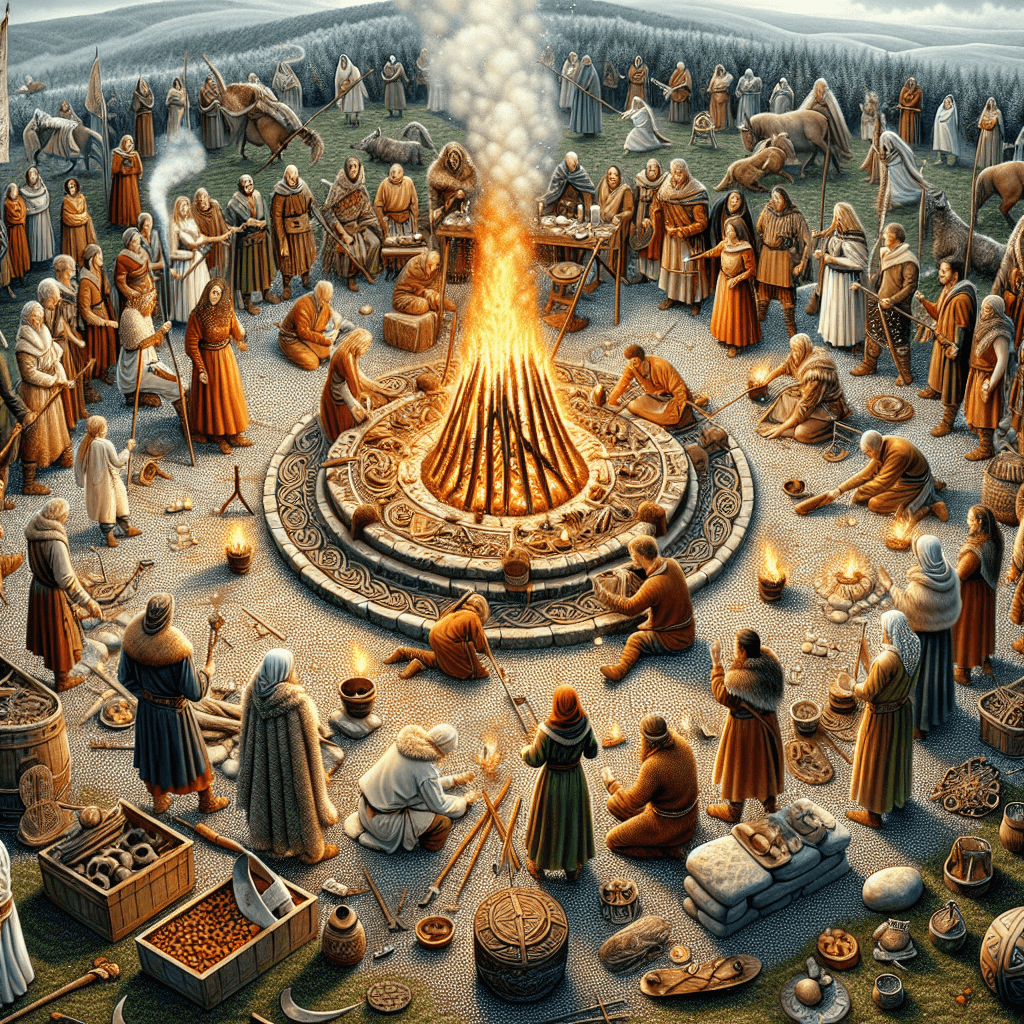


Water played a crucial role in Celtic death ceremonies, with ritual offerings of valuable objects cast into rivers, lakes, and sacred wells to honor the deceased and facilitate their passage to the Otherworld. These aquatic offerings, discovered by archaeologists in locations throughout the Celtic world, included weapons, jewelry, cauldrons, and other precious items that demonstrated the community’s commitment to supporting their departed members. Celtic death rituals also involved specific practices designed to prevent restless spirits from returning to trouble the living, particularly in cases of sudden, violent, or mysterious deaths that might leave the soul confused or attached to earthly concerns.
The custom of removing and preserving the heads of revered warriors and leaders reflected Celtic beliefs about the head as the seat of the soul and the source of spiritual power that could continue to protect the community after death. Funeral feasts and commemorative gatherings were held to honor the deceased while strengthening bonds among the living, with food, drink, music, and storytelling creating celebratory atmospheres that affirmed life’s continuation despite individual mortality. Seasonal observances, particularly during Samhain, included specific rituals for communicating with the dead, seeking their guidance, and ensuring their continued blessing upon the community. These death ceremonies reflected the Celtic understanding that mortality represented transformation rather than termination, with elaborate rituals serving to support both the departing soul and the surviving community during times of profound transition. Modern practitioners often adapt these ancient death rituals into contemporary memorial services, grief counseling practices, and seasonal observances that honor deceased loved ones while providing comfort and meaning to those processing loss and mortality.
Celtic Otherworld
The Celtic Otherworld represents one of the most fascinating and complex concepts in ancient European spirituality, serving as a supernatural realm that exists parallel to our physical world and offers unlimited possibilities for soul exploration, healing, and transformation. This mystical dimension, accessible through various means including dreams, meditation, shamanic journeying, and visits to thin places in the landscape, was understood by the ancient Celts as a vibrant and dynamic realm where the normal limitations of time, space, and physical form no longer applied. The Otherworld appears in Celtic mythology as multiple interconnected realms including underwater kingdoms, underground palace complexes, distant islands, and magical forests where supernatural beings, ancestors, and deities dwell in harmony and abundance.
Celtic literature describes the Otherworld as a place of eternal youth where inhabitants never experience aging, illness, or death, where food and drink never diminish, where music surpasses anything heard in the mortal world, and where knowledge and wisdom flow freely to those seeking spiritual understanding. Access to the Celtic Otherworld was traditionally gained through various portals including ancient burial mounds known as sidhe, sacred wells and springs, stone circles, caves, misty lakes, and other liminal locations where the boundaries between worlds naturally thinned. Specific times also facilitated Otherworld access, particularly during the Celtic festivals of Samhain and Beltane when the veils between realms became most permeable, allowing for easier communication and travel between dimensions.
Celtic heroes and heroines frequently journeyed to the Otherworld in mythological tales, seeking magical objects, wisdom from supernatural teachers, healing from otherworldly physicians, or rescue missions to bring back kidnapped loved ones. These otherworldly journeys served as metaphors for spiritual initiation, personal transformation, and the soul’s quest for meaning and purpose beyond ordinary existence. The Celtic Otherworld was inhabited by various supernatural beings including the Tuatha Dé Danann, fairy folk, ancestral spirits, and divine figures who could serve as guides, teachers, and allies for those brave enough to venture into their realm. Modern practitioners of Celtic spirituality continue to work with Otherworld concepts through guided meditations, shamanic journeying, lucid dreaming, and ritual practices designed to facilitate contact with otherworldly guides and access to supernatural wisdom and healing energies. The Otherworld serves contemporary spiritual seekers as a source of inspiration, guidance, and renewal, reminding us that reality extends far beyond physical perceptions and that the soul possesses infinite potential for growth and transformation.
Celtic Soul Journey Traditions continue to offer profound pathways for modern spiritual awakening, bridging ancient wisdom with contemporary needs for healing, transformation, and authentic spiritual connection. Which aspect of these timeless traditions calls most strongly to your soul, and how might you begin incorporating these practices into your own spiritual journey?