

What are the traditional steps to perform Perun’s sacred oak tree blessing rituals for protection and strength?
Perun’s Sacred Oak Rituals have captivated modern practitioners seeking to connect with one of the most powerful deities in Slavic mythology. While complete historical records remain elusive due to the oral tradition and later Christian suppression, archaeological evidence and surviving texts provide enough detail to reconstruct meaningful ceremonies. The traditional approach begins with selecting a sacred site featuring a mature oak tree, preferably on a hilltop or within a grove where Perun’s presence feels strongest. Lightning-struck oaks hold particular significance, as these trees bear the physical mark of the thunder god’s power. Once you’ve chosen your location, prepare an altar beneath the oak using traditional elements: kindle a ritual fire using oak wood, arrange symbols of Perun’s authority such as axes, hammers, or thunderbolt effigies crafted in six or eight-pointed star patterns. The invocation phase calls upon Perun as the supreme thunderer and warrior patron, acknowledging his eternal battle against Veles, the underworld deity representing chaos and disorder. Modern practitioners typically offer symbolic gifts including mead, bread, eggs, herbs, or carved figurines representing bulls or rams, pouring libations around the oak’s roots to nourish both tree and spirit. The blessing ceremony involves circling the oak clockwise to mirror Perun’s celestial chariot movement, striking the ground or wood with an axe to simulate thunder, and anointing the tree with water or oil while visualizing protective lightning energy. The ritual concludes with a communal feast, songs honoring Perun’s victories over winter and darkness, and meditation for personal empowerment, ensuring proper gratitude before safely extinguishing the sacred fire.
Ancient Thunder God Ceremonies
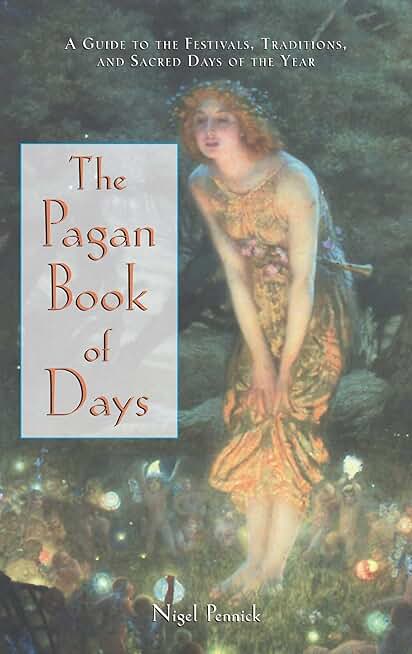
The Pagan Book of Days: A Guide to the Festivals, Traditions, and Sacred Days of the Year
View ProductThe grandeur of ancient Perun worship ceremonies reflected the supreme position this thunder deity held within Slavic pantheons across Eastern Europe. Archaeological excavations at sites like Novgorod and Kiev have revealed the impressive scope of these sacred spaces, where massive oak trees served as natural temples crowned with elaborate wooden idols depicting Perun with his characteristic silver head and golden mustache. These open-air shrines maintained perpetual fires that burned day and night, tended by dedicated priests who understood the intricate requirements of honoring the storm lord. The ceremonies themselves were spectacular community events that drew entire tribes together during the peak of summer, when thunderstorms rolled across the landscape and Perun’s power felt most tangible. Participants would gather at these hilltop sanctuaries carrying offerings of cattle, particularly bulls and oxen whose strength mirrored the god’s own might, along with weapons that would be deposited as votive gifts.
The rhythmic striking of axes against oak trunks created thunderous percussion that echoed across valleys, while priests led processions around the sacred groves, their chants rising and falling with the intensity of approaching storms. These ancient rituals weren’t mere spiritual exercises but vital community bonds that reinforced social order, settled legal disputes under Perun’s watchful justice, and ensured the continuation of favorable weather for crops and warfare. The ceremonies often coincided with natural thunderstorms, creating an atmosphere where participants felt they stood at the intersection of earthly and divine realms, witnessing firsthand the cosmic battle between order and chaos that defined their worldview.
Perun Thunder God Complex Slavic
Understanding Perun requires grasping his role within the broader Indo-European thunder god tradition that spans from the Baltic shores to the Black Sea steppes, connecting him to divine figures like Thor, Zeus, and the Lithuanian Perkūnas through shared mythological DNA. This thunder god complex represents far more than simple weather worship; it embodies the fundamental cosmic principle of order battling chaos, with Perun serving as the divine enforcer of natural law and social justice across the Slavic world. His eternal conflict with Veles, the serpentine lord of the underworld, cattle, and dark waters, forms the backbone of Slavic seasonal mythology, where each thunderstorm represents another skirmish in their endless war.
Perun rules from his celestial palace, racing across storm clouds in a chariot pulled by a magical goat or sometimes depicted as riding a mighty bull, wielding weapons that vary by region but consistently include axes, hammers, and golden arrows that manifest as lightning bolts. His sacred animals include the eagle, which serves as his messenger and embodies his mastery over the sky realm, while the oak tree functions as his earthly anchor point, a living conductor for his electrical power that bridges heaven and earth. The geographic spread of Perun worship demonstrates remarkable consistency despite the vast distances involved, with similar ritual practices emerging from Novgorod’s northern forests to the Carpathian Mountains, suggesting a deeply rooted cultural understanding that transcended tribal boundaries.
His domain encompasses not just natural phenomena but human institutions like warfare, law-making, and the binding power of oaths, making him essential for maintaining social cohesion in societies where personal honor and community justice formed the foundation of civilization. Modern research into Slavic mythology reveals that Perun’s cult likely predates organized Christianity in these regions by centuries, with some scholars tracing his worship patterns back to Bronze Age thunder god traditions that evolved alongside the development of agricultural communities dependent on seasonal rainfall and protection from natural disasters.
Modern Oak Tree Worship

Contemporary Slavic Neopaganism, known as Rodnovery, has breathed new life into Perun’s oak rituals, adapting ancient practices for modern practitioners who seek authentic spiritual connection with their ancestral traditions. These modern interpretations focus heavily on ethical considerations, replacing historical animal sacrifices with symbolic offerings while maintaining the ritual’s essential spiritual framework and connection to natural cycles. Today’s practitioners often establish personal relationships with specific oak trees, visiting them regularly throughout the seasons to build ongoing spiritual partnerships rather than conducting isolated ceremonial events.
The revival movement emphasizes understanding Perun’s ecological significance, recognizing oak groves as crucial ecosystems that support biodiversity while serving as sacred spaces for meditation and ritual work. Many contemporary groups organize seasonal gatherings at prominent oak sites, particularly during spring thunderstorms when Perun’s energy feels most accessible, creating communities of practice that honor both ancient wisdom and modern environmental consciousness. The integration of archaeological findings with surviving folk traditions has allowed modern practitioners to develop more historically informed approaches to oak tree worship, incorporating elements like traditional Slavic music, authentic clothing styles, and historically appropriate offerings that don’t harm living creatures or natural environments.
Social media and internet communities have connected practitioners across continents, sharing experiences and developing collective understanding of how Perun’s oak rituals can address contemporary spiritual needs while maintaining connection to ancestral practices. Modern adaptations often include personal protection work, with practitioners seeking Perun’s aid for everything from legal troubles to personal conflicts, viewing him as a powerful ally in navigating the complexities of contemporary life. The emphasis on oak tree conservation has led many groups to participate in forest preservation efforts, viewing environmental activism as a form of devotional practice that honors Perun’s domain while protecting sacred spaces for future generations.
Sacred Grove Ritual Guide
Creating meaningful sacred grove experiences requires understanding both the practical logistics and spiritual protocols that govern respectful interaction with Perun’s oak sanctuaries. The approach to any sacred grove should begin with proper mental and spiritual preparation, including fasting, meditation, or purification practices that help practitioners enter the space with appropriate reverence and focused intention. Site selection plays a crucial role in ritual effectiveness, with ideal locations featuring mature oak trees in natural settings away from urban noise and distractions, preferably on elevated ground where participants can feel closer to Perun’s sky realm.
The physical arrangement of ritual space involves creating a circular area around the chosen oak, marking cardinal directions with stones or natural materials, and establishing a central fire area that can be safely maintained throughout the ceremony without damaging tree roots or surrounding vegetation. Timing considerations include not only seasonal appropriateness but also weather patterns, with many practitioners preferring to conduct oak rituals during approaching thunderstorms when electromagnetic activity heightens the spiritual atmosphere and connects directly to Perun’s manifestation in nature.
The ritual sequence typically begins with boundary marking, where participants walk the grove’s perimeter while invoking protective energies and requesting permission from local nature spirits to conduct their ceremony in that space. Group dynamics require careful attention to ensure all participants understand their roles, maintain appropriate energy levels, and contribute meaningfully to the collective spiritual work without disrupting the natural flow of the ritual process. Offering protocols emphasize biodegradable materials that nourish rather than pollute the grove environment, with traditional items like bread, mead, and herbs buried at oak bases where they can decompose naturally and feed the root systems.
Slavic Storm God Invocations
The power of spoken invocation forms the heart of connecting with Perun’s thunderous energy, requiring practitioners to understand both the linguistic heritage and spiritual mechanics of calling upon this mighty deity. Traditional Slavic languages contain specific sound patterns and rhythmic structures that resonate with storm energy, though modern practitioners working in other languages can achieve similar effects by focusing on the emotional and spiritual content rather than exact phonetic reproduction. Effective Perun invocations typically acknowledge his multiple aspects including his role as thunder wielder, lightning striker, rain bringer, warrior protector, and cosmic law enforcer, creating comprehensive recognition of his diverse powers and domains.

Ancient Religious Rituals: Sacred Mysteries and Spiritual Traditions: Exploring Pagan Practices and Ancient Wisdom Across Cultures
View ProductThe timing of invocations significantly impacts their effectiveness, with optimal periods occurring during natural thunderstorms, at dawn when morning energy builds toward daily climax, or during the summer months when storm activity peaks across most regions where Perun worship traditionally flourished. Vocal techniques for storm god invocations often incorporate deep, resonant tones that mimic thunder’s rumbling quality, rising to sharp peaks that echo lightning strikes, then falling back to steady rhythms that match heavy rainfall patterns.
Physical accompaniments including drumbeats, hand clapping, or striking wooden objects against oak bark help create the percussive thunder sounds that attract Perun’s attention and demonstrate practitioners’ understanding of his sonic signature in the natural world. Personal protection invocations focus specifically on requesting Perun’s shield against both physical dangers and spiritual threats, acknowledging his role as a warrior deity who defends the faithful against chaos, enemies, and malevolent supernatural forces. Strength-building invocations emphasize Perun’s ability to share his mighty power with devoted followers, helping them develop courage, physical vitality, leadership abilities, and the moral fortitude needed to stand up for justice and community welfare.
Understanding and practicing Perun’s Sacred Oak Rituals offers modern pagans a profound connection to ancestral wisdom while fostering deeper relationships with the natural world’s most majestic trees. What aspects of Perun’s thunder and oak symbolism resonate most strongly with your own spiritual journey and environmental consciousness?
Related Items:

Lilly Dupres
Owner & AuthorLilly Dupres, a lifelong practitioner of paganism, established Define Pagan to offer a clear definition of paganism and challenge misconceptions surrounding modern pagan lifestyles.


