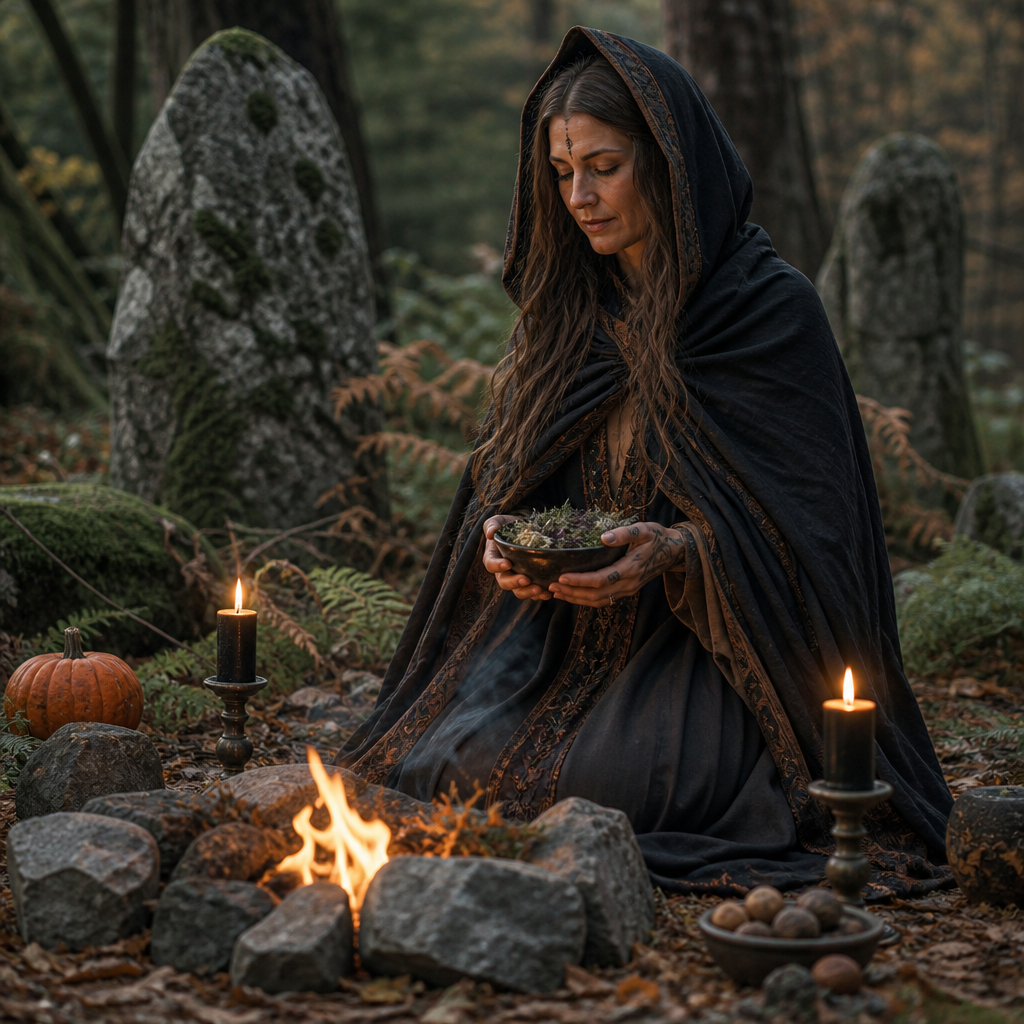
What should you wear for a Samhain ritual that keeps you warm and still feels sacred?
You have a working in mind. Maybe it's an ancestor rite, a protection spell, a night walk, or a seasonal altar ceremony. Whatever the purpose, you need a garment that does real work. It has to keep you warm. It has to let you move. It has to support your focus instead of pulling attention to itself. The best medieval cloaks and hooded shawls for Samhain ritual do all of this without turning your practice into a costume party.
Why a Full Wool Cloak Works Best for Samhain Ritual
For most people, a full wool cloak with a separate hood is the strongest option. Wool was the standard fabric for medieval cloaks. People chose it for warmth, durability, and because it was easy to find. Separate hoods were common too, often built with a wide cowl that spread over the shoulders. This cowl protected the neck and worked as a scarf when needed.
A separate hood gives you more control than one sewn into the cloak. You can wear the cloak open while you prepare. Fasten it closed when the rite begins. Pull the hood forward when you need privacy or a clear break between everyday life and ritual space. That small action of drawing the hood up can mark the moment you step into sacred work.
Choosing Fabric and Cut for Medieval Cloaks and Hooded Shawls
Pick a dense, breathable wool. Skip thin costume material and anything shiny or synthetic. Good wool has weight. It should stand up to wind but still let you kneel, carry offerings, or tend a fire without fighting the fabric.
Look for a half-circle cut or a generous rectangle. Both give solid coverage without excess bulk. Check the ties and the brooch. Make sure nothing will snag your hair or clothing. Look at the seams too. They need to hold up after repeated use outdoors in cold, damp conditions.
Color matters less than function, but certain shades suit the season well. Dark brown, charcoal, black, deep green, and muted red all work for Samhain ritual. These colors fit the mood of the season without forcing a meaning onto the garment that you have not chosen yourself.
When a Hooded Shawl Serves Samhain Ritual Better Than a Cloak
A hooded shawl makes more sense for quiet, seated, or indoor work. It takes up less room around candles and altar items. You can layer it over regular clothing and remove it fast if the rite calls for that.
Choose a shawl that is broad and paired with a real hood, not a decorative flap. Check the edging for clean, finished stitching. Make sure it covers your shoulders fully. A thin triangular wrap might look nice in a photo, but it slips during movement and gives almost no warmth. For ritual use, that trade is not worth it.
Using Cloaks and Hoods as Ritual Boundaries
Treat the garment as a tool, not decoration. Put it on at a specific point, after washing your hands, before casting the circle, or at the moment you set aside daily concerns. Taking it off at the end can mark the close of the rite.
Pulling the hood over your head can help with meditation or communication with ancestors. Just stay aware of your surroundings. Never let the hood block your view near flame, sharp tools, or rough ground. Safety comes first, even in sacred space.
What Quality Looks Like in Medieval Cloaks and Hooded Shawls
Touch the fabric before you buy. Run your hand across it. Good wool feels solid but still soft, not stiff like cardboard. Poor fabric pills fast, holds sweat, and loses its shape after a few wears.
Avoid loose fringe near candles. Avoid long hems that drag on the ground outdoors, since they catch dirt and create a trip risk. Wash or air out the cloak before you use it for ritual, especially if it smells like the factory or carries scent from a previous owner. A clean garment is easier to dedicate to sacred use.
Samhain Symbolism and Honest History
Samhain traditions changed across different times and regions. There is no single, unbroken Celtic ritual that modern cloaks recreate. Historical records tie the season to fires, feasts, disguises, and remembering the dead. Medieval records show cloaks and hoods as everyday outerwear, not ceremonial costume.
Let your own practice decide what the garment means to you. You do not need to claim a direct link to an ancient, unchanged tradition for the item to hold weight in your ritual.
Final Steps Before Samhain Night

Measure the layers you plan to wear underneath. Choose wool or a well-made wool blend. Test every tie, clasp, and brooch before the night of the ritual, not during it. A cloak or hood that fails mid-rite breaks focus at the worst time.
The right garment keeps you warm through a long outdoor rite, gives you room to kneel and move, and marks the line between ordinary life and ritual space without pulling focus from your work. A well-made wool cloak or hooded shawl does this quietly, which is exactly what sacred work requires. If you want to see cloaks and hoods built for real ritual use, visit the shop at definepagan.com/pagan-shop.

Lilly Dupres
Owner & AuthorLilly Dupres, a lifelong practitioner of paganism, established Define Pagan to offer a clear definition of paganism and challenge misconceptions surrounding modern pagan lifestyles.