
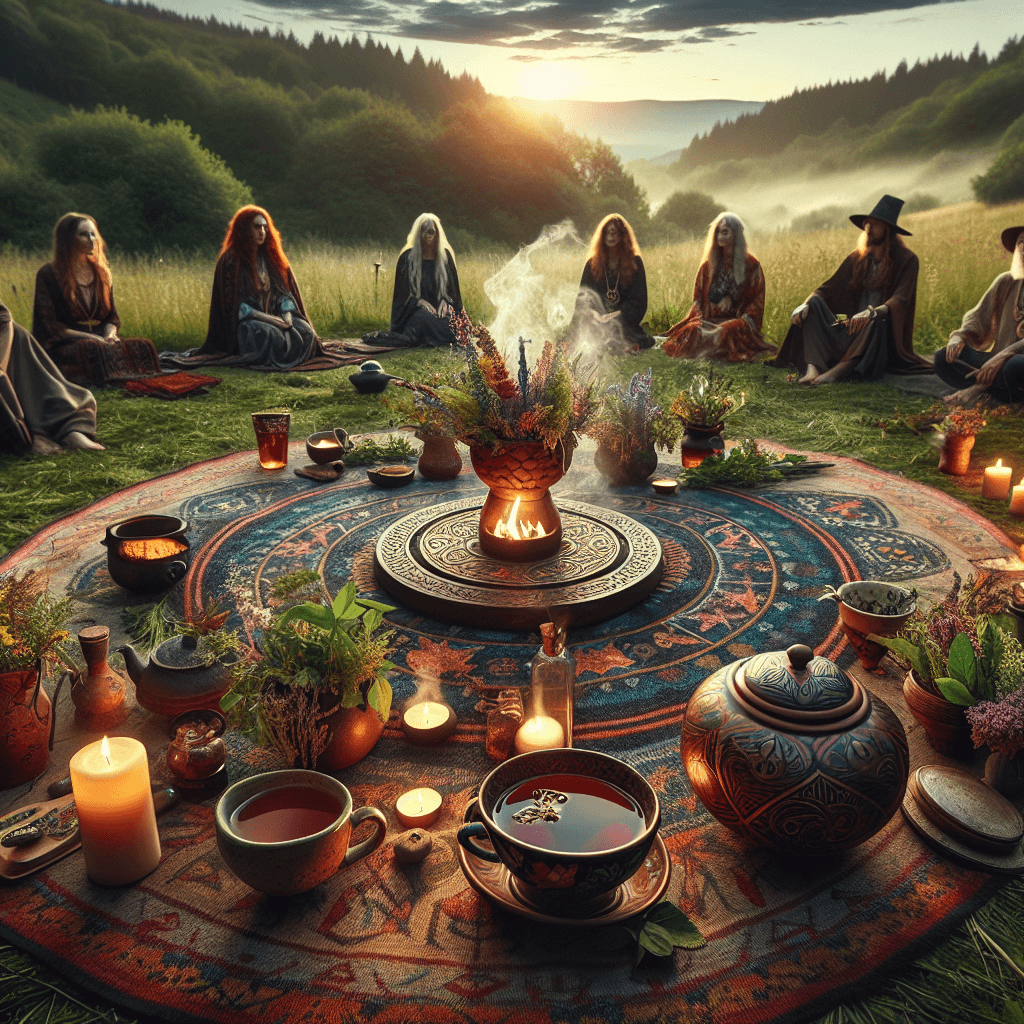
How to Perform Pagan Tea Blessing Rituals for Beginners at Home
The answer lies in understanding that Pagan Tea Blessing Rituals are beautifully accessible practices that anyone can learn in their own kitchen. Start by creating a clean, quiet space where you won’t be disturbed. Gather your basic tools: a teapot or mug, your chosen herbs or tea, a spoon for stirring, and perhaps a candle or some incense to help set the mood. Begin by taking several deep breaths to ground yourself and connect with your intention. This might be healing, peace, protection, or simply gratitude for the moment. As you prepare your tea, focus on this intention rather than letting your mind wander to daily concerns. Pour hot water over your herbs and let them steep while maintaining this mindful state. The key difference between ordinary tea drinking and a blessing ritual is this sustained focus on spiritual connection. Stir your tea clockwise – this direction is traditionally associated with bringing positive energy into your life. As you stir, either silently or aloud, speak your intention or offer thanks to the elements, nature, or whatever spiritual forces resonate with you. Many practitioners tap their spoon gently on the rim of the cup three times to seal their blessing. Finally, drink your tea slowly and mindfully, paying attention to the warmth, flavor, and how it makes you feel. This simple process transforms an everyday activity into a sacred moment of spiritual connection and can be adapted to fit your personal beliefs and needs.
Sacred Tea Ceremony Steps
Creating meaningful Sacred Tea Ceremony Steps elevates your Pagan Tea Blessing Rituals from simple beverage preparation to profound spiritual practice. The foundation of any effective tea blessing begins with proper preparation of both your physical space and your mental state. Clear your ritual area of clutter and distractions, then cleanse it according to your tradition – this might involve smudging with sage, sprinkling salt water, or simply wiping surfaces clean while holding the intention to remove stagnant energy. Many practitioners find that lighting a single candle or stick of incense helps signal to their subconscious mind that this is sacred time. Once your space feels ready, turn your attention inward through grounding techniques. Place your feet firmly on the floor, breathe deeply, and visualize roots extending from your body into the earth below. This connection to the earth’s energy provides stability and helps you remain centered throughout the ritual.
The brewing process itself becomes a meditation when approached with intention. As you measure your herbs or tea leaves, consider their properties and how they align with your purpose. Pour water that has been heated mindfully – not while multitasking, but with full attention to the process. The steeping time offers an opportunity for deeper spiritual preparation. Use these minutes to clarify your intention, perhaps visualizing the outcome you seek or offering gratitude for the healing you’re about to receive. When you stir your tea clockwise, imagine drawing positive energy into the cup and into your life. The act of tapping your spoon on the cup’s rim serves as both a signal to your subconscious that the blessing is complete and a way to send your intention out into the universe. The final step of mindful consumption completes the circle of the ceremony, allowing you to internalize the blessed energy you’ve created.
Herbal Blessing Ingredient Guide
Understanding the Herbal Blessing Ingredient Guide transforms your Pagan Tea Blessing Rituals from generic tea drinking into targeted spiritual work. Each herb carries its own energetic signature and magical properties, making the selection process crucial to your ritual’s effectiveness. Chamomile stands as one of the most versatile blessing herbs, offering gentle relaxation and protection while opening the heart to peaceful resolution of conflicts. Its sunny, apple-like scent immediately shifts the energy toward calm and comfort, making it perfect for evening blessing rituals or when you need to release stress from your day. Lavender brings purification and spiritual clarity, helping to clear mental fog and connect with higher wisdom. When added to blessing teas, lavender enhances meditation and dream work while providing a sense of spiritual cleansing that many practitioners find essential for deeper ritual work.
Rose petals introduce the vibration of love – not just romantic love, but universal love and compassion. They’re particularly powerful in blessing rituals focused on healing relationships, self-love practices, or when you need to approach a situation from a place of heart-centered wisdom. Peppermint offers both physical and spiritual cleansing properties, clearing blocked energy while providing mental alertness that keeps you focused during ritual work. Nettle, despite its prickly reputation, serves as a powerful protector and strength-giver in tea blessings, particularly useful when facing challenges or needing courage for difficult conversations. The key to effective herbal selection lies in trusting your intuition while respecting traditional correspondences. Create blends that speak to your specific needs, perhaps combining chamomile and rose for a love-drawing mixture, or pairing nettle with peppermint for protection and clarity. Consider the lunar phase when selecting herbs – waxing moon energy supports herbs that bring things into your life, while waning moon energy works well with cleansing and releasing herbs. Always research any new herbs for safety, especially if you have health conditions or take medications, and start with small amounts to test your body’s response.
Seasonal Tea Ritual Variations
Embracing Seasonal Tea Ritual Variations deepens your Pagan Tea Blessing Rituals by aligning your practice with the natural rhythms of the earth. Spring brings the energy of renewal and fresh beginnings, making it the perfect time to incorporate herbs that support new growth in your life. Fresh nettle, if you can safely harvest it, carries powerful energy for spring blessing rituals, as does mint, violet leaves, and early dandelion greens. These herbs help you tap into spring’s natural momentum for starting new projects, breaking old habits, or calling in fresh opportunities. Spring blessing teas work particularly well when focused on intentions around creativity, fertility, new relationships, or career changes. The ritual timing can align with dawn hours when the earth’s energy feels most renewal-focused, and many practitioners like to perform spring tea blessings outdoors when weather permits.


Summer’s abundant energy calls for herbs that celebrate joy, manifestation, and the fullness of life. Rose petals reach their peak power during summer months, offering heart-opening energy perfect for blessing rituals focused on love, friendship, and creative expression. Hibiscus adds vibrant energy and passion, while calendula flowers bring sunny optimism and enhanced psychic abilities. Summer tea blessings often center around gratitude for abundance, strengthening relationships, and celebrating achievements. The ritual energy flows best during the day’s peak hours when solar energy runs strong, and many practitioners choose to perform summer blessings in garden spaces or other outdoor locations where they can connect directly with the season’s vital energy. Autumn shifts the focus toward harvest, gratitude, and preparation for the introspective months ahead. Warming spices like cinnamon, clove, and cardamom not only taste appropriate for cooler weather but also carry energies of protection, prosperity, and spiritual grounding. Apple pieces, when available, connect you to the traditional harvest celebrations, while rosemary and sage offer wisdom and memory enhancement perfect for autumn’s reflective energy. Winter blessing rituals embrace the season’s call for rest, healing, and inner work, making herbs like chamomile, ginger, and eucalyptus perfect choices for their warming, protective, and restorative properties.
Tasseography Tea Leaf Reading
Integrating Tasseography Tea Leaf Reading into your Pagan Tea Blessing Rituals creates a complete spiritual experience that combines blessing, meditation, and divination in one powerful practice. This ancient art of reading tea leaves transforms the remnants of your blessed tea into a tool for spiritual guidance and insight. The process begins during your initial tea preparation when you choose loose leaf teas rather than tea bags, allowing the leaves to move freely and settle naturally in your cup. As you perform your blessing ritual and drink your tea, save the final sip along with the settled leaves at the bottom of your cup. The divination process starts by gently swirling the remaining liquid and leaves in your cup three times clockwise, the same direction you used when blessing your tea. This movement distributes the leaves while maintaining the positive energy flow you established during your blessing ritual. After swirling, quickly invert your cup onto a saucer and allow it to drain for a few moments, leaving the wet leaves clinging to the sides and bottom of your cup in random patterns.
The interpretation phase requires a shift from the focused intention of your blessing ritual to an open, receptive state of awareness. Turn your cup upright and examine the patterns formed by the leaves, looking for recognizable shapes, symbols, or images. Traditional tasseography assigns meanings to common shapes – birds often represent messages or news, trees suggest growth and stability, circles indicate completion or cycles, while lines can represent journeys or connections. However, your personal intuition and the context of your original blessing intention should guide your interpretation more than rigid symbol dictionaries. The handle of your cup represents you and your immediate concerns, with leaves near the handle relating to present circumstances, while leaves on the opposite side suggest future influences or distant matters. Leaves positioned high in the cup typically relate to spiritual or mental matters, while those settled at the bottom connect to practical, earthly concerns. The beauty of combining tasseography with your blessing ritual lies in how the reading often relates directly to your original intention, providing guidance or confirmation about the spiritual work you just completed through your tea ceremony.
Wiccan Tea
Wiccan Tea practices bring formal structure and elemental awareness to Pagan Tea Blessing Rituals, creating ceremonies that honor both the Goddess and God energies while working with the natural magical properties of herbs. In Wiccan tradition, tea rituals often begin with casting a protective circle, calling upon the four elements to witness and bless the ceremony. This formal opening transforms your tea preparation into sacred space where mundane concerns fall away and spiritual work can flourish. Many Wiccan practitioners start by lighting candles to represent the God and Goddess, often choosing white or silver for the Goddess and gold or red for the God, though color choices can vary based on the specific intention of the ritual. The elemental correspondences play a crucial role in Wiccan tea ceremonies, with water representing the emotional and psychic aspects of the working, fire present in the heating of the water and the candle flames, earth represented by the herbs themselves, and air invoked through the steam rising from the cup and any incense burned during the ritual.
The selection of herbs in Wiccan tea practice often follows more formal correspondences, with practitioners choosing plants that align with specific deities, moon phases, or magical purposes. For example, a Wiccan blessing tea for protection might combine mugwort for the Goddess’s protection, rosemary for remembrance and fidelity, and a pinch of salt for earth’s grounding power. The preparation process becomes a form of spellwork, with each action performed with conscious intent and often accompanied by spoken invocations or chants. Stirring the tea clockwise while reciting a blessing or affirmation charges the liquid with magical energy, transforming it from simple herbal tea into a sacred potion for healing, blessing, or spiritual connection. The consumption of the blessed tea represents a communion with divine energy, allowing the practitioner to literally internalize the magical work they’ve created. Many Wiccans end their tea rituals by offering a small portion of the tea to the earth as a libation, thanking the elements and deities for their presence and assistance. The formal closing of the circle completes the ceremony, but the blessed energy of the tea continues to work within the practitioner long after the ritual tools are put away. This structured approach to tea blessing makes Wiccan tea ceremonies particularly powerful for important magical workings or when seeking strong divine connection and protection.
Ready to deepen your spiritual practice and discover which herbs call to your soul for your own sacred tea ceremonies?


