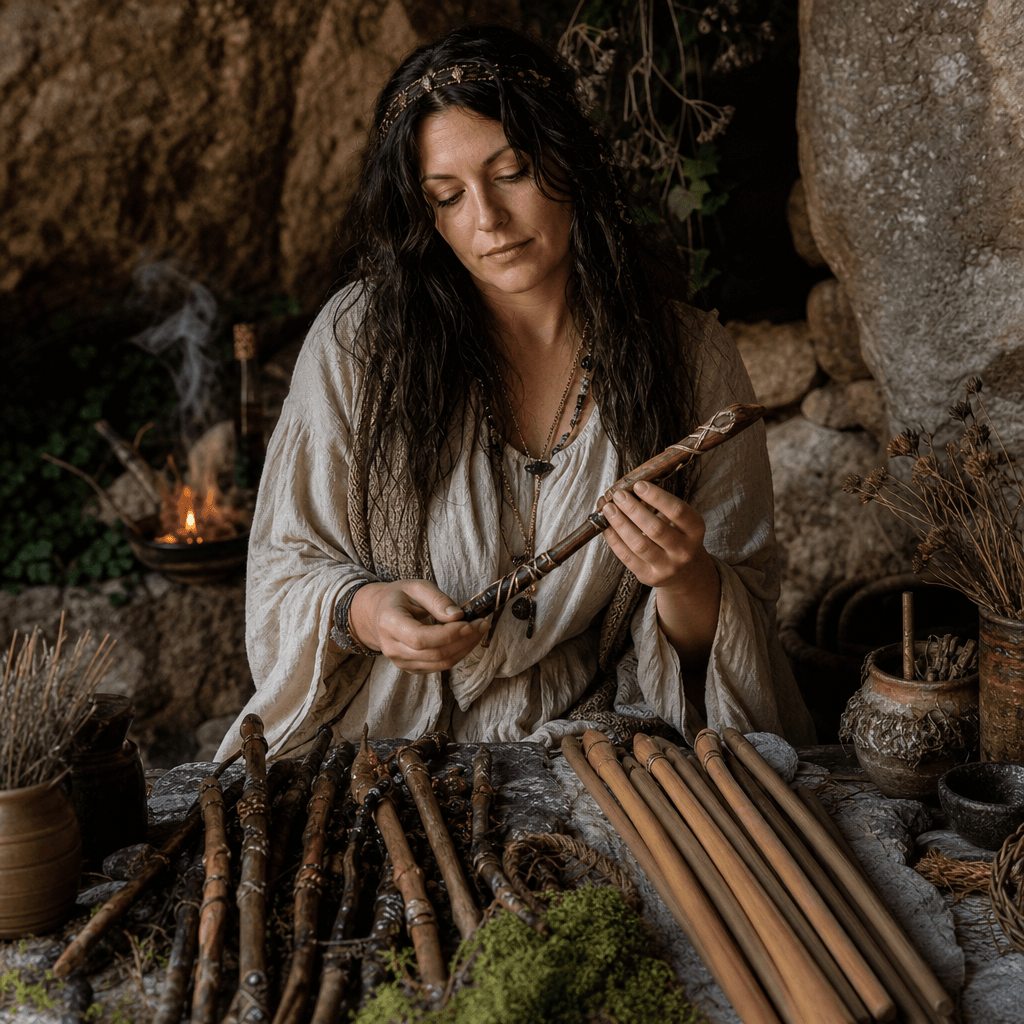
How to Use a Magick Wand in Spellwork for Real Results

Handicraftviet Skull Wand - Handcrafted Real Wood Grain, Wizard Magic Wand for Adults Kids to a Magical Adventure, 15In Great Gift for Halloween
View Product →A wand directs energy. It does not create focus for you. You already bring the intention. The wand gives it form and shape in physical space.
When you work with a wand, you use it to mark boundaries, point energy toward a target, trace sigils or circles, bless objects, and close rituals. These are functional movements, not symbolic gestures.
Your role is to gather your intention first. Then the wand becomes the final physical expression of that intention. Energy moves through your body, into your hand, and out through the tip.
What a Wand Does in Different Magical Traditions
In many modern traditions, the wand represents air or fire depending on the system. In ceremonial magic, it often serves as a command instrument. In folk practice, it is simply a personal tool that extends your hand.
This flexibility is why wands work across different styles of practice. You are not locked into one interpretation. The wand adapts to the work you do.
Choosing a Wand That Fits Your Ritual Work
Material changes how a wand handles. This matters more than symbolism when you are in the middle of a ritual.
Wood is traditional and forgiving. It warms quickly in your hand. It suits repeated use. It feels comfortable after months of practice.
Crystal wands work better for precise, visualized work. They give a more reflective, contained feel. Practitioners who want to see energy moving through the tool tend to prefer crystal.
Metal wands are less common. They give you a clean line, durability, and a colder presence. They suit formal work where you want a clear boundary between ritual and everyday life.
What matters most is balance and grip. A wand should feel stable when you trace a circle or hold a point for a long blessing. If it wobbles or feels awkward, it will break your focus.
A poor wand is too slick, too heavy at one end, or decorated so much that it becomes awkward to handle.
How to Use a Magick Wand in Spellwork: Step by Step
Start by cleansing the wand. Dedicate it to one purpose or to your general practice. This sets the tool apart from everyday objects.
Hold it in your dominant hand. Gather your intention. Let the wand be the last movement, not the first.
Move energy through your body, into your hand, and out through the tip. Use the wand to point, trace, or seal.

Rich Boxer Fine Handcrafted Crystal Magic Wands Wizard Wand | Green Aventurine Gemstone White Crystal Magic Wand for Witches and Wizards
View Product →If you are casting a circle, walk the perimeter with the wand. Draw the boundary with steady, deliberate motion. The circle is not complete until you finish the trace.
If you are blessing an object, touch or hover the tip over it. Finish with a clear verbal declaration. The wand gives the blessing a physical anchor.
If you are tracing a sigil, move the wand at a pace that lets you hold the entire design in your mind. Rushing breaks the connection between intention and form.
Which Type of Wand to Buy for Each Purpose
For circle casting and general spellwork, buy a straight, balanced wood wand with a comfortable taper. Length should fall between 9 and 15 inches. This makes it easy to control without straining your wrist.
For blessing and healing work, buy a lighter wand that allows slow, precise motion. A rounded feel is easier to move deliberately. Avoid heavy crystal tops or thick handles.
For formal altar work or ceremonial practice, a metal or stone-accented wand gives a more deliberate presence. Weight matters here. A heavier wand signals authority and clear directional force.
For travel or outdoor rites, choose something sturdy, plain, and easy to carry. You do not want a fragile piece that you hesitate to pack or use in wind and weather.
If you make your own wand, the making becomes part of the charge. You embed your intention into the tool as you shape it.
What Practitioners Get Wrong About Wands
The most common mistake is treating the wand like decoration. A wand should fit your hand, your pace, and your actual workings. If it sits on your altar untouched, it is not serving you.
Another mistake is buying a dramatic piece that looks impressive but is awkward in ritual. This happens with oversized crystal tops, slippery lacquered finishes, or highly fragile construction.
A wand that survives regular use and feels natural after repeated handling will serve you better than a showpiece you hesitate to pick up.
How a Wand Fits Into Your Larger Practice
Use the wand enough that it becomes part of your ritual grammar. Your body should know how it feels in your hand. Your movements should be automatic, not deliberate.
If your work is mostly altar-based, a shorter wand between 9 and 15 inches is easier to control in a confined space.
If you cast circles often, choose one that is balanced in the hand and visible in dim ritual light. You need to see where you are pointing without second-guessing.

If you do healing, ancestor work, or blessing work, a lighter wand with a rounded feel is easier to move slowly and deliberately. Heavy tools tire your hand and break your focus.
If you want authority and clear directional force, a heavier wood wand or a wand with a pronounced point gives that sense of finish.
Where to Buy a Wand That Works for Ritual Use
When you are ready to buy a wand, choose from a supplier that understands how to use a magick wand in spellwork. Reputable pagan suppliers stock wands made for function, not display. This makes a practical difference.
Look for wands with clear weight distribution, comfortable finishes, and construction that holds up to repeated use. Avoid anything that feels slippery, top-heavy, or too delicate to handle without worry.
The wand should feel like an extension of your hand within a few uses. If it takes months to feel comfortable, the fit is wrong.
Making Your Wand a Working Tool
A wand is only useful if you use it. Pick it up during every ritual. Trace every circle. Bless every object. Seal every working.
The more you work with it, the more the wand becomes part of your body memory. You stop thinking about where it is. You stop worrying about dropping it. You stop questioning whether you are holding it correctly.
That is when the wand starts doing what it is supposed to do. It directs energy cleanly. It gives your intention physical form. It completes the movement from thought to action.
If you are building a ritual practice or deciding which tools belong on your altar, a wand that fits your hand and your work will serve you for years. Define Pagan carries wands made for practitioners who need functional tools, not decorative objects. Explore the collection at https://www.definepagan.com/pagan-shop/ to find a wand that works for the rituals you already do.

Lilly Dupres
Owner & AuthorLilly Dupres, a lifelong practitioner of paganism, established Define Pagan to offer a clear definition of paganism and challenge misconceptions surrounding modern pagan lifestyles.