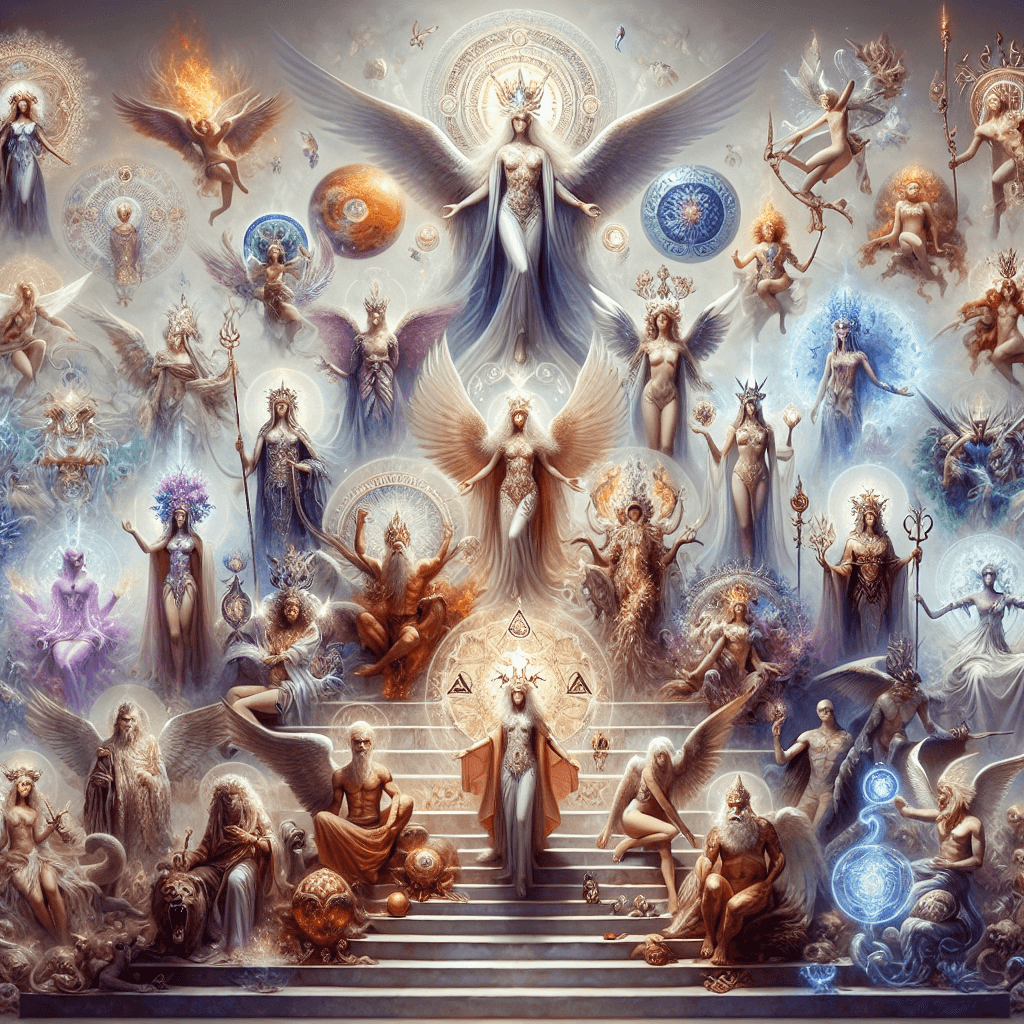
What are the different levels of gods and their specific roles in ancient pantheon hierarchy and roles systems?
Ancient pantheons structured themselves into three primary tiers that reflected both cosmic order and earthly society. At the foundation level, primordial beings like Gaia, Uranus, and Tartarus governed fundamental forces such as earth, heavens, and the underworld. These ancient entities predated all other divine beings and controlled the basic building blocks of existence. The middle tier consisted of Titans and second-rank deities who served as intermediaries between primordial forces and active divine rule. Figures like Coeus embodied wisdom while Themis represented divine law and proper conduct. At the apex stood supreme deities such as the Greek Olympians or chief gods from other cultures. Zeus commanded sky and justice, Poseidon ruled the seas, and Demeter controlled agricultural abundance. This hierarchical structure created clear chains of divine authority that mortals and lesser gods alike recognized and respected.
Divine Authority Structures
Divine authority structures in ancient pantheons mirrored the power dynamics found in human societies while establishing absolute cosmic order. Zeus reigned from Mount Olympus with unquestionable dominion over gods and mortals, delegating specific domains to other Olympian deities who answered directly to his supreme authority. Each god maintained strict control over their assigned sphere of influence, creating a divine bureaucracy that managed every aspect of existence from war to harvest seasons. Mesopotamian pantheons followed similar patterns where Anu held ultimate power before transferring authority to Enlil, who became more accessible to human prayers and offerings. This transfer of active rule allowed the supreme deity to maintain cosmic oversight while a more engaged god handled daily divine administration.
Prayers and requests moved upward through carefully maintained chains of lesser gods, each deity serving as a crucial link between human petitioners and higher divine powers. The Hittite pantheon formed distinct pyramid structures with the Storm-god and his divine spouse at the peak, followed by descending ranks of mother-goddesses, solar deities, war gods, and finally base-level spirits and deified kings. These hierarchical systems ensured that divine power flowed in predictable patterns, giving both gods and mortals clear understanding of proper spiritual protocol. Local variations adapted these structures to regional needs while maintaining the essential principle that divine authority must flow through established channels to remain effective and legitimate.
Mythological Power Rankings
Mythological power rankings established clear precedence among divine beings based on their cosmic importance and sphere of influence. Primordial chaos forces held the highest theoretical power, with entities like Chronos controlling time itself and Eros governing the fundamental drive of procreation that sustained all life. These ancient powers rarely involved themselves in daily divine politics but their influence permeated every aspect of existence. Titans occupied the second tier with specialized cosmic duties that bridged primordial forces and active divine rule. Helios carried the sun across the sky each day while Eos brought forth each dawn, their consistent performance maintaining the basic rhythms that allowed civilization to flourish. The Olympian gods represented the peak of active divine authority with Athena embodying wisdom and crafts, Apollo controlling sun, prophecy, and healing arts. Their power manifested through direct intervention in mortal affairs and command over lesser divine beings.


Mesopotamian rankings placed Anu as the distant ultimate lord while Enlil served as the accessible divine enforcer who carried out cosmic justice and responded to human appeals. Egyptian hierarchies shifted over time, sometimes elevating Ra as the supreme solar deity, other times placing Amun as the hidden god above all others, and occasionally recognizing powerful mother goddesses as the highest divine authority. These ranking systems reflected changing political and religious priorities within each culture while maintaining the essential concept that divine power must be organized and distributed according to cosmic law. The rankings also provided mortals with clear guidance about which gods to approach for specific needs and proper protocols for divine communication.
Religious Leadership Systems
Religious leadership systems reinforced pantheon hierarchies through elaborate priesthoods that connected earthly worship with divine authority structures. Ancient temples established high priests and priestesses dedicated to specific deities, with these religious leaders serving as direct intermediaries between their assigned gods and human worshippers. Local high priests managed daily temple operations, conducted regular rituals, and interpreted divine will for their communities, while continental archpriests drew power from entire pantheons to perform extraordinary feats including resurrection of the dead and major healing miracles. Kings often served as chief servants of the gods, managing vast networks of offerings, sacrifices, and temple maintenance that kept divine favor flowing to their kingdoms. Greek oracles provided direct communication channels with specific deities, delivering prophecies and guidance that shaped major political and military decisions throughout the Mediterranean world.
The sacrifice system created formal protocols for approaching different levels of the divine hierarchy, with specific animals, foods, and ritual procedures required for each type of divine petition. Hittite treaties incorporated pantheon order directly into political documents, making divine hierarchy part of international law and diplomatic protocol. These religious systems ensured that divine authority translated into earthly power while maintaining proper respect for cosmic order. Priesthoods also preserved knowledge of correct ritual procedures, seasonal ceremonies, and divine genealogies that kept pantheon hierarchies functioning across generations. Temple complexes served as administrative centers where religious and political authority merged, creating unified leadership structures that reflected divine organization in human institutions.
Sacred Governance Models
Sacred governance models integrated divine hierarchy directly into political authority, creating unified systems where earthly rulers derived legitimacy from their position within cosmic order. Mesopotamian kings split their authority between sacred priestly duties and secular military leadership, serving female deities through elaborate temple rituals while commanding armies and administering justice as representatives of male war gods. Egyptian pharaohs embodied divine authority more completely, ruling as gods incarnate who maintained cosmic balance through their very existence and daily ritual performance. This divine kingship model made the pharaoh simultaneously the highest human authority and an active member of the divine hierarchy with direct access to cosmic power.
Hittite local pantheons simplified the complex divine pyramid structures for individual towns and cities, emphasizing primeval gods who connected directly with local rulers and their specific regional needs. These simplified hierarchies made divine authority more accessible to smaller communities while maintaining connection to the greater cosmic order. Divine mandate systems required rulers to demonstrate their worthiness through successful military campaigns, abundant harvests, and effective administration of justice, with failure indicating loss of divine favor and legitimacy. Royal succession often involved complex religious ceremonies that formally transferred divine authority from one ruler to the next, ensuring continuity of both earthly and cosmic order. Sacred governance also included advisory councils of priests and nobles who helped interpret divine will and maintain proper relationships between human authority and pantheon hierarchy. These integrated systems created stable governments that could adapt to changing circumstances while maintaining their essential divine foundation and cosmic legitimacy.
Understanding pantheon hierarchy and roles provides essential insights into how ancient cultures organized both divine and earthly power, creating integrated systems that influenced politics, religion, and daily life for thousands of years. Which ancient pantheon structure resonates most strongly with your own understanding of divine organization and cosmic order?
Related Items:

Lilly Dupres
Owner & AuthorLilly Dupres, a lifelong practitioner of paganism, established Define Pagan to offer a clear definition of paganism and challenge misconceptions surrounding modern pagan lifestyles.