
What Are the Best Magick Wands Under $25 That Won’t Break or Stop Holding Energy?
You need a wand for ritual work and your budget stops at $25. The challenge is finding something that holds energy without falling apart after three uses. Most cheap wands are plastic garbage dressed up with fake crystals and vague promises. Some are worth buying. This guide shows you exactly which ones work and which ones waste your money.
Best Magick Wands Under $25: Real Wood Versus Plastic Junk

Hand Carved Wooden Magic Wand, Magic Wands for Wizards/Collectible Cosplay, Magical Gift for Halloween, Christmas and Birthday Party 15 inch (S6)
View ProductA wand under $25 works if it’s made of real wood. Skip anything made from composite materials or plastic. Real wood wands at this price point come from pine, cedar, or driftwood. These materials hold energy well enough for basic spellwork and charging rituals.
The wood should show visible grain patterns, natural knots, and a slight texture when you run your finger across it. Press your thumb against the surface. Real wood feels slightly warm and has texture. Plastic feels cold and uniformly smooth. Real wood also smells faintly natural when you warm it in your hand. If it smells like varnish or has no smell at all, it’s synthetic.
Avoid anything labeled “resonant wood” without telling you the species. That phrase hides composite materials or resin-filled foam. Sellers use it when they want to sound mystical without specifying what they’re actually selling you.
What Makes Best Magick Wands Under $25 Hold Energy During Rituals
The wood’s integrity matters more than its appearance. A wand channels energy from you through the wood and out into your working space. It’s a conductor, not a battery. The wood’s history and natural properties give it this ability.
Choose wood that aligns with your tradition’s elemental system. Cedar corresponds to air in many practices. Pine connects to earth. Oak brings strength. Willow supports intuition. Birch works for new beginnings. Under $25, you won’t find rare woods like ebony or yew. Common species work well if they’re real and properly finished.
The finish should be light. Hand-sanded wood with minimal oil or wax works better than heavy varnish. Thick finishes block the wood’s natural properties and create a barrier between your energy and the tool.
Skip These Features When Buying Best Magick Wands Under $25
Painted gems glued to the tip shatter under ritual heat. They also disrupt energy flow because the adhesive creates a dead zone where the glue sits. Metal rings look decorative but often crack the wood as it expands and contracts with temperature changes.
Pre-painted symbols limit how you personalize the wand later. Your relationship with this tool evolves. A bare wand lets you add your own marks, oils, or ribbons as your practice develops. Pre-made imagery forces someone else’s intent onto your work.
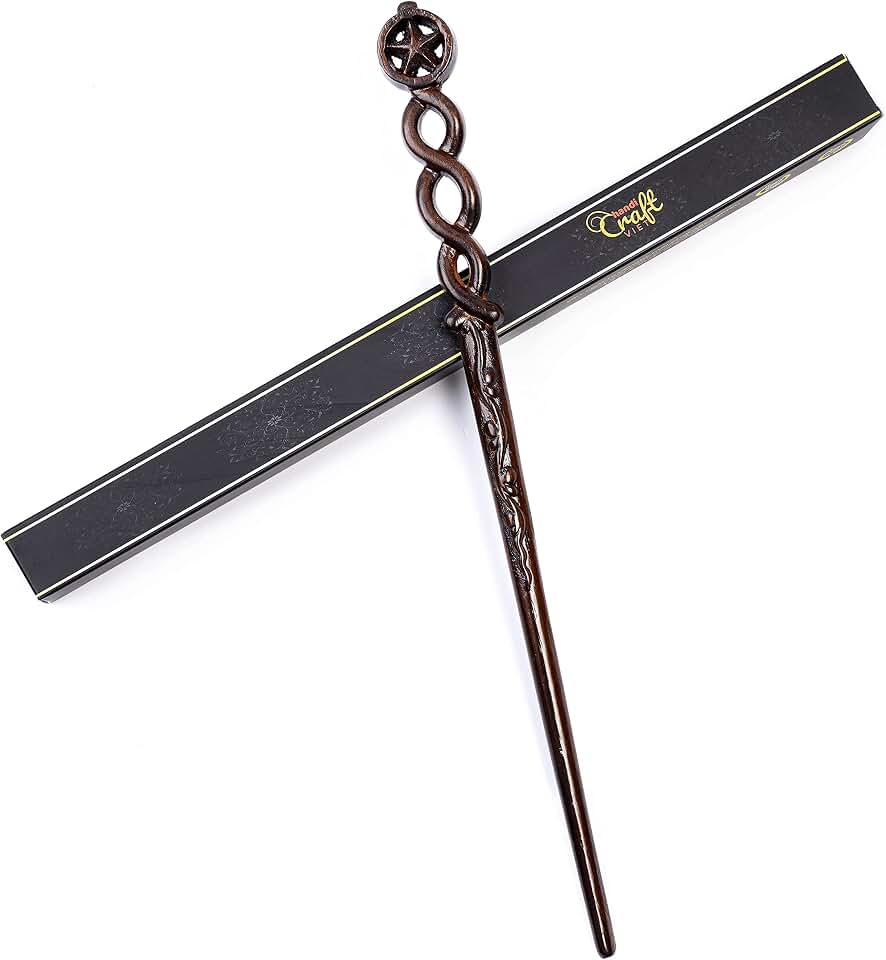
Hand Carved Wood Magic Wand/Witch Wand Real Wood/Wizard Wands 15' for Halloween, Christmas and Birthday Party/Wooden Wand Star (S5)
View ProductAvoid wands that feel tip-heavy. Hold the wand like you would during a casting. The weight should balance naturally in your grip. A tapered end fits most hands better than a bulbous tip loaded with fake decorations.
Skip anything hollow or extremely lightweight. Tap the wood gently. Solid wood produces a dull thud. Hollow composite materials sound tinny or empty.
How to Test a Budget Wand Before You Use It in Circle
Hold the wand during a short meditation. Sit quietly for five to ten minutes with the wand in your dominant hand. Notice how it feels. Does it warm slightly? Does it feel responsive when you direct your attention through it? A good wand feels alive in your hand, not inert.
Try a simple energy movement exercise. Stand and hold the wand at waist level. Visualize energy moving from your core, down your arm, through the wand, and out the tip. A functional wand makes this feel smooth and natural. A poor wand feels like pushing energy through mud.
If the wand feels dead or unresponsive after this test, it won’t improve with use. Return it if you’re able. If not, set it aside and try a different one.
Where to Source Quality Budget Wands That Work
Buy from suppliers who understand ritual use, not general craft stores. Pagan suppliers source wood specifically for energy work. They know which finishes interfere with function and which woods hold up to repeated use.
These suppliers stock plain, functional wands without unnecessary decorations. They specify wood species clearly. They understand that practitioners need tools that work, not props that look good in photos.
General retailers often sell decorative items marketed as ritual tools. These pieces prioritize appearance over function. They use cheap materials and heavy finishes because they’re designed to sit on shelves, not work in circle.
Why Function Beats Appearance Every Time

Wooden Wizard Wand 15 inch, Magic Wand Real Wood/Collectible Cosplay Magic Wand/Magical Gift for Halloween, Christmas and Birthday Party (S10)
View ProductA wand’s job is to move energy. Decorations add weight, create weak points where materials join, and introduce foreign energies into your working. The most effective wands under $25 are bare wood, properly finished, with clean lines and balanced weight.
You personalize a plain wand as your practice grows. Add ribbons during specific rituals. Mark it with chalk for temporary workings. Anoint it with oils that match your intent. This flexibility matters because your needs change. A decorated wand locks you into someone else’s aesthetic and energetic choices.
The wood’s natural properties do the work. Oak doesn’t need painted runes to bring strength. Cedar doesn’t need blue paint to connect with air. The tree’s history, the wood’s grain, and your focused intent create the tool’s power.
Traditional practitioners know this. They choose simple tools and build relationships with them over time. A bare pine wand you’ve used for two years outperforms an elaborately decorated composite wand you bought yesterday.
Start with a simple wood wand that feels balanced when you hold it. Test it during meditation or a basic spell. If it feels responsive and alive, you’ve found a working tool. The wood’s integrity and your relationship with it matter more than any decoration.
Reputable pagan suppliers stock functional wands at every price point, including quality options under $25. These tools hold energy, survive repeated use, and give you space to build your own practice without interference from pre-made imagery. Browse the collection at https://www.definepagan.com/pagan-shop/ to find tools built for actual ritual work, not shelf display.

Lilly Dupres
Owner & AuthorLilly Dupres, a lifelong practitioner of paganism, established Define Pagan to offer a clear definition of paganism and challenge misconceptions surrounding modern pagan lifestyles.