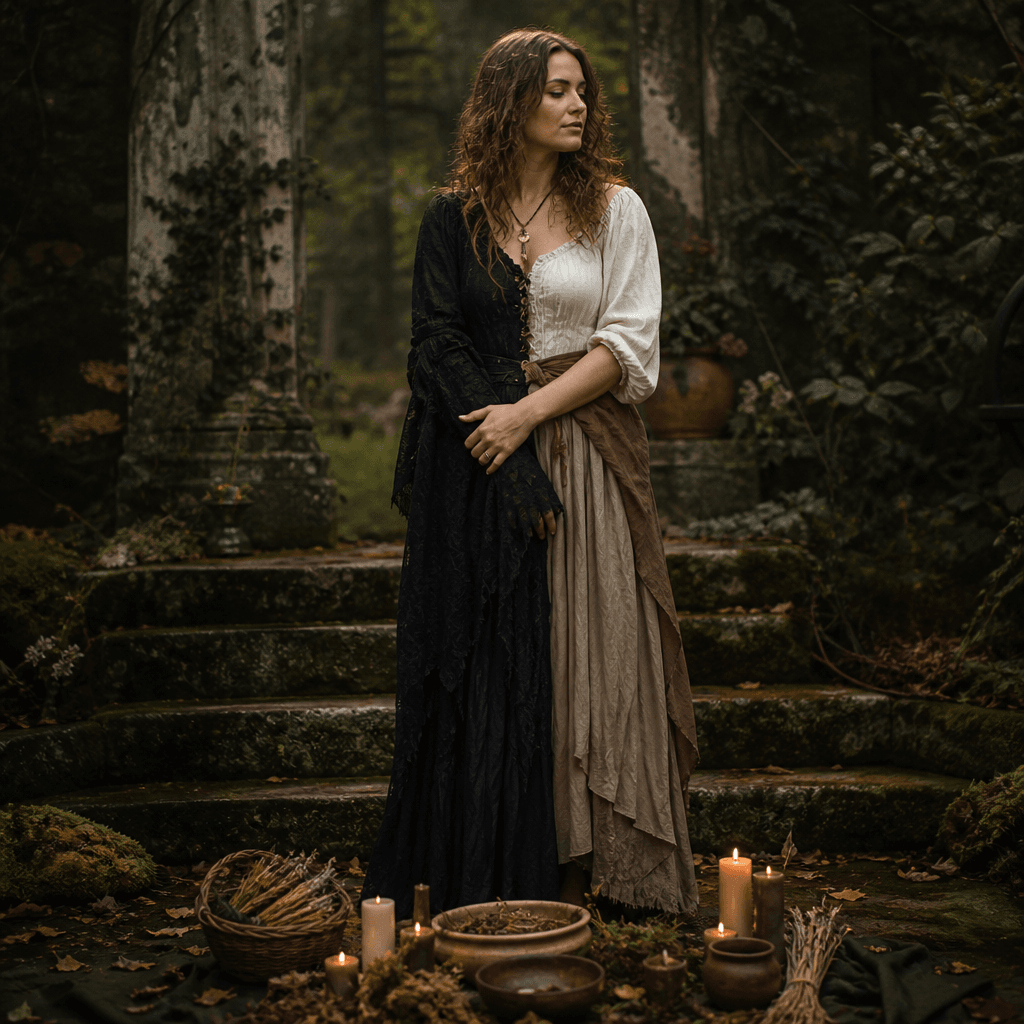
Should I Get a Gothic Witch Dress or a Renaissance Peasant Dress for My Practice?
You have a ritual coming up, or a seasonal gathering, or you simply want your wardrobe to match your practice. Then the question hits you: gothic witch dress or Renaissance peasant dress? The answer depends on what you need the garment to do, not just how it looks.
What a Renaissance Peasant Dress Offers Your Practice
A Renaissance peasant dress is built for work, not display. Rural clothing from that era used linen, wool, and hemp because those fabrics hold up to daily labor. Long skirts, aprons, belts, and loose layers let people move, bend, and carry things without restriction.
This makes the Renaissance peasant dress a strong pick if your practice happens outdoors. Think seasonal festivals, herb gathering, or rituals where you kneel on the ground or walk through a field. If you want one dress that handles candle work, meditation, and public gatherings without changing clothes between each one, start here.
The fabric does the heavy lifting. Natural fibers breathe. They hold up through repeated wear and washing. A dress built from these materials will still look right after a full season of use, not just one special night.
What a Gothic Witch Dress Offers Your Practice
A gothic witch dress works differently. It sets a mood before you say a single word. Gothic fashion pulls from dark romanticism and later subcultures, using black fabric, dramatic shapes, lace, and velvet. When you put one on, you feel the shift from ordinary time into ritual time.
This style fits formal invocations, devotional work, trance sessions, and altar ceremonies. These are moments where presentation helps you step into a role. The dress becomes part of the ritual itself, not just something you happen to be wearing.
One warning here. A gothic witch dress that looks stunning but traps your arms or drags through flame is not doing its job. Movement still matters. Check the sleeves. Check the hem. A dress that catches on your altar candles defeats its own purpose.
Gothic Witch Dress vs. Renaissance Peasant Dress: The Historical Truth
Neither style was ever actual "witch clothing." During the European witch trials, accused people wore the same clothing as everyone else in their village. There was no recognizable magical uniform. The gothic witch look you see today came from later cultural movements, not from historical witchcraft practice.
This matters because it changes how you should value these dresses. The Renaissance peasant dress earns its place through practical cut and sturdy materials, not because it connects you to real historical witches. The gothic witch dress earns its place through atmosphere and symbolism you bring to it, not because it matches some lost magical tradition.
Choosing Between a Gothic Witch Dress and a Renaissance Peasant Dress by Fabric and Fit
Look at the fabric before you look at the style. Linen and wool breathe and last through repeated use. Thin polyester traps heat against your skin and can melt if it gets near an open flame. That matters more than you might think during candle work.
Check four things on any dress you consider:
- Seam strength, so it holds up to movement
- Sleeve clearance, so your arms move freely
- Hem length, so you do not trip or drag fabric through wax
- Neckline comfort, so you can kneel, bow, or reach without adjusting your collar mid-ritual
No sleeve or skirt should ever come close to an open flame, regardless of fabric. Natural fibers lower the risk. They do not remove it.
How Each Dress Works Once You Own It
A Renaissance peasant dress works best as a base layer for your wardrobe. Add an apron for kitchen witchery. Add a belt pouch to carry small tools. Add a shawl when you work outside in the cold. The plain design leaves room for you to add your own touches through embroidery or color.
A gothic witch dress works more like a frame around a specific moment. Black can carry meaning tied to protection, mourning, or shadow work, but that meaning comes from your own practice and intention. The color alone does not create the meaning. Skip any dress covered in generic occult symbols unless those symbols actually belong to your tradition. A pentacle stitched on for decoration means nothing if it has no place in your actual practice.
Making the Final Call
The right choice comes down to how often you will wear the dress and what you need it to do. Pick the Renaissance peasant dress for comfort, versatility, and repeated outdoor use. Pick the gothic witch dress when you need strong ceremony and a clear line between ordinary life and ritual time. Many practitioners end up owning both, using each one for what it does best.
Your dress should support your practice, not fight against it. A well-made Renaissance peasant dress gives you the freedom to move through outdoor rites and daily tasks without a second thought, while a well-made gothic witch dress gives your formal ceremonies the weight and focus they deserve. Choosing the wrong fabric or fit can mean a dress that melts near your candles or limits your arms during a working, so getting this decision right actually protects your practice.
Browse the full collection of ritual-ready dresses and accessories at the Define Pagan shop and find the one built for how you actually practice.

Lilly Dupres
Owner & AuthorLilly Dupres, a lifelong practitioner of paganism, established Define Pagan to offer a clear definition of paganism and challenge misconceptions surrounding modern pagan lifestyles.