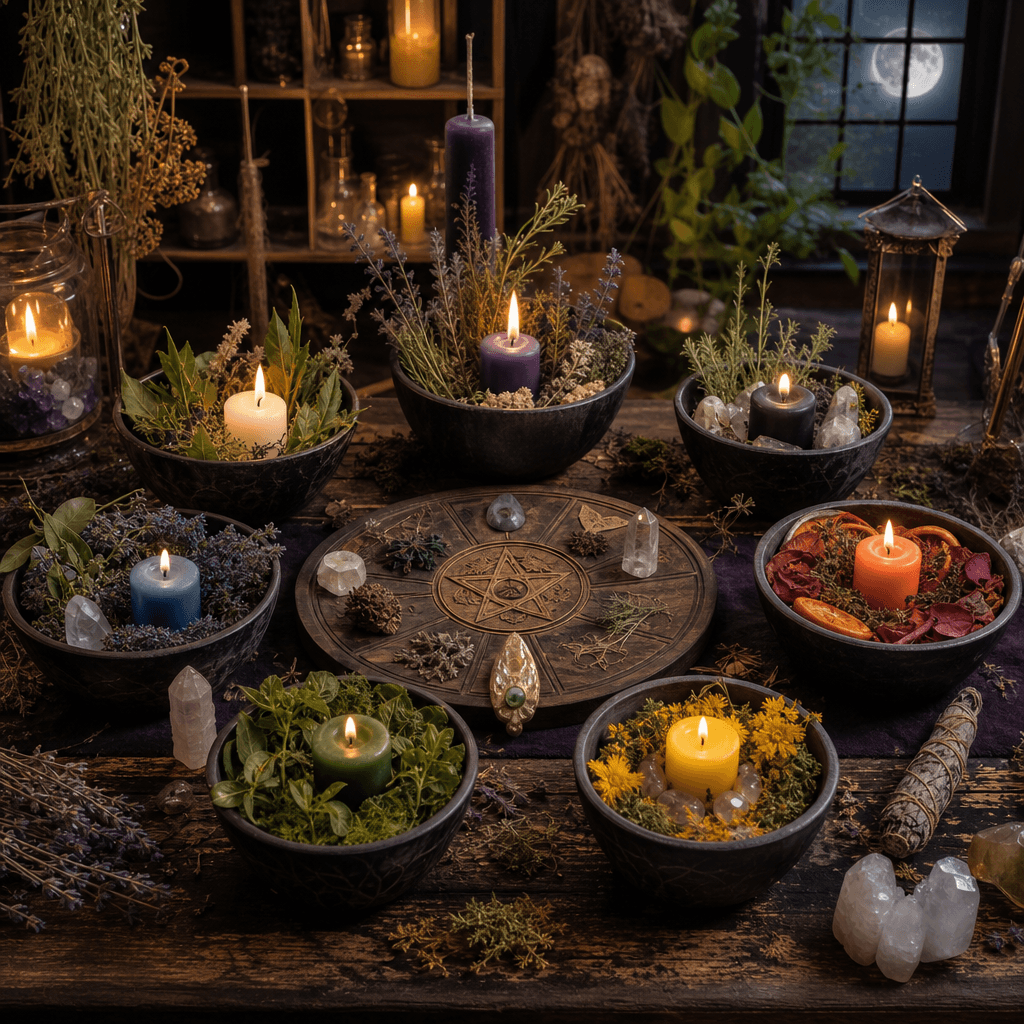
What Should I Learn Before I Buy Witchcraft Supplies?

YOROXRG 2"x4" High White Pillar Candles, Set of 20 Unscented. Bulk Buy. Ideal for Halloween, Wedding, Emergency Lanterns, Household, Wedding and Home Décor Candlesticks
View Product →You do not need a full altar before you start practicing. You need to know what you are going to do with it. The 7 spells every witch should know before buying a single supply form the structure of a working practice. Learn these first, then buy what supports them.
Most new practitioners fill carts before they understand what their practice needs. They buy crystals, athames, specialty candles, and expensive oils without knowing which problems they are trying to solve. This leads to clutter, confusion, and money spent on items that never leave the shelf.
A functional practice grows from use, not from accumulation. Start with seven spell forms that solve real problems: cleansing, protection, blessing, banishing, attraction, divination, and offering. These workings form the backbone of everyday witchcraft because they address the situations you will face repeatedly.
The 7 Spells Every Witch Should Know Before Buying a Single Supply
Cleansing resets a space or object after heavy use. You perform it before and after ritual work, when you move into a new home, or when something feels energetically heavy. The method depends on your tradition. Smoke, salt, water, and prayer have all been used in folk practice. What matters is consistency and results. A good cleansing working should leave the space feeling settled, not theatrically overwhelmed.
Protection holds boundaries. It creates a barrier between you and unwanted influences. You set protection on your home, your workspace, your body, or your tools. It is proactive work, done before you need it. The working should create a clear sense of boundary, not vague optimism.
Blessing sets a favorable charge on a person, room, or item. You bless what you already have to consecrate it for use. This includes blessing food, blessing a new tool, or blessing yourself before a difficult task. Blessing affirms what is present and directs positive intention toward it.
Banishing removes what does not belong. It is active removal work. You banish an influence, a habit, a person’s hold on you, or an unwanted presence. Banishing is not the same as protection. Banishing removes; protection prevents. Many practitioners confuse the two and end up with muddled results.
Attraction draws a condition toward you. That condition might be opportunity, clarity, love, money, or health. Attraction is different from blessing. Blessing works with what you have. Attraction calls in what you want to invite. The distinction matters because the working and the timing are different.
Divination gives feedback before you commit time and energy. It lets you check your read on a situation, test a choice, or ask a direct question. The tool matters less than the discipline of using it consistently and recording outcomes. Cards, coins, a pendulum, or a written sign system all work if you use them with attention and track what they tell you.
Offering establishes reciprocity with spirits, deities, ancestors, or the land. The form depends on your tradition and the relationship you are building. Offerings should fit the customs you follow. Use what is appropriate, safe, and respectful in your path. This is not about performance. It is about maintaining relationship.
Why These Seven Spell Forms Come First
These workings solve the problems you face most often. You will cleanse more than you will curse. You will protect more than you will summon. You will bless and banish and attract far more than you will perform elaborate seasonal rites.
The 7 spells every witch should know before buying a single supply teach you how magic works in your hands. Repetition builds skill. The same protection rite done well will teach you more than ten decorative workings. You learn what ingredients do by using them in multiple contexts. You learn what words hold power by speaking them until they feel true.
When you know these seven forms, you stop buying supplies at random. You buy for function, not aesthetics. You choose items that are safe to burn, easy to clean, and versatile across several spell types. You understand why plain candles, plain bowls, a durable journal, and a simple incense or herb base remain staples in so many practices. They are useful because they work across multiple spell types without losing meaning.
What You Need to Perform These Spells

WPONSZU 50 Pack White Taper Candles, 7-8 Hours Burn Time, Unscented, Smokeless and Dripless, 4/5 x 10 Inch for Christmas,Household,Dinner,Wedding,Valentine's Day,Party and Home Décor Candlesticks
View Product →A candle, a cup of water, salt, paper, a pen, and your voice cover most of this work. You do not need a separate tool for every job.
For cleansing, you need something to reset the space. Saltwater works. Smoke from dried herbs works. A bell or spoken prayer works. The method is less important than the intention and the follow-through.
For protection, you need a boundary marker. A line of salt, a candle set at a threshold, a spoken word of power, or a sigil drawn on paper all create boundaries. Choose what your space allows and what your tradition supports.
For blessing, you need something to mark the act of consecration. Oil, water, breath, touch, or spoken words all work. The blessing should be clear and specific, not vague.
For banishing, you need a method of removal. Burn a written statement, wash your hands in moving water, sweep the space while speaking the banishment, or use smoke to carry the influence out. The key is finality. The banishment should feel complete.
For attraction, you need a focal point. A candle dressed with oil, a written petition, a sachet of herbs, or a spoken affirmation all direct attention toward the condition you want. The working should be specific about what you are calling in.
For divination, you need a tool you use consistently. Tarot, oracle cards, runes, a pendulum, coin toss, or bibliomancy all work if you practice with them regularly and write down what you learn. The tool should feel natural in your hands and give you clear answers over time.
For offering, you need something appropriate to the relationship. Water, bread, honey, herbs, incense, song, or your time all serve as offerings depending on your path. The offering should reflect respect and reciprocity, not transaction.
How to Buy Supplies Once You Know What You Need
Once you understand these seven spell forms, your shopping becomes focused. You buy what supports the workings you do most often.
If you cleanse regularly with smoke, you invest in good herbs and a firesafe dish. If you prefer water-based cleansing, you buy salt and a bowl you use only for that purpose. If you work protection through candle magic, you buy plain candles in bulk and learn to dress them properly.
You stop buying items because they look mystical. You stop filling your space with things you do not use. You choose supplies based on how they perform across multiple workings.
Plain white candles work for cleansing, protection, blessing, and offering. A ceramic bowl holds water for cleansing, serves as an offering dish, and stores salt for protection work. A journal records divination results, tracks spell outcomes, and holds written petitions. A basic herb bundle cleanses, blesses, and serves as offering material.
Function over aesthetics means your practice becomes efficient. You use what you have repeatedly. You learn what each item does because you work with it in different contexts. You develop a relationship with your tools through use, not through display.
What This Means for Your Practice

Howemon 20 Pcs Bulk Long Burning Wax Pillar Candles 2" x 4" Dripless Unscented Smokeless for Wedding Party Spa Lantern Fireplace Home(White)
View Product →The 7 spells every witch should know before buying a single supply give you a framework. They let you evaluate what you read in books, what you see in videos, and what other practitioners recommend. You stop asking “what do I need” and start asking “what does this working require.”
You learn to tell the difference between a working that serves your practice and a working that exists for show. You stop confusing complexity with power. You recognize when a spell is trying to do too much or when it is using the wrong form for the goal.
Your practice becomes honest. You do what works. You repeat what teaches you. You spend money on what you use, not on what you think you should own.
This is how serious practitioners build their work. They start small. They learn the fundamental forms. They buy what supports those forms. They practice until the workings feel natural. Then they expand.
You do not need a crowded shelf to have a functional practice. You need reliable workings, clear intention, and a sense of what each spell form does. The rest follows from use.
Define Pagan stocks supplies chosen for function and purpose, not gimmicks. When you are ready to build from a working practice instead of guessing at it, you will find what you need. Explore the shop at https://www.definepagan.com/pagan-shop/.

Lilly Dupres
Owner & AuthorLilly Dupres, a lifelong practitioner of paganism, established Define Pagan to offer a clear definition of paganism and challenge misconceptions surrounding modern pagan lifestyles.