What were the most important ancient Celtic sacred spaces and how were they used for religious ceremonies?
Ancient Celtic Sacred Spaces formed the spiritual backbone of Celtic civilization, encompassing sacred groves called nemeta, stone circles and megalithic monuments, rivers and springs, and underground chambers. These sites served as focal points for rituals marking seasonal changes, offerings to gods and spirits, initiations, burials, and communal worship. Druids conducted elaborate ceremonies at these natural and constructed locations, carefully aligning them with celestial events like solstices for purification, healing, prophecy, and establishing connections to the Otherworld. Stone circles functioned as ritual calendars with precise solar alignments, while springs received countless votive offerings including wooden carvings and metal embossments. These sacred spaces emphasized the Celtic belief in harmony with nature, featuring groves, stone alignments, water sources, and earth features as portals to divine realms. Unlike other ancient cultures that built elaborate temples, Celtic worship involved offerings, seasonal rites, and druidic gatherings in natural settings that honored the living landscape itself.
Celtic Stone Circles Purpose

Sacred Earth, Sacred Soul: Celtic Wisdom for Reawakening to What Our Souls Know and Healing the World
View Product →Stone circles represent some of the most enduring and mysterious examples of ancient Celtic sacred spaces. These remarkable monuments, including Stonehenge, Avebury, the Callanish Stones on the Isle of Lewis dating to approximately 3000 BCE, and the Ring of Brodgar in Orkney from around 2500 BCE, functioned as multifaceted ritual sites for ceremonies, astronomical observations, burials, and community gatherings. The Drombeg Stone Circle in Ireland features a central stone known as the Druid’s Altar, while the Uragh Stone Circle demonstrates the widespread nature of these sacred constructions across Celtic lands.
These circles often aligned with significant solar events, particularly solstices. Drombeg’s winter solstice sunset alignment through its portal stones exemplifies the sophisticated astronomical knowledge possessed by their builders. The circles featured carefully planned entrances, central altars, and sometimes tomb chambers, serving as living calendars for seasonal rites and communal prayers. Archaeological evidence suggests these sites hosted ceremonies throughout the year, with the most significant gatherings occurring during solar festivals.
The massive stones themselves held spiritual significance, believed to store and channel earth energies. Druids led rituals within these circles, conducting initiations, seasonal celebrations, and rites of passage that connected participants to cosmic cycles. The circles also served as meeting places for different tribes, facilitating trade, marriages, and political alliances. Modern archaeological research reveals that many circles were used continuously for thousands of years, with each generation adding layers of ritual significance. The positioning of stones often created acoustic effects that enhanced chanting and ritual music. These ancient Celtic sacred spaces demonstrate remarkable engineering skill and deep spiritual understanding of natural forces.
Druidic Ritual Grove Locations
Sacred groves, known as nemeta in the ancient Celtic world, formed the heart of druidic religious practice across Ireland, Gaul, Britain, and Wales. These wooded sanctuaries were viewed as dwelling places of gods, where druids conducted their most sacred ceremonies beneath natural canopies of oak, ash, and thorn trees. The island of Anglesey in Wales held particular significance, described by Roman historians like Tacitus as a center for druidic activities. These groves served multiple functions within Celtic society, hosting seasonal festivals, initiations into druidic orders, judicial proceedings, and healing ceremonies.

The Celtic Spirit: Daily Meditations for the Turning Year – Ancient Druid Wisdom and Sacred Practices for Reawakening Your Soul's Power
View Product →The druids selected grove locations based on specific criteria including the presence of sacred trees, proximity to water sources, and alignment with celestial events. Archaeological evidence remains limited because these organic temples left no stone foundations, but historical accounts and place names across Celtic territories confirm their widespread existence. Groves often featured cleared central areas surrounded by ancient trees, with paths leading to smaller clearings for different ritual purposes. The druids maintained these spaces as living temples, carefully tending the trees and plants that formed part of their ceremonial practices.
Ritual activities within nemeta included offerings to tree spirits, divination ceremonies using natural signs, and elaborate seasonal celebrations that marked agricultural cycles. The groves also served as centers of learning where druids taught their oral traditions, laws, and spiritual knowledge to initiates. Many groves were positioned near other sacred sites like stone circles, creating networks of spiritual power across the landscape. Water features within or near groves enhanced their sacred nature, with springs and streams receiving votive offerings. The Romans specifically targeted these groves during their conquest of Celtic lands, recognizing their central importance to Celtic resistance and identity. Despite this destruction, the memory of sacred groves persisted in folklore and place names, with many modern Celtic spiritual practitioners seeking to revive grove-based worship.
The History of Altar Tables in Pagan and Wiccan Traditions
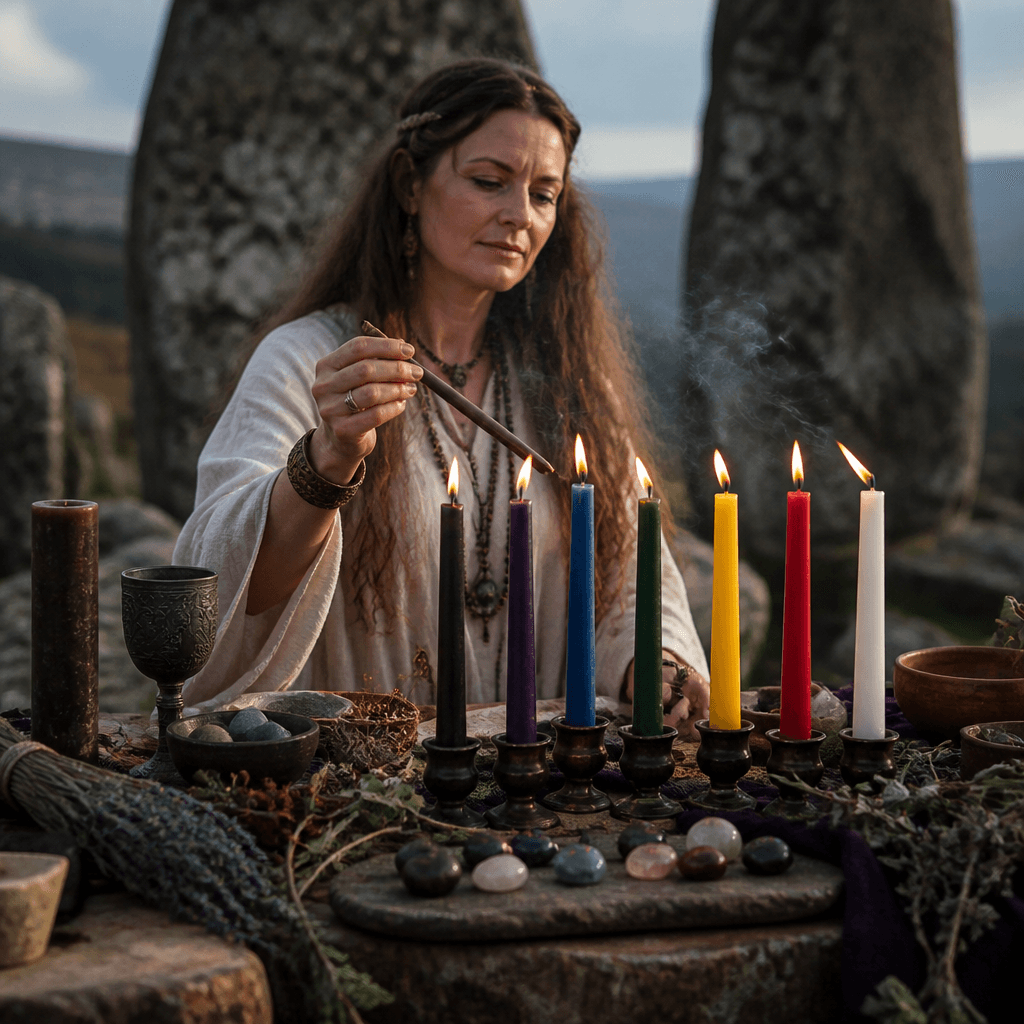
The concept of altar tables within ancient Celtic sacred spaces remains complex and often misunderstood in modern interpretations. Archaeological evidence for formal altar tables in Celtic practice is limited and frequently speculative, with central stones in circles like Drombeg’s Druid’s Altar or standing stones in Grooved Ware sites suggesting ritual use for ceremonies, sacrifices, or offerings during Neolithic and Bronze Age periods that Celtic cultures later adopted. These early altars bore little resemblance to the formal tables we associate with modern religious practice. Instead, Celtic practitioners utilized natural features like flat stones, earth pits, or specially prepared ground areas for their ritual work.
The evolution of altar practices in broader pagan traditions led to Iron Age viereckschanzen enclosures with buried votive offerings and Gaulish sanctuaries that featured more structured ritual spaces. Ancient Celtic sacred spaces typically incorporated existing landscape features as focal points for ceremony rather than constructing separate altar structures. Rivers, springs, and wells served as natural altars where practitioners deposited offerings directly into the water. Cave mouths and underground chambers provided altar-like spaces where ceremonies connected the upper world with the underworld realm of ancestors and spirits.
Stone circles often featured central areas that functioned as communal altars for group rituals, with participants arranged around the perimeter. The druids conducted ceremonies using portable ritual items rather than permanent altar furniture, allowing them to sanctify any location for religious purposes. This flexibility reflected the Celtic understanding that sacred power existed throughout the natural world rather than being confined to specific constructed spaces. Modern Wiccan and neo-pagan practices have adapted these ancient concepts, creating portable altars and outdoor ritual spaces that honor the Celtic preference for nature-based worship. Contemporary practitioners often seek to recreate the flexibility and natural focus of ancient Celtic ritual practices while incorporating elements from various historical periods. The challenge lies in distinguishing authentic ancient practices from modern interpretations that may project contemporary religious concepts onto historical cultures. Archaeological research continues to reveal new insights about how ancient Celtic practitioners organized their sacred spaces and ritual activities.
Modern Celtic Sacred Sites
Today’s landscape still holds the power of ancient Celtic sacred spaces, with sites like the Hill of Tara in Ireland, Newgrange passage tomb dating to approximately 3200 BCE, Oweynagat Cave linked to the Morrígan and Otherworld entrances, the springs at Bath dedicated to Sulis, the River Boyne associated with the goddess Boann, and the Callanish Stones attracting modern pagans, druids, and spiritual seekers from around the world. These locations maintain their mystical allure through ongoing visits for personal renewal, astronomical observations, and deep connections to ancestral folklore.

Celtic Symbols: Unlocking the Secrets of Ancient Mysteries, Sacred Meanings, and the Power of the Celts and Druids (Spiritual Practices)
View Product →Contemporary Celtic spiritual practitioners gather at these sites for solstice celebrations, healing pilgrimages, and neo-pagan rituals that attempt to revive ancient traditions while adapting them to modern understanding. The Hill of Tara continues to serve as a gathering place for those seeking connection to ancient Irish kingship and sovereignty goddess traditions. Newgrange draws thousands of visitors each winter solstice to witness the sun’s rays penetrating the passage tomb’s interior chamber, recreating a ceremony that has occurred for over five millennia.
Modern archaeological research at these sites reveals new layers of understanding about ancient Celtic sacred spaces, while also raising questions about appropriate contemporary use and conservation. Many sites face challenges from increased tourism and modern pagan activities that may impact their preservation. Celtic spiritual communities work to balance their desire for authentic practice with respect for these irreplaceable historical monuments. The growth of Celtic reconstructionist movements has led to more historically informed approaches to working with these sacred spaces. Scholars and practitioners collaborate to better understand ancient practices while developing sustainable ways to honor these sites. The internet and social media have increased awareness of these ancient Celtic sacred spaces, bringing both benefits and challenges to their preservation and spiritual use. Many practitioners now combine traditional Celtic approaches with modern environmental consciousness, seeing these ancient sites as teachers for contemporary earth-centered spirituality.
These ancient Celtic sacred spaces continue to inspire and challenge our understanding of spirituality, community, and our relationship with the natural world. What connections might you discover if you explored the ancient Celtic sacred spaces in your own region?
Related Items:

Lilly Dupres
Owner & AuthorLilly Dupres, a lifelong practitioner of paganism, established Define Pagan to offer a clear definition of paganism and challenge misconceptions surrounding modern pagan lifestyles.