
How to Set Up a Pagan Altar for Beginners at Home
This question sparks excitement in many new practitioners ready to create their first sacred space. Your pagan altar setup guide begins with choosing a small, private surface like a table, windowsill, shelf, dresser top, or countertop corner. Start by cleansing your chosen space through dusting counterclockwise while visualizing white light, then draw a pentacle with olive oil in the center. Gather basic elemental representations: a candle for fire, feather or incense for air, cup of water for the water element, and stone or crystal for earth. Add personal symbols like deity statues, photos, or prayer beads to make the space uniquely yours. Arrange these items intentionally, often aligning with cardinal directions. Place the feather east for air, candle south for fire, water west, and stone north for earth, with a central focal point like a goddess figurine. Use a cloth as your base for protection and energy focus. Personalize with natural elements or crystals that speak to you. Complete your setup by consecrating through intention or simple ritual before first use. Your altar becomes a bridge between the mundane and sacred, a place where you connect with divine energies and focus your spiritual practice.
Essential Altar Tools for Beginners
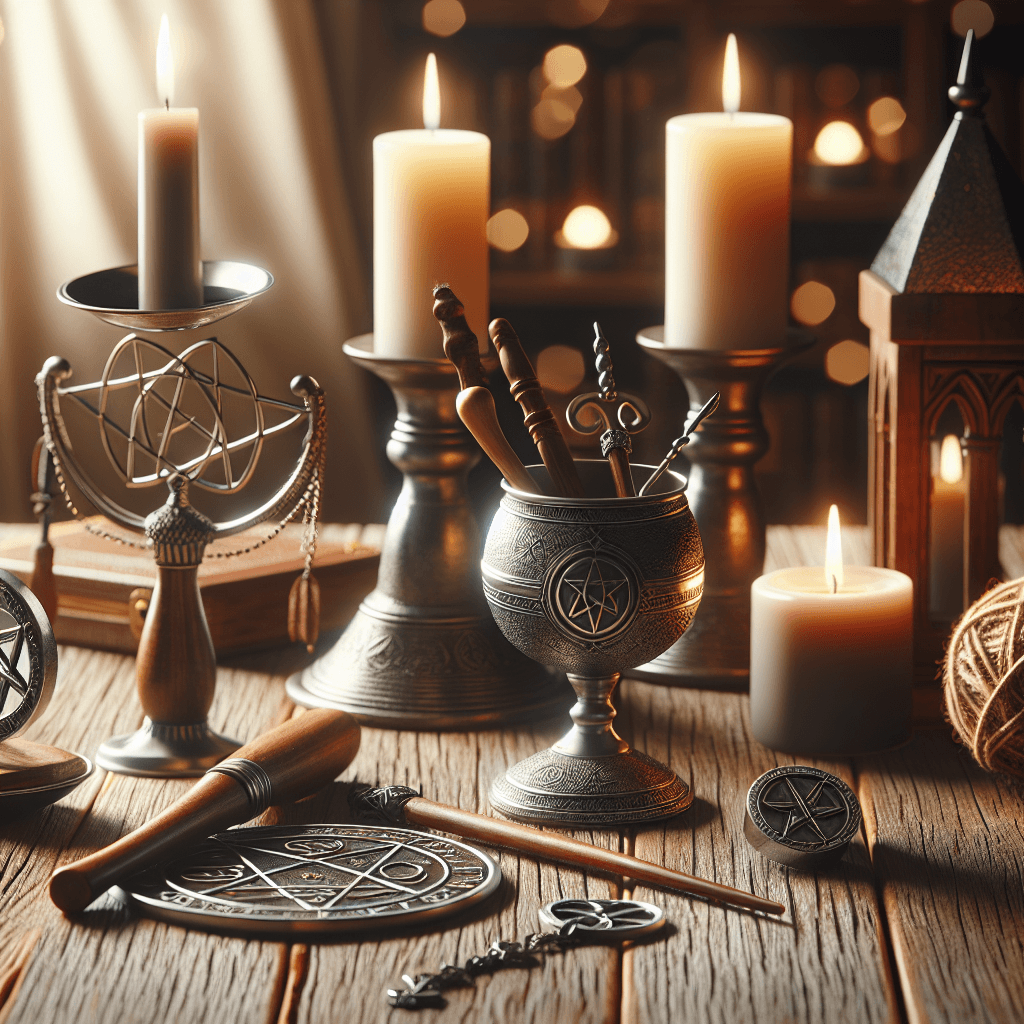
Your beginner pagan altar setup guide focuses on essential tools that create a strong foundation for your practice. Core items include candles for fire and divine light, crystals or gemstones for energy and grounding, incense or oils for air and cleansing purposes. Add a chalice or cup for water and Goddess representation, plus natural items like stones, feathers, or plants for earth energy. Include symbols of deities or elements such as statues, pillar candles in gold for God and silver for Goddess, or offering bowls for gifts to your chosen deities. Additional practical items expand your toolkit: wands to direct energy during rituals, athames as ritual knives, bells to purify and mark ritual beginnings or endings. Consider cauldrons for mixing herbs or brooms for cleansing energy.
Start minimally with household substitutes to keep your practice budget-friendly and personal. Use printed images instead of expensive statues, frames from thrift stores, or kitchen oils for anointing. Your altar grows with your practice, so avoid pressure to acquire everything immediately. Focus on items that resonate with your spiritual path and personal energy. Each tool serves specific purposes but your intention matters more than expensive materials. Many practitioners find power in simple items: a smooth river stone, candle from the grocery store, or feather found during walks. Your altar reflects your individual journey, not anyone else’s expectations or requirements.
Black Altar Cloths: Meaning and Uses
A black altar cloth serves as an excellent, versatile base for your pagan altar setup guide implementation. This practical choice protects surfaces from wax drips or oils while absorbing and neutralizing energies for any ritual work. Black proves ideal for beginners or general workings because it provides a neutral foundation that enhances other colors and items without interference. The color black holds deep symbolism in pagan traditions: mystery, protection, the void, and banishing negativity from your sacred space. It grounds chaotic energies and creates a clean canvas for your spiritual work.
Black suits shadow work perfectly, protection spells, or Samhain celebrations, but pairs well year-round before you expand to seasonal colors like green for prosperity work or pink for love magic. This versatile color works with all elemental representations and deity symbols without clashing or diminishing their power. Many practitioners prefer black cloths because they hide stains from candle wax, herbs, or oils better than lighter colors, making maintenance easier. You save money by starting with one quality black cloth rather than buying multiple seasonal options immediately. The psychological impact of black creates focus and seriousness in your practice. It signals to your subconscious that this space holds sacred purpose. As your practice develops, you might add colored cloths for specific seasons or workings, but black remains your reliable foundation. The neutral energy of black allows your other altar items to shine while providing protective boundaries for your sacred work.
Seasonal Altar Decoration Ideas
Your pagan altar setup guide adapts dynamically to sabbats and seasons through rotating decorations that honor natural cycles. For Samhain, incorporate autumn leaves, small pumpkins, and black or orange cloths that reflect the harvest and thinning veil between worlds. Yule calls for evergreen branches, red berries, and gold candles representing the return of light during winter’s darkest time. Imbolc welcomes snowdrops, white cloths, and seeds symbolizing early spring’s promise and Brigid’s growing strength. Ostara brings fresh flowers, decorated eggs, and pastel colors celebrating the spring equinox and renewed life force.


Beltane embraces green decorations and prosperity crystals honoring fertility and abundance as summer approaches. Litha features sunflowers and solar symbols marking the summer solstice’s peak power. Lughnasadh displays grains and harvest symbols acknowledging the first harvest and sacrifice themes. Mabon incorporates falling leaves and grapes representing autumn’s second harvest and balance between light and dark. Seasonal gemstones enhance your decorations: citrine for summer’s solar energy, amethyst for winter’s introspection, or rose quartz for spring’s love energy. Fresh fruits make excellent offerings that connect you to each season’s gifts. Change altar cloths to match seasonal themes using reds for fire festivals or blues for water-focused celebrations. Layer natural elements like pinecones in winter, shells in summer, or fallen leaves in autumn. Your seasonal altar becomes a living calendar that keeps you connected to natural rhythms and earth’s energy cycles throughout the year.
Personal Sacred Space Creation
Creating your personal sacred space starts with choosing a convenient, private location that fits your living situation and practice needs. Consider bedroom shelves, kitchen corners, or portable trays for broom-closet practitioners who need discretion or flexibility in their spiritual work. Define your space boundaries with a cloth that delineates sacred from mundane while infusing your conscious intention into every inch. Select meaningful items that resonate with your personal energy: favorite crystals collected over time, feathers found during nature walks, family heirlooms with spiritual significance, or deity artwork that speaks to your soul. Avoid rigid rules about altar arrangement and embrace your intuitive preferences. Choose asymmetrical layouts if they feel more natural to your energy flow.
Your sacred space evolves over time as your practice grows and changes. Rearrange items seasonally or add new pieces that reflect your spiritual development and deeper understanding of your path. Enhance sensory depth through flickering candles that create dancing shadows, aromatic incense that signals sacred time, living plants that bring earth energy indoors, or singing bowls that help you focus quickly during busy periods. Your personal space reflects your unique spiritual fingerprint, not anyone else’s vision or expectations. Trust your instincts about what belongs in your sacred area. Some practitioners prefer minimal setups with just a few meaningful objects, while others create elaborate displays with multiple deity representations and seasonal decorations. Neither approach holds more validity than the other. Your space succeeds when it helps you connect with divine energy and supports your spiritual practice effectively.
Altar Consecration
Altar consecration completes your pagan altar setup guide by transforming ordinary space into sacred ground through intentional ritual and energy work. Begin with physical cleansing by dusting your surface counterclockwise while visualizing white light removing all stagnant or negative energies from your chosen area. Anoint your altar by tracing a pentacle with olive oil in the center, connecting your space to protective elemental forces. Spiritual dedication follows physical preparation through ceremonial welcome of elemental energies. Light your central candle while stating your intention aloud: This space is sacred for my spiritual practice and divine connection.
Welcome each element directionally by invoking air in the east with incense smoke, fire in the south with candle flame, water in the west with blessed liquid, and earth in the north with crystal or stone. Ring a bell or use cleansing smoke to purify your entire altar area and seal your consecration work. Place each altar item mindfully while focusing your energy and intention on its specific purpose in your practice. Repeat this consecration process seasonally or whenever you feel your altar needs refreshing or renewed energy. Maintain your altar’s potency through regular care: expose items to moonlight monthly, sprinkle with blessed salt water, or leave daily offerings of fresh flowers, herbs, or food for your deities. Your consecrated altar becomes a powerful tool for spiritual work, meditation, and divine communication. The energy you invest in proper consecration multiplies the effectiveness of all future magical and spiritual work performed at your sacred space. This pagan altar setup guide provides your foundation for meaningful spiritual practice.
What specific deity or elemental energy calls to you most strongly as you begin planning your personal altar space?
Related Items:

Lilly Dupres
Owner & AuthorLilly Dupres, a lifelong practitioner of paganism, established Define Pagan to offer a clear definition of paganism and challenge misconceptions surrounding modern pagan lifestyles.