
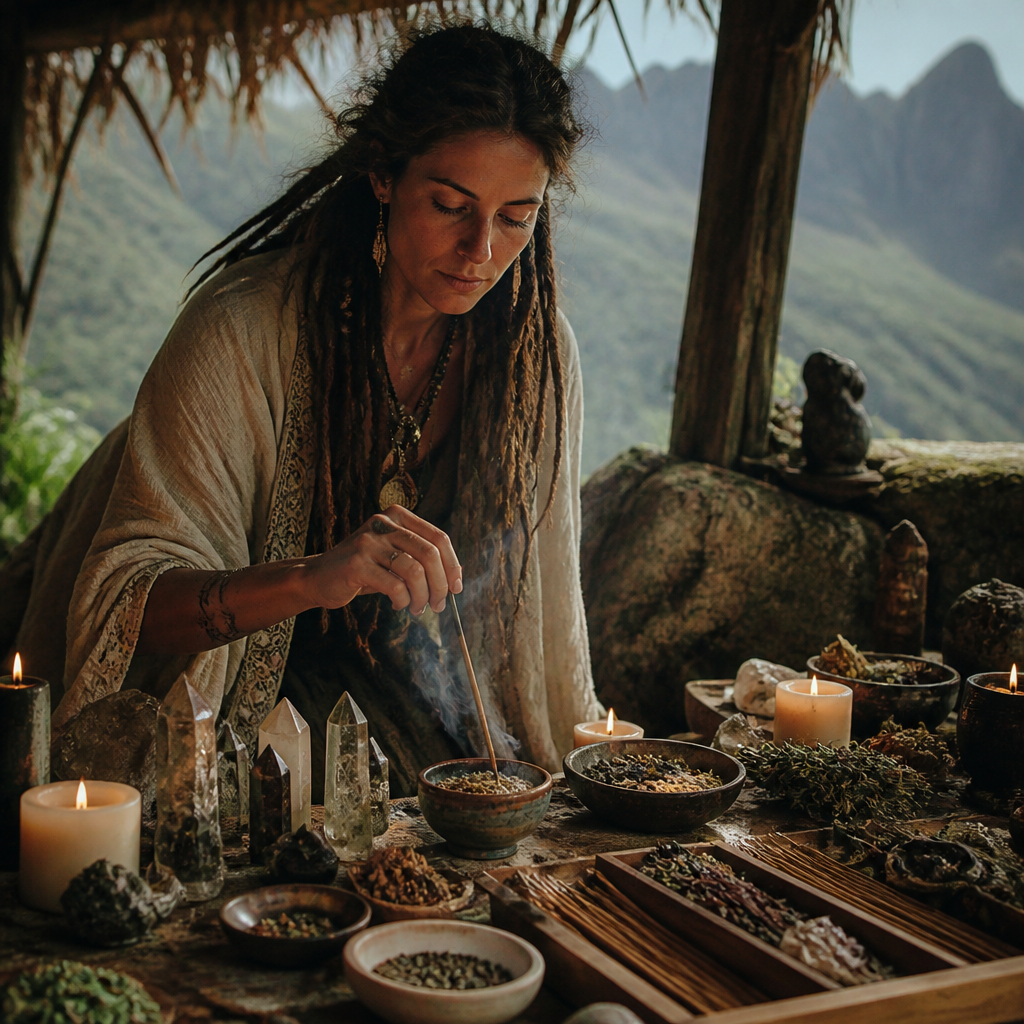
What Should a Beginner Witch Look For in an Incense Variety Pack?
If you've typed something like this into a search bar, you're already asking the right question. The best incense variety packs for beginner witches and altar work give you distinct scents for distinct purposes, not a dozen jars that all smell like a candle aisle. You want a set that teaches you something each time you light it.
The problem with most variety packs on the market is overlap. You open the box and find ten versions of floral sweetness with different names. That doesn't build skill. It builds a drawer full of sticks you'll never use with intention. A pack worth buying gives you tools for different jobs: cleansing a space, grounding your body, honoring a deity or ancestor, protecting your home, or marking a season.
Core Scents Every Starter Incense Pack Should Include
A solid first collection covers several ritual families, not one theme repeated.
Sandalwood calms the mind and helps you center before a working. Frankincense lifts the tone of devotional practice and has been used in ceremonial settings for thousands of years. Myrrh carries a heavier, more solemn note and works well in protection rites or any ritual that asks for seriousness. Cedar and pine clear a space and mark boundaries, useful when you want to close off negative energy. Lavender slows things down and supports peaceful or dream-focused work. Mugwort shows up in divination and transition rituals across several folk traditions.
Copal, benzoin, patchouli, and rose can round out a set. Each one should earn its spot by doing something the others don't. If a pack includes patchouli and rose but both are marketed as "love and attraction," you're paying for a repeat, not a range.
Resins vs Sticks vs Cones: Picking the Right Incense Format
Format matters as much as scent when you're building ritual skill.
Stick incense is the easiest place to start. It burns at a steady pace, gives you predictable timing, and suits meditation, petition writing, or opening an altar space. You light it, set it down, and know roughly how long you have.
Cones burn faster and hotter. They take up less room, which helps if your altar space is small, but they tend to produce more smoke in less time. That makes them less forgiving if you're still learning to gauge how much incense a room can handle.
Resins give you the richest experience of the three. Frankincense, myrrh, and copal have been burned in ceremonial and devotional contexts across many religious traditions, and the smoke they produce feels denser and more deliberate than a stick's. The catch is that resins need charcoal or an electric heater. They're not something you light with a match and forget. A good incense variety pack for beginners pairs a few resins with sticks or cones, so you can learn both methods without buying a full burner setup on day one.
Loose herbs deserve a mention too. They require more attention to burn safely and should never be treated as harmless just because they're plant material. Natural doesn't mean risk-free.
Reading Ingredient Labels Before You Buy
Skip anything labeled with vague language like "mystic blend" or "sacred fragrance." You want to see actual ingredients: sandalwood, frankincense resin, dried lavender, cedar chips. That list tells you what you're burning and gives you a real relationship with the material instead of a guess.
Synthetic perfume isn't automatically bad, but it makes correspondence work harder to interpret. If you're trying to learn what cedar actually does in your practice, a stick that's mostly synthetic fragrance oil won't teach you much. Synthetic blends also tend to burn with a sharper, less pleasant smoke.
Quantity matters too. Five sticks of each scent isn't enough to test whether something belongs in your regular rotation. Look for packs that give you enough of each variety to burn it more than once, compare results, and decide if it earns a permanent spot on your altar.
Correspondence Isn't Fixed, So Keep Notes
Don't lock every scent into one meaning and stop there. Frankincense supports devotion in some traditions and purification in others. Mugwort has documented use in European and East Asian folk practices, but what it means shifts depending on which tradition you're following. Start with the lore of your own path, then pay attention to what actually happens when you burn something.
Keep a simple record. Note the scent, your mood before and after, how long it burned, and what you noticed during the working. That record will tell you more over time than any generic correspondence chart. The best incense variety packs for beginner witches and altar work are the ones that give you enough range to start building that kind of personal knowledge.
Incense Safety for Altar Work and Ritual Spaces
Good incense burns evenly and smells like what it claims to be. If a stick snaps constantly, smells overwhelmingly like perfume, puts off thick black smoke, or leaves a chemical aftertaste, that's a sign of poor construction.
Use a stable, heatproof holder every time. Keep burning incense away from cloth, paper, and anything flammable near your altar. Open a window or ventilate the room, especially if you're burning resin on charcoal, which produces more smoke than a stick. Never leave incense burning unattended, and put it out fully before you leave the room.
Smoke bothers some people and some animals more than others. Birds are especially sensitive to airborne particles and fumes. If you share your space with pets or with anyone who has breathing issues, don't burn incense in a closed room. Crack a window or choose a well-ventilated space instead.
Building Your First Ritual Incense Set
Start small and specific. Pick one cleansing scent, one grounding wood, one devotional resin, one gentle floral or herb, and one protective or seasonal option. That's five materials, each with a clear job.
Burn them one at a time before you ever combine them. This step matters more than it sounds like it should. Burning everything at once on day one creates a thick, confusing cloud of scent, and you won't be able to tell what's actually supporting your work and what's just adding noise. Test each one alone, note how it feels, and only combine scents once you understand what each brings on its own.
A well-chosen incense variety pack isn't decoration. It's a toolbox you learn to use one piece at a time. Start with distinct materials, test them with intention, and keep only the scents that earn a place in your actual practice. The ideas in this article only work if the incense behind them is made with real ingredients and burns the way it should, which is why sourcing from a supplier who understands ritual use makes the whole process easier. Take a look at what's available in the Define Pagan shop and start building a set that actually supports your work.

Lilly Dupres
Owner & AuthorLilly Dupres, a lifelong practitioner of paganism, established Define Pagan to offer a clear definition of paganism and challenge misconceptions surrounding modern pagan lifestyles.


