How do you perform Anunnaki invocation rituals for beginners step by step?
The truth is, Anunnaki Ritual Invocation Practices weren’t actually performed as collective ceremonies by ancient Mesopotamians. Instead, they honored individual Anunnaki deities through city-specific temple worship, treating these powerful beings as patrons rather than subjects of group invocation. Modern practitioners have reconstructed these practices based on mythological fragments and archaeological evidence, creating accessible rituals for contemporary pagans seeking connection with these ancient Sumerian deities.
Ancient Sumerian Invocation Methods
The Pagan Book of Days: A Guide to the Festivals, Traditions, and Sacred Days of the Year
View ProductThe ancient Sumerians approached Anunnaki Ritual Invocation Practices through individual deity worship rather than collective ceremonies. These powerful descendants of the sky-god An were honored through elaborate temple cults where each god resided as a city’s patron. The Sumerians believed that up to fifty Anunnaki were connected to Eridu’s temple alone, yet they never developed standardized group invocation rituals for the entire pantheon. Instead, their worship practices focused on hymns and homage directed toward specific deities like Enki, who received elaborate praise in texts such as Enki and the World Order. Temple ceremonies involved dressing divine statues, feeding them offerings, and parading them through city streets during festivals. The underworld aspect of Anunnaki worship appears in myths like Inanna’s Descent, where seven Anunnaki served as judges, though these references were mythological rather than practical ritual instructions.
Hurrian-Hittite adaptations introduced purification ceremonies involving eight old gods like Aduntarri and Zulki, where practitioners sacrificed piglets in ground pits without establishing formal temple cults. Treaties often invoked the Anunnaki as oath witnesses, emphasizing their role as fate-decreers among the seven primary gods who determined destiny. This historical approach to Anunnaki worship was deeply integrated into daily civic and religious life, with celestial observations of Venus for Inanna worship and solar rituals for Utu creating a comprehensive spiritual framework. The emphasis remained on individual relationships with specific deities rather than collective invocation of the entire Anunnaki pantheon, making modern group practices a significant departure from ancient traditions.
Modern Anunnaki Ritual Techniques
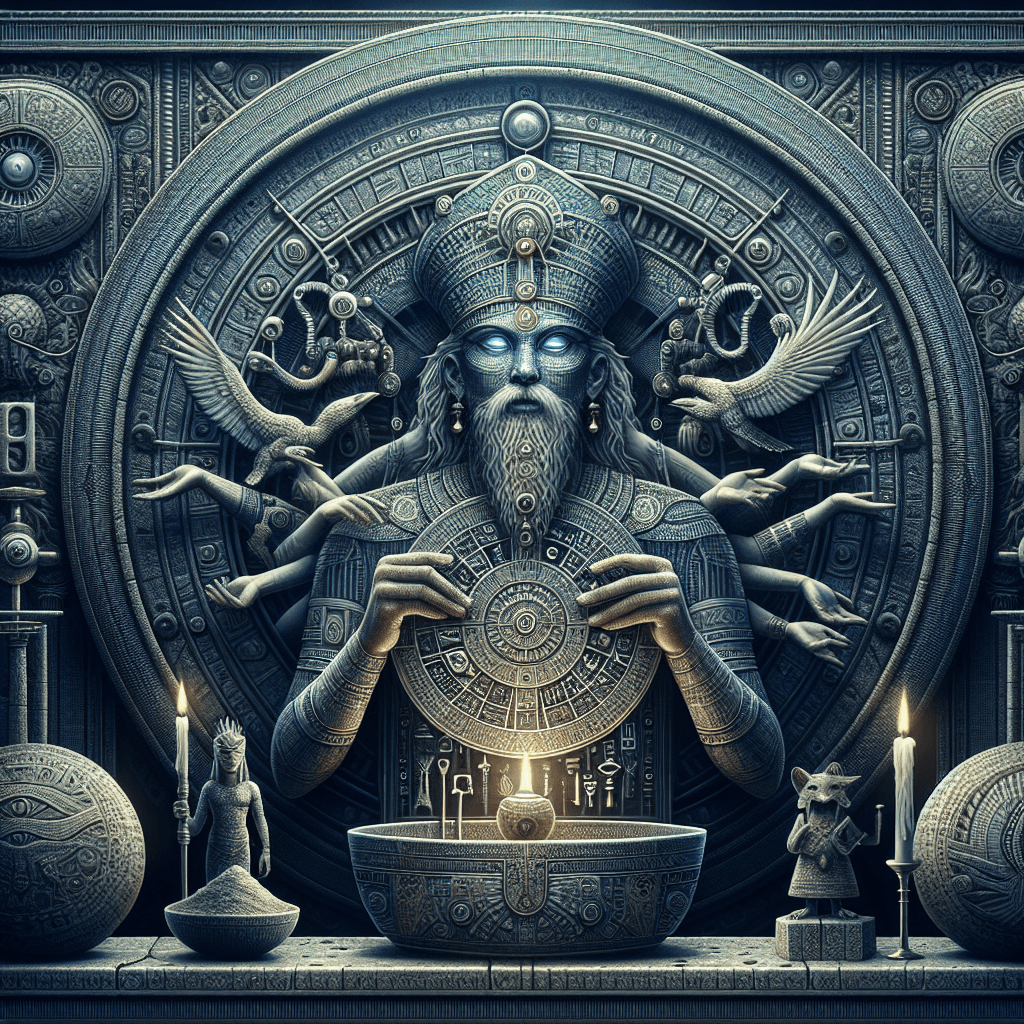
Contemporary practitioners have developed Anunnaki Ritual Invocation Practices by blending archaeological evidence with neopagan reconstruction methods and speculative interpretations. Modern techniques often frame Anunnaki invocation as Babylonian magic, incorporating Jungian psychology and archetypal work with deities like Inanna, Enki, and Enlil. These practices typically begin with symbolic invocation using decoded ancient symbols such as the rod and ring representing fate measurement, pine cones symbolizing life force, and winged disks representing celestial travel and divine authority. Practitioners often focus on meditation concerning mythological conflicts, particularly the Enki-Enlil dynamics and human creation stories found in Mesopotamian literature.
Neopagan adaptations emphasize spiritual dedication through hymns, offerings, and visualization techniques, treating the Anunnaki as accessible spiritual guides rather than distant mythological figures. Many modern practitioners incorporate elements from Zecharia Sitchin’s theories about the Anunnaki as ancient astronauts, though these interpretations lack archaeological support and represent speculative rather than historical approaches. YouTube and online communities have popularized narratives about Vatican suppression of Anunnaki knowledge, inspiring hidden ritual practices that blend conspiracy theories with genuine spiritual seeking. The lack of standardized modern techniques means that practices vary significantly between practitioners, with some focusing on scholarly reconstruction while others embrace more intuitive or channeled approaches. Modern ritual structures typically include altar preparation with representative symbols, purification through water or incense, invocation through adapted hymns or personal prayers, offerings of food or symbolic items, meditation or visualization work, and closing gratitudes. These contemporary methods emphasize personal experience and symbolic connection rather than literal divine contact, making them accessible to beginning practitioners while maintaining respect for ancient Mesopotamian spiritual traditions.
Sacred Tools and Ceremonial Objects

Historical evidence reveals that authentic Anunnaki Ritual Invocation Practices relied on temple statues and offerings rather than specialized ritual tools designed specifically for Anunnaki worship. Modern practitioners have reconstructed ceremonial approaches using mythic symbols that appear throughout Mesopotamian art and literature, creating meaningful connections to ancient spiritual concepts. The rod and ring symbol, frequently depicted in Anunnaki artwork, represents divine authority over fate and measurement, making it a powerful focus for meditation and ritual work. Pine cone imagery, associated with life force and spiritual awakening in Mesopotamian contexts, serves as both altar decoration and symbolic tool for invoking wisdom and growth. Winged disk representations, symbolizing celestial travel and divine authority, help practitioners connect with the cosmic aspects of Anunnaki mythology and their role as sky deities.
Traditional temple worship involved elaborate care of divine statues, including dressing god images in fine clothing, offering food and drink, and adorning them with horned caps and wings that depicted their divine nature. Modern adaptations might include small statues or artistic representations of specific Anunnaki deities, candles representing solar deities like Utu, and water bowls honoring Enki’s association with wisdom and the cosmic sweet waters. Hurrian-style purification items, inspired by historical practices involving sacrificial pits, can be adapted using small bowls or designated earth spaces for symbolic offerings rather than animal sacrifice. Celestial observation tools connect practitioners with the astronomical aspects of Anunnaki worship, as ancient practitioners tied their rituals to observations of Venus for Inanna, solar movements for Utu, and lunar cycles for Nanna. Contemporary practitioners often create personalized tool collections that honor both historical accuracy and practical accessibility, avoiding claims about advanced technology or magnetic fields that lack archaeological support while maintaining meaningful symbolic connections to authentic Mesopotamian spiritual concepts.
The Anunnaki: Roles and Hierarchy
Understanding Anunnaki Ritual Invocation Practices requires comprehensive knowledge of the complex hierarchy and specialized roles within this powerful pantheon of Mesopotamian deities. The Anunnaki, first mentioned in inscriptions dating to approximately 2144 BCE, were considered the offspring of Anu, the supreme sky god, and held authority over fate-decreeing from their heavenly positions and judgment responsibilities in the underworld. An or Anu served as the ancestral sky-god associated with equatorial stars, representing the ultimate divine authority from which all other Anunnaki derived their power and legitimacy. Enlil controlled the northern sky and held primary responsibility for fate-decreeing, positioned at the north celestial pole and serving as one of the most powerful deities in active governance of human affairs. Enki governed the southern sky, embodying wisdom, creation, and the sweet waters that sustained life, making him particularly accessible to practitioners seeking knowledge and creative inspiration.

Ninhursag represented the earth mother goddess aspect, connecting the celestial Anunnaki to earthly domains and fertility, while Nanna ruled lunar cycles and Utu governed solar justice and truth. Inanna, associated with Venus, embodied the complex roles of love, war, and underworld trials, appearing in some of the most dramatic Mesopotamian mythological narratives. Historical sources indicate that up to fifty Anunnaki were connected to Eridu’s temple complex, while seven served as primary judges in underworld mythology, and eight appeared in Hurro-Hittite texts as old gods requiring specific purification ceremonies. Individual city-states developed patron relationships with specific Anunnaki rather than collective worship practices, creating diverse regional traditions that honored particular deities through specialized festivals and daily temple maintenance. Modern practitioners often focus on developing relationships with individual Anunnaki based on personal spiritual needs, with Enki popular for wisdom seeking, Inanna for transformation work, and Enlil for authority and leadership development, while maintaining awareness that fringe theories casting them as alien engineers lack archaeological support and represent modern speculation rather than ancient belief systems.
The Anunnaki Ritual Invocation Practices you choose to explore should align with your personal spiritual goals while respecting the rich historical traditions that inspired these modern adaptations. Will you begin your journey by connecting with a specific Anunnaki deity, or does the prospect of reconstructing ancient Mesopotamian wisdom through contemporary practice call to your spiritual path?
Related Items:

Lilly Dupres
Owner & AuthorLilly Dupres, a lifelong practitioner of paganism, established Define Pagan to offer a clear definition of paganism and challenge misconceptions surrounding modern pagan lifestyles.